Commercial vehicle wraps are not just aesthetic upgrades; they are high-performance mobile billboards that must withstand constant environmental stress. According to industry data, a well-executed vehicle wrap can generate between 7,000 and 70,000 impressions per day depending on traffic density. This massive exposure means the material you choose must balance durability, print quality, and removability. Selecting the wrong vinyl can lead to premature fading, adhesive failure, or damage to the underlying paint when it is time to remove the wrap. (Contact Us 360 Wraps)
Understanding Vinyl Types and Grades
The foundation of any successful vehicle wrap is the vinyl itself. Not all vinyl is created equal, and the grade determines how the material behaves over time. Commercial fleets require materials that can endure UV radiation, extreme temperatures, and chemical exposure from road grime and cleaning agents. (Services 360 Wraps)
Cast Vinyl: The Premium Standard
Cast vinyl is the industry standard for long-term commercial applications. This material is manufactured by pouring liquid PVC onto a casting sheet, resulting in a thin, conformable film. Cast vinyl is designed to last between five and seven years. It offers superior conformability to complex curves and body lines, which is critical for maintaining a professional appearance on modern vehicle designs.
One of the primary advantages of cast vinyl is its dimensional stability. It resists shrinking and lifting over time, ensuring that edges remain sealed and graphics stay crisp. For high-value assets like delivery vans or executive sedans, cast vinyl provides the necessary durability to protect the original paint while maximizing brand visibility.
Calendered Vinyl: The Cost-Effective Alternative
Calendered vinyl is produced by rolling PVC into thin sheets. This process is more cost-effective than casting, making calendered vinyl an attractive option for short-term campaigns or budget-conscious fleets. However, this material is thicker and less conformable than cast vinyl. It typically lasts between three and five years.
Calendered vinyl is best suited for flat surfaces and simple curves. If your fleet consists of box trucks or trailers with minimal body contours, calendered vinyl can provide excellent results at a lower price point. However, it is not recommended for vehicles with complex curves or sharp edges, as it may lift or crack over time.
Perforated Window Film: Visibility and Privacy
Perforated window film, often referred to as one-way vision, allows graphics to be applied to vehicle windows without obstructing the driver's view. This material is essential for commercial vehicles that require branding on side and rear windows while maintaining safety compliance.
The perforations allow light to pass through from the outside, creating a solid image for pedestrians while allowing drivers to see out. This material is typically used in conjunction with cast vinyl for a cohesive look across the entire vehicle.
Key Selection Factors for Fleet Managers
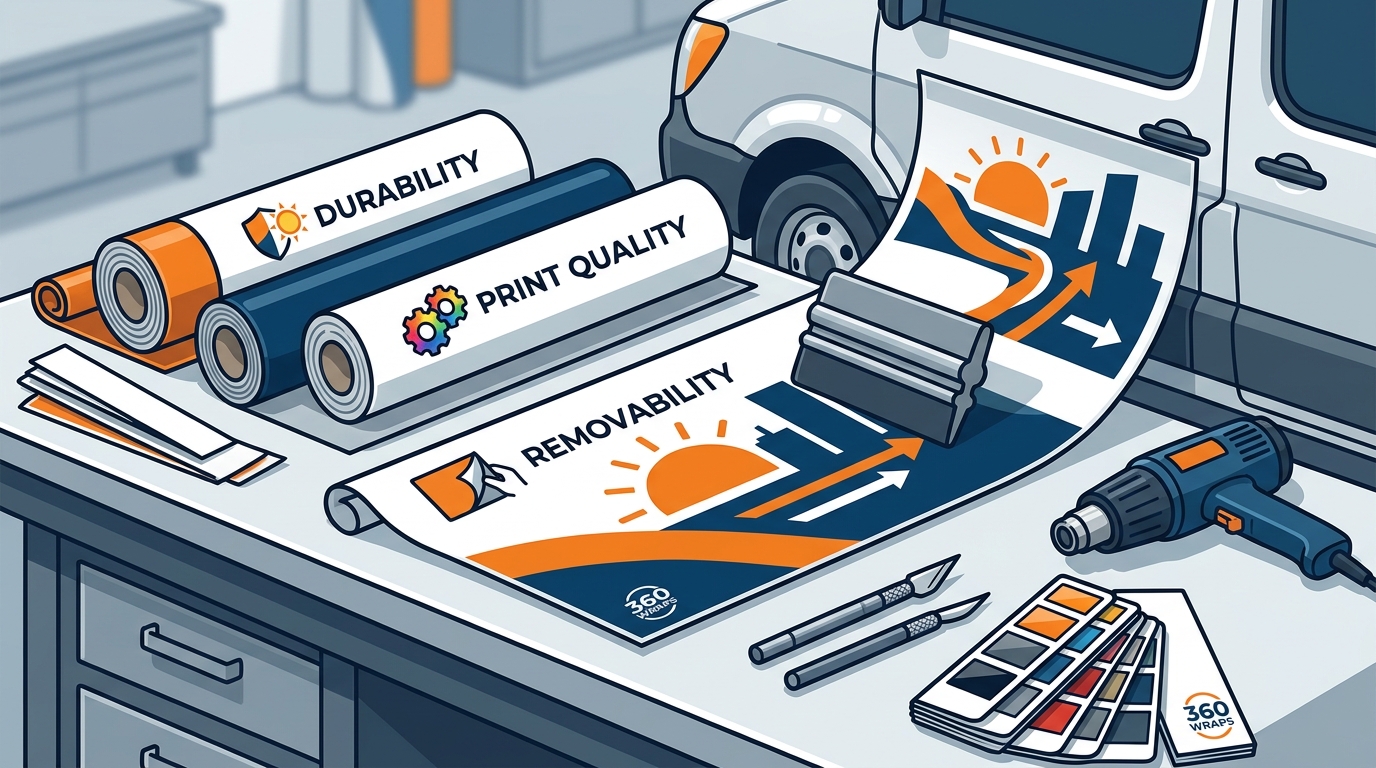
Choosing the right material involves more than just picking a price point. Fleet managers must consider several operational factors that impact the longevity and effectiveness of the wrap.
Environmental Conditions
The geographic location of your fleet plays a significant role in material selection. Vehicles operating in high-UV environments, such as the southwestern United States, require vinyl with advanced UV inhibitors to prevent fading. According to research on material degradation, prolonged UV exposure can cause colors to shift and adhesives to break down faster.
Similarly, fleets operating in extreme cold or heat must use materials that remain flexible across a wide temperature range. Some vinyls become brittle in cold weather, leading to cracking during installation or use. Always verify the temperature tolerance of the specific vinyl product.
Brand Longevity and Campaign Duration
How long do you plan to keep the wrap on the vehicle? If the wrap is intended for a short-term promotional campaign lasting less than two years, calendered vinyl may suffice. However, for long-term brand consistency, cast vinyl is the only viable option. Removing a short-term wrap from a long-term cast vinyl can be difficult and may damage the paint.
Surface Compatibility
The condition and type of the vehicle's surface are critical. Newer vehicles with smooth, factory paint are ideal for wrapping. Older vehicles with existing damage, rust, or poor-quality repaints may not be suitable for wrapping. The adhesive on the vinyl can pull off loose paint during removal, leading to costly repairs. A professional assessment of the vehicle's surface is recommended before proceeding.
Installation and Surface Preparation
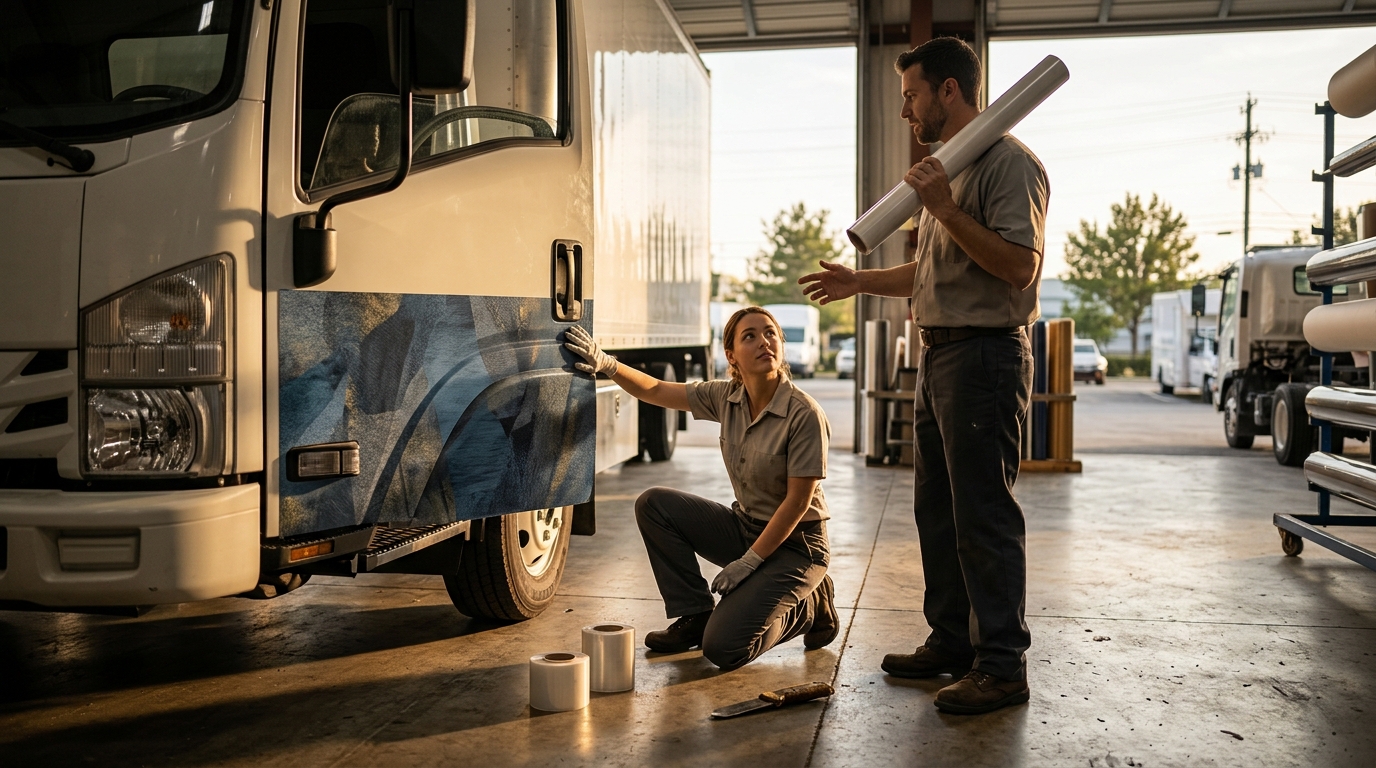
Even the highest quality vinyl will fail if installed incorrectly. Professional installation is non-negotiable for commercial fleets. The installation process involves thorough cleaning, surface preparation, and precise application techniques.
Surface Cleaning and Degreasing
Before any vinyl is applied, the vehicle surface must be meticulously cleaned to remove dirt, wax, and grease. Any contaminants left on the surface can prevent the adhesive from bonding properly, leading to bubbles and lifting. Professional installers use specialized cleaning solutions to ensure a pristine surface.
Temperature Control
Installation temperature is crucial for vinyl adhesion. Most vinyls require a minimum surface temperature of 60 degrees Fahrenheit for proper adhesion. Installers use heat guns to stretch and conform the vinyl to complex curves, ensuring a smooth finish without wrinkles or bubbles.
Post-Installation Care
After installation, vehicles should not be washed for at least 72 hours to allow the adhesive to fully cure. During this time, the vinyl continues to bond to the surface. Following proper care instructions, such as avoiding high-pressure washes on edges and using pH-neutral cleaners, can extend the life of the wrap significantly.
Material Comparison and Recommendations
To help you make an informed decision, here is a comparison of common vehicle wrap materials and their ideal use cases.
| Material Type | Lifespan | Best For | Key Benefit |
|---|---|---|---|
| Cast Vinyl | 5-7 Years | Long-term branding, complex curves | Superior conformability and durability |
| Calendered Vinyl | 3-5 Years | Short-term campaigns, flat surfaces | Cost-effective for simple applications |
| Perforated Film | 3-5 Years | Window branding, one-way vision | Maintains driver visibility |
| Textured Vinyl | 5-7 Years | Specialty finishes, luxury vehicles | Unique aesthetic appeal |
For most commercial fleets, a combination of cast vinyl for the body and perforated film for windows provides the best balance of durability, aesthetics, and functionality. This approach ensures that the brand message is consistent and visible from all angles while maintaining safety standards.
Key Takeaways
- Cast vinyl is the industry standard for long-term commercial use, offering a lifespan of 5-7 years and superior conformability to complex vehicle curves.
- Calendered vinyl is cost-effective for short-term campaigns or flat surfaces but lacks the durability and flexibility of cast vinyl.
- Environmental factors matter, as UV exposure and extreme temperatures can degrade vinyl faster if the wrong material is selected.
- Professional installation is critical for ensuring proper adhesion and longevity, as surface preparation and temperature control are key success factors.
- Perforated window film allows for branding on windows without obstructing driver visibility, essential for safety compliance.
- Surface condition dictates suitability, as wrapping over damaged or poorly painted surfaces can lead to paint removal during wrap extraction.
- Post-installation care includes a 72-hour curing period and the use of pH-neutral cleaners to extend the wrap's life.
Frequently Asked Questions
How long does a commercial vehicle wrap last?
A high-quality cast vinyl wrap typically lasts between five and seven years, depending on environmental conditions and maintenance. Calendered vinyl may last three to five years.
Can I wrap my vehicle myself?
While DIY kits are available, professional installation is recommended for commercial fleets. Proper surface preparation and application techniques are crucial for longevity and appearance.
Will a vehicle wrap damage my paint?
When installed and removed correctly by professionals, a vehicle wrap will not damage the paint. In fact, it protects the original paint from UV rays and minor abrasions.
What is the difference between cast and calendered vinyl?
Cast vinyl is thinner, more conformable, and durable, making it ideal for long-term use. Calendered vinyl is thicker and less flexible, suitable for short-term or flat-surface applications.
How do I clean a wrapped vehicle?
Hand wash the vehicle using a pH-neutral soap and a soft sponge. Avoid high-pressure washes on edges and do not use abrasive brushes or wax on the vinyl surface.
Can I remove the wrap early?
Yes, wraps can be removed at any time. However, removing a long-term cast vinyl wrap from a short-term calendered vinyl application can be difficult and may require professional assistance.
Is perforated film safe for drivers?
Yes, perforated window film is designed to allow drivers to see out while displaying graphics from the outside. It meets safety standards for visibility.
Get Your Fleet Wrapped
Choosing the right material is just the first step in creating a high-impact mobile advertising campaign. At 360 Wraps, we combine premium materials with expert design and installation to ensure your fleet looks its best. With over 17 years of experience and a network of certified installers across all 50 states, we deliver consistent, high-quality results for every vehicle. Get a quote today to start transforming your fleet into a powerful branding tool.