Commercial vehicle wraps are not merely decorative; they are high-performance mobile billboards that must withstand extreme environmental stressors. According to industry data, a professionally installed vehicle wrap can generate between 7,000 and 70,000 impressions per day depending on route frequency. This level of exposure demands materials that resist UV degradation, chemical spills, and mechanical abrasion. Selecting the wrong vinyl can lead to premature peeling, color fading, and costly reinstallation, directly impacting your brand's return on investment. (Contact Us 360 Wraps)
Understanding Vinyl Categories
The foundation of any successful vehicle wrap lies in the vinyl substrate. Not all vinyl is created equal, and the distinction between cast and calendered vinyl is critical for commercial applications. (About Us 360 Wraps)
Cast Vinyl: The Industry Standard
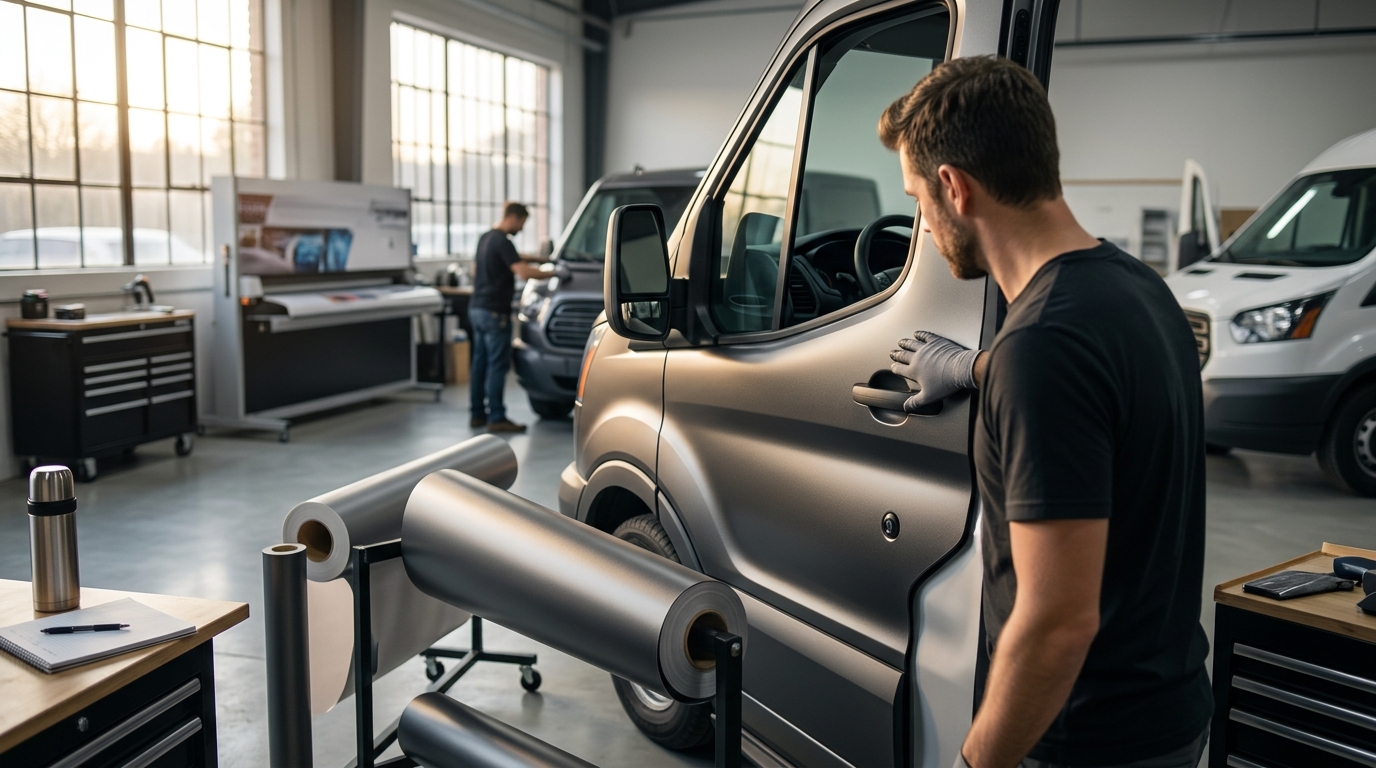
Cast vinyl is manufactured by pouring a liquid PVC mixture onto a casting line, resulting in a thin, flexible, and dimensionally stable film. This material is engineered to conform to complex curves, rivets, and ridges without shrinking or lifting over time. For commercial fleets, cast vinyl is the preferred choice because it offers superior longevity, typically lasting five to seven years. It also provides better resistance to environmental stress cracking, which is common in vehicles that operate in varying temperatures. (Services 360 Wraps)
Calendered Vinyl: The Budget Alternative
Calendered vinyl is produced by squeezing PVC between heavy rollers. This process creates a thicker, more rigid material that is less expensive to manufacture. While suitable for flat surfaces and short-term promotions, calendered vinyl is prone to shrinking and edge lifting on curved commercial vehicles. It is generally recommended for temporary wraps lasting less than three years. Using calendered vinyl on a long-term fleet vehicle can result in adhesive failure, leaving behind residue that is difficult and expensive to remove. (360 Wraps Seamless Wraps)
Perforated Window Film
For vehicles that require visibility for the driver, perforated window film offers a solution. This material allows light to pass through from the inside while displaying graphics from the outside. It is essential for buses, delivery vans, and trucks where safety regulations prohibit full coverage on windows. The material must be high-grade to ensure clarity and durability, preventing the "halo effect" where the graphic appears blurry from a distance.
Key Durability Metrics
When evaluating materials, you must look beyond the price tag and assess the technical specifications that determine lifespan.
UV Resistance and Color Fastness
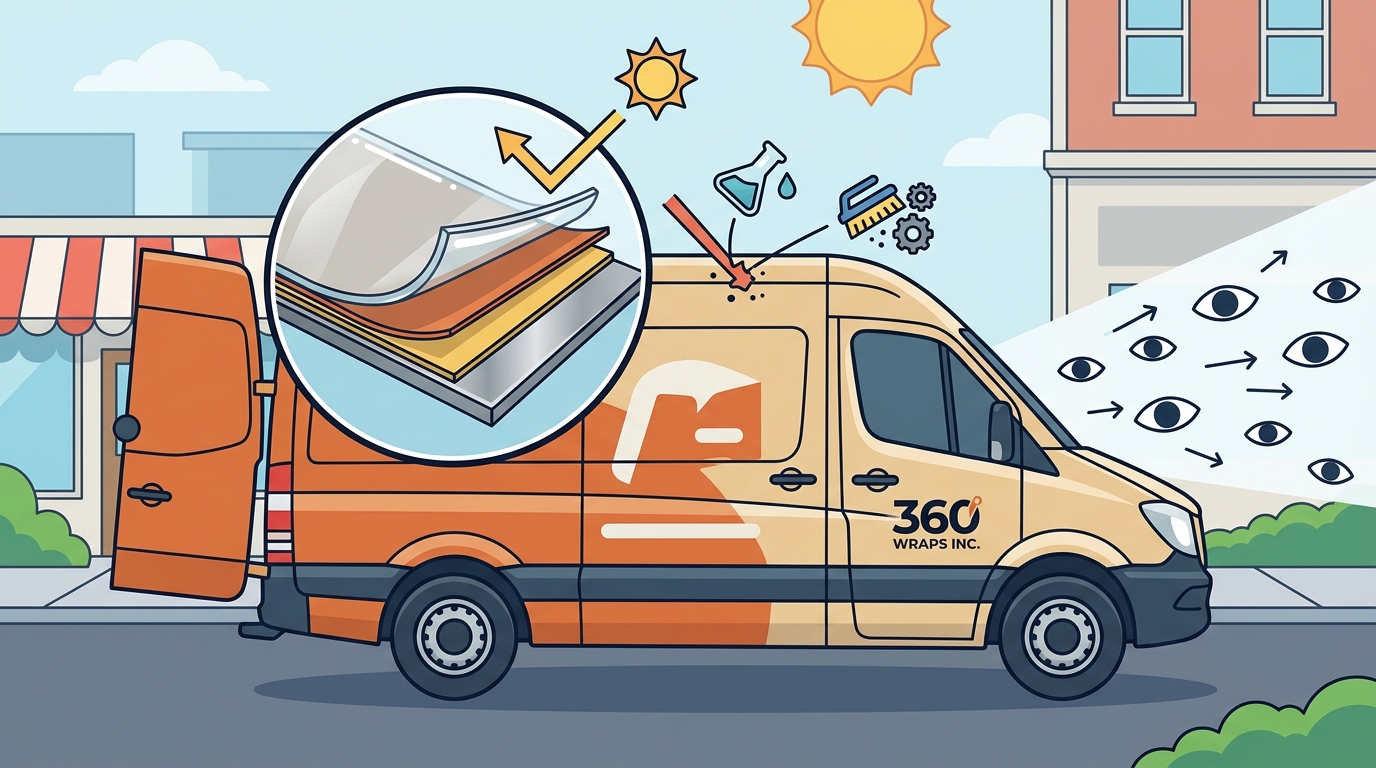
Sunlight is the primary enemy of vehicle graphics. High-quality commercial vinyl includes UV inhibitors that prevent the ink from fading and the vinyl from becoming brittle. According to research on outdoor advertising durability, premium cast vinyl retains 90% of its color integrity after five years of direct sunlight exposure. Lower-grade materials may fade significantly within 12 to 18 months, making your brand look neglected and unprofessional.
Adhesive Technology
The adhesive layer is what bonds the vinyl to your vehicle's paint. Repositionable adhesives are designed for temporary applications, allowing for removal without residue. Permanent adhesives, however, are engineered for long-term hold, resisting wind pressure at highway speeds and temperature fluctuations. For commercial fleets, a permanent, high-tack adhesive is non-negotiable to ensure the wrap stays secure during daily operations.
Chemical and Abrasion Resistance
Commercial vehicles often encounter road salt, bird droppings, tree sap, and fuel spills. Premium vinyl materials are coated with a protective laminate that resists chemical penetration. Without this laminate, acids in bird droppings can etch into the vinyl, causing permanent discoloration. Abrasion resistance is also critical for vehicles that frequently pass through automated car washes or carry cargo that might rub against the sides.
Surface and Contour Challenges
The physical condition and shape of your fleet vehicles dictate the material requirements. A one-size-fits-all approach rarely works for diverse fleets.
Complex Curves and Rivets
Modern commercial vehicles, such as box trucks and delivery vans, feature complex body lines, rivets, and seams. Cast vinyl is essential here because it can be stretched and heated to conform to these contours without wrinkling. Calendered vinyl lacks the necessary elasticity and will often lift at the edges of rivets or curves, creating pockets for dirt and moisture to accumulate.
Surface Condition and Preparation
The underlying paint condition affects material performance. If your fleet vehicles have existing scratches, dents, or peeling paint, the vinyl will highlight these imperfections rather than hide them. A professional installer will assess the surface and recommend appropriate prep work. In some cases, a thicker vinyl may be required to bridge minor surface irregularities, but this is a temporary fix. The best practice is to ensure vehicles are in good condition before wrapping.
Material Thickness and Weight
Thicker vinyl materials offer more durability but can be harder to install on tight curves. Thinner materials conform better but may be more susceptible to tearing during installation. The balance between thickness and conformability is a key factor in material selection. For most commercial applications, a medium-weight cast vinyl provides the optimal balance of ease of installation and long-term performance.
Strategic Fleet Selection
Your fleet's operational profile should drive your material choice. A delivery van that stays in the city has different needs than a long-haul truck that traverses multiple climate zones.
High-Mileage vs. Low-Mileage Vehicles
Vehicles that accumulate high mileage are exposed to more road debris, wind, and weather cycles. These vehicles require the most durable cast vinyl with high-tack adhesive. Low-mileage vehicles, such as executive sedans or promotional cars, may get away with slightly less aggressive materials, but the investment in durability is still wise for brand consistency.
Geographic and Climate Considerations
Climate plays a significant role in material performance. In hot climates, UV resistance is paramount to prevent fading and adhesive breakdown. In cold climates, flexibility is key to prevent the vinyl from cracking during temperature drops. Some materials are specifically engineered for extreme weather conditions, offering enhanced performance in both heat and cold.
Brand Consistency Across Fleets
For large fleets, maintaining consistent color and finish across all vehicles is crucial. Using the same material type and color profile ensures that older wraps do not look significantly different from newer ones. This consistency reinforces brand identity and prevents a fragmented appearance as vehicles are replaced or rewrapped over time.
Cost vs. Longevity Analysis
While the upfront cost of premium materials is higher, the total cost of ownership is often lower due to extended lifespan and reduced maintenance.
Initial Investment
Cast vinyl materials cost more than calendered vinyl, and professional installation adds to the initial expense. However, this investment protects your underlying paint and ensures your brand looks professional for years. Cheap wraps often fail prematurely, requiring costly removal and reinstallation, which disrupts your fleet's operations and marketing continuity.
Removal and Paint Protection
High-quality vinyl is designed to be removed cleanly without damaging the underlying paint. This is critical for commercial fleets that may need to rebrand or sell vehicles. Poor-quality vinyl can leave behind stubborn adhesive residue or even pull paint off the vehicle, leading to expensive paint correction costs. The cost of professional removal and paint repair often exceeds the savings from choosing a cheaper wrap initially.
ROI and Brand Impact
A well-maintained wrap continues to generate impressions and reinforce brand trust. A faded, peeling wrap does the opposite, damaging brand perception. The ROI of a durable wrap is realized through sustained visibility and the avoidance of premature replacement costs. Investing in the right material is an investment in your brand's long-term equity.
Key Takeaways
- Prioritize Cast Vinyl: For commercial fleets, cast vinyl is the industry standard due to its durability, conformability, and five-to-seven-year lifespan.
- UV Resistance is Critical: Premium materials with UV inhibitors prevent fading and brittleness, ensuring your brand looks professional for years.
- Adhesive Matters: Use high-tack, permanent adhesives for long-term hold, especially on high-mileage vehicles exposed to highway speeds.
- Climate Compatibility: Select materials engineered for your specific geographic climate to prevent cracking in cold or fading in heat.
- Surface Preparation: Ensure vehicles are in good condition before wrapping, as vinyl highlights existing imperfections.
- Total Cost of Ownership: Consider removal costs and paint protection; high-quality vinyl removes cleanly, saving money on paint repair.
- Brand Consistency: Use the same material type across your fleet to maintain a uniform appearance as vehicles age.
Frequently Asked Questions
How long does a commercial vehicle wrap last?
A professionally installed cast vinyl wrap typically lasts five to seven years, depending on environmental conditions and maintenance. Calendered vinyl may last only two to three years.
Can I wash my wrapped vehicle?
Yes, but you should use hand washing or touchless car washes. Avoid high-pressure nozzles directed at the edges and abrasive brushes, which can lift the vinyl.
Does a vehicle wrap damage the paint?
No, when high-quality vinyl is installed and removed correctly, it protects the underlying paint. Poor-quality vinyl or improper removal can damage the paint.
What is the difference between cast and calendered vinyl?
Cast vinyl is thinner, more flexible, and more durable, making it ideal for commercial vehicles. Calendered vinyl is thicker, less flexible, and less expensive, suitable for short-term use on flat surfaces.
How do I choose the right color for my fleet?
Choose colors that align with your brand guidelines and are visible in various lighting conditions. Darker colors may show heat expansion more, while lighter colors may show dirt more easily.
Is a laminate necessary?
Yes, a protective laminate is highly recommended for commercial wraps. It adds UV protection, chemical resistance, and abrasion resistance, extending the life of the graphic.
Can I wrap a vehicle with existing dents or scratches?
It is not recommended. Vinyl will highlight imperfections. It is best to repair the vehicle before wrapping to ensure a smooth, professional finish.
Get Your Fleet Quote
Choosing the right material is the first step toward a successful fleet branding strategy. At 360 Wraps, we provide coast-to-coast consistency and expert guidance to ensure your vehicles look their best. Our team of designers and installers is ready to help you select the perfect material for your specific needs. Get a Quote today to start your project.