Vehicle wrapping has evolved from a niche customization hobby into a multi-billion dollar advertising industry. According to recent market data, the global vehicle wrap market is projected to grow at a significant compound annual growth rate through 2030, driven by the demand for mobile advertising. However, the technical execution of that wrap determines its longevity, aesthetic appeal, and overall return on investment. The primary decision point for fleet managers and vehicle owners is the choice between seamless and seamed installation techniques. This analysis breaks down the financial and operational implications of each method to help you make an informed decision.
What Are the Differences?
The fundamental distinction lies in how the vinyl material is applied to the vehicle's complex curves and body panels. A seamless wrap involves stretching and wrapping the vinyl around the edges of body panels, hiding the cut lines from the viewer. In contrast, a seamed wrap involves cutting the vinyl along the natural body lines or panel gaps, leaving a visible seam where two pieces of material meet.
Understanding these technical differences is critical because they directly impact the visual quality, installation time, and long-term durability of the wrap. While seamless wraps offer a factory-finished look, seamed wraps provide a practical solution for complex geometries or budget-conscious projects. At 360 Wraps, we evaluate each vehicle's specific geometry to recommend the most effective approach for your brand's image.
Seamless Wraps: The Premium Standard
Seamless wrapping is considered the gold standard in the industry for high-end branding and luxury vehicles. This technique requires highly skilled installers who can manipulate the vinyl to conform to the vehicle's contours without leaving visible cut lines.
Aesthetic Superiority
The primary benefit of a seamless wrap is its visual continuity. When viewed from a distance, the vehicle appears to have a new, uniform paint color. This is particularly important for corporate fleets where brand consistency is paramount. A seamless finish eliminates visual distractions, allowing the logo and messaging to stand out clearly. For luxury vehicles, such as the satin black Lamborghini or pearl Rolls Royce Phantom projects featured in our gallery, seamless application is non-negotiable for maintaining the vehicle's premium aesthetic.
Installation Complexity
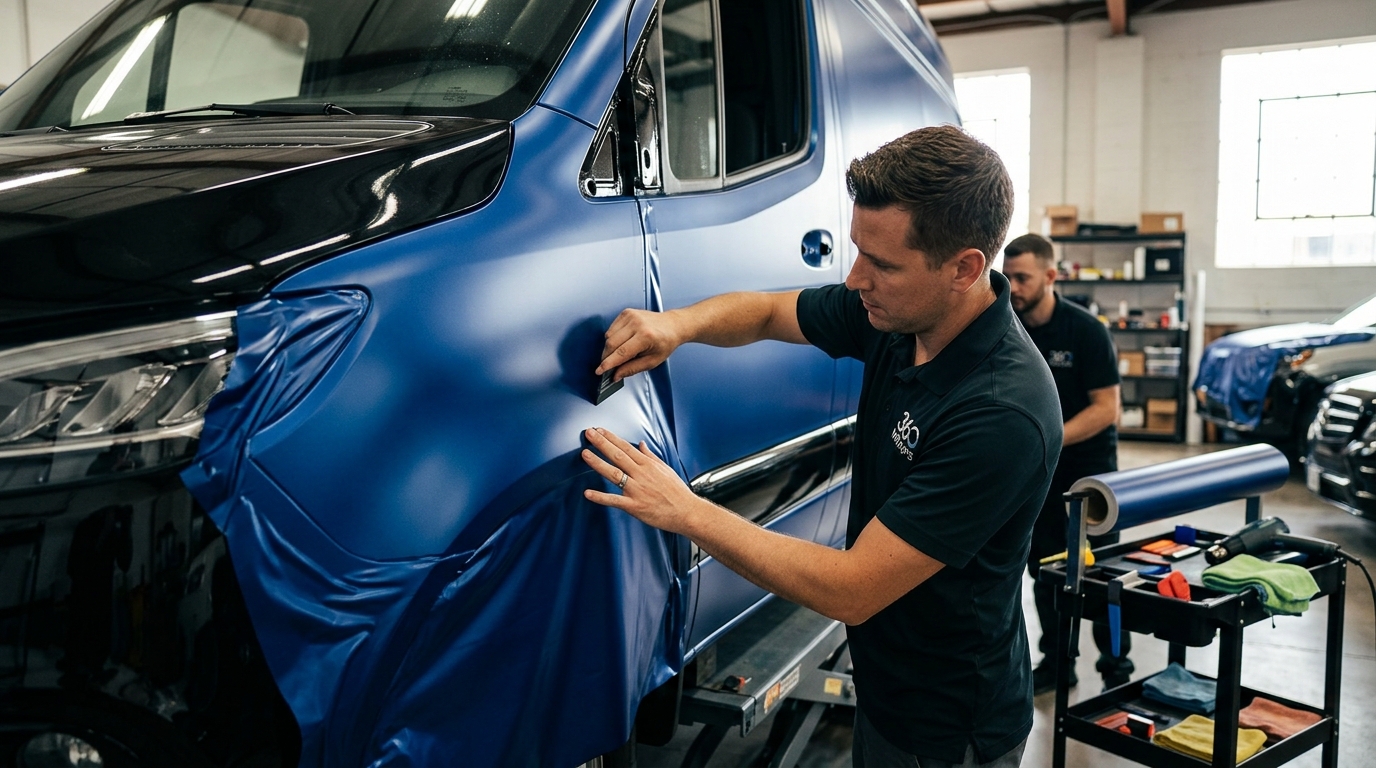
Executing a seamless wrap is technically demanding. Installers must use heat guns and specialized tools to stretch the vinyl over edges and into panel gaps. This process requires precision to avoid bubbling, wrinkling, or premature lifting. Because of the labor intensity, seamless wraps typically cost more than seamed alternatives. However, the investment pays off in the longevity of the finish, as there are fewer exposed edges for dirt and moisture to penetrate.
Seamed Wraps: The Budget-Friendly Alternative
Seamed wrapping involves cutting the vinyl along the natural body lines of the vehicle, such as the gap between the hood and the fender or along the rocker panels. This method is widely used in fleet branding where cost efficiency and speed are prioritized.
Cost Efficiency
The most significant advantage of seamed wraps is their lower cost. Because the installation process is faster and requires less specialized stretching techniques, labor hours are reduced. This makes seamed wraps an attractive option for large fleets with tight budgets. For example, a fleet of 50 delivery vans might opt for seamed wraps to keep annual branding costs manageable while still achieving high visibility.
Visibility of Seams
The trade-off for lower cost is the visibility of the seams. While skilled installers can minimize the appearance of seams by aligning them with natural body lines, they are still present upon close inspection. This can detract from the premium feel of the vehicle. However, for commercial vehicles that are primarily viewed from a distance or in motion, the seams are often less noticeable than they appear in static photos.
Cost-Benefit Breakdown
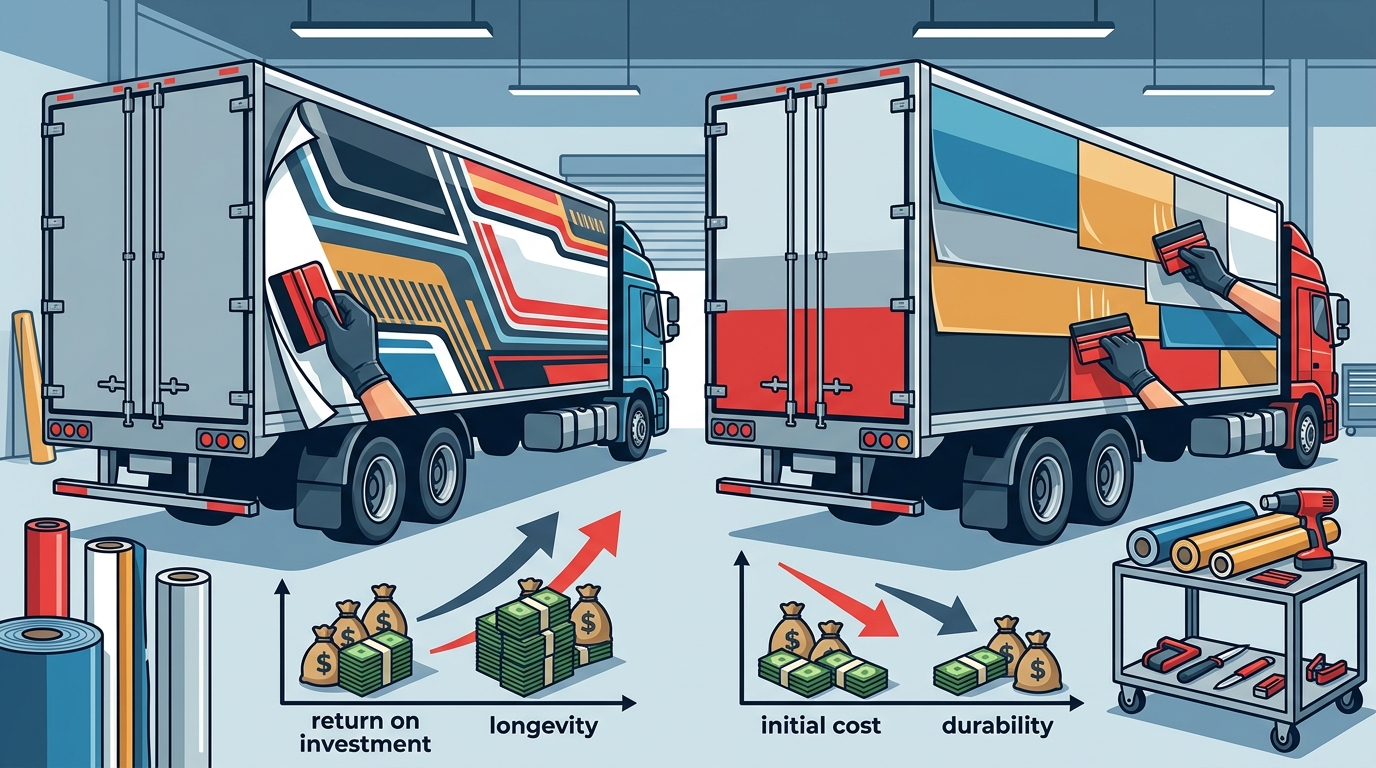
When evaluating the cost-benefit ratio, it is essential to look beyond the initial price tag. The total cost of ownership includes installation, maintenance, and the impact on brand perception.
| Factor | Seamless Wrap | Seamed Wrap |
|---|---|---|
| Initial Cost | Higher due to labor intensity | Lower due to faster installation |
| Aesthetic Quality | Factory-like, no visible lines | Visible seams along body lines |
| Durability | Higher, fewer exposed edges | Standard, edges may lift over time |
| Best Use Case | Luxury vehicles, executive fleets | Commercial fleets, budget projects |
| Brand Perception | Premium, high-end | Functional, utilitarian |
For businesses that rely on a premium brand image, the higher initial cost of a seamless wrap is often justified by the enhanced visual impact. Conversely, for high-volume fleets where the primary goal is visibility rather than luxury, seamed wraps offer a compelling return on investment.
Durability and Maintenance
Durability is a critical factor in the long-term cost-benefit analysis. Seamless wraps generally outperform seamed wraps in terms of longevity. Because there are no cut edges exposed to the elements, there is less risk of dirt accumulation and moisture ingress, which can cause the vinyl to lift or fade prematurely.
Seamed wraps, while durable, have exposed edges that are more susceptible to wear and tear. Over time, these edges may begin to lift, requiring touch-ups or reinstallation. Regular maintenance, such as washing and waxing, is essential for both types of wraps to preserve their appearance. However, seamless wraps require less frequent maintenance due to their superior edge protection.
At 360 Wraps, we use premium vinyl materials that are designed to withstand harsh weather conditions. Our color-managed output ensures that every panel lands consistent from press to peel, regardless of the installation method chosen. This commitment to quality is reflected in our 17 years of experience in the industry.
Key Takeaways
- Seamless wraps offer a premium, factory-like finish with no visible seams, making them ideal for luxury vehicles and high-end branding.
- Seamed wraps are more cost-effective and faster to install, making them suitable for large commercial fleets with budget constraints.
- Durability is generally higher for seamless wraps due to the lack of exposed edges, reducing long-term maintenance costs.
- Brand perception is significantly enhanced by seamless wraps, which convey professionalism and attention to detail.
- Installation complexity is greater for seamless wraps, requiring highly skilled technicians and more time.
- 360 Wraps has over 17 years of experience and a network of 3,000+ certified installers across all 50 states.
- Material quality is critical for both methods, with premium vinyl ensuring longevity and color consistency.
Frequently Asked Questions
What is the main difference between seamless and seamed vehicle wraps?
The main difference is that seamless wraps are installed by wrapping the vinyl around the edges of body panels, hiding the cut lines, while seamed wraps are cut along the natural body lines, leaving visible seams.
Are seamless vehicle wraps more expensive than seamed wraps?
Yes, seamless wraps are typically more expensive due to the increased labor time and technical skill required to install them without visible seams.
Which wrap type is better for a commercial fleet?
Seamed wraps are often preferred for commercial fleets due to their lower cost and faster installation time, especially when the vehicles are primarily viewed from a distance.
How long do seamless vehicle wraps last?
With proper maintenance and high-quality materials, seamless vehicle wraps can last between 5 to 7 years, depending on environmental conditions and driving habits.
Can seamed wraps look professional?
Yes, when installed by skilled technicians, seamed wraps can look professional and clean, especially when the seams are aligned with the vehicle's natural body lines.
Does 360 Wraps offer both seamless and seamed installation?
Yes, 360 Wraps offers both seamless and seamed installation services, leveraging our network of certified installers to provide the best solution for each client's needs.
What materials does 360 Wraps use for vehicle graphics?
360 Wraps uses premium vinyl materials that are color-managed and designed for durability, ensuring consistent finish and clean edges for both seamless and seamed applications.
Ready to Transform Your Fleet?
Whether you need a seamless wrap for a luxury vehicle or a seamed wrap for a large commercial fleet, 360 Wraps has the expertise to deliver exceptional results. Our team of designers, installers, and wrap specialists is ready to help you achieve your branding goals. Contact us today to get a quote and learn more about our services.
Get a Quote | Our Services | About Us | View Gallery | Join Installer Network