Commercial vehicle wraps are not just decorative; they are high-performance advertising assets that must withstand harsh environmental conditions. According to industry data, a properly maintained vehicle wrap can generate up to 70,000 impressions per month while protecting the underlying paint. However, the longevity of that investment depends entirely on the vinyl material selected. Choosing the wrong film can lead to premature fading, adhesive failure, or costly removal issues. This guide breaks down the critical material choices available to fleet managers and business owners. (Contact Us 360 Wraps)
Understanding Vinyl Material Types
The foundation of any successful vehicle wrap is the vinyl film itself. Not all vinyl is created equal, and the grade of material directly impacts how long your brand stays visible on the road. Understanding the difference between cast and calendered vinyl is the first step in making a smart investment. (About Us 360 Wraps)
Cast Vinyl: The Premium Standard
Cast vinyl is the industry standard for commercial fleets. Cast vinyl is a high-grade film produced by pouring a liquid PVC mixture onto a casting line and curing it. This process creates a film with exceptional conformability, meaning it can stretch and shrink to fit complex curves, rivets, and creases without lifting. For vehicles with aerodynamic shapes or intricate body panels, cast vinyl is the only reliable choice. It typically lasts between five and seven years, making it ideal for long-term fleet branding. (Services 360 Wraps)
Calendered Vinyl: The Budget Option
Calendered vinyl is manufactured by rolling the PVC mixture between heavy rollers. This method is less expensive but results in a thicker, less flexible film. Calendered vinyl is a cost-effective material designed for flat surfaces and short-term applications. It works well for box trucks, trailers, or vehicles with minimal curvature. However, it is prone to shrinking over time, which can cause edges to lift or the design to distort. It is generally recommended for a lifespan of three to five years. (360 Wraps Seamless Wraps)
Perforated Window Film
For vehicles that need to maintain visibility for the driver, perforated vinyl is essential. Perforated window film is a one-way vision material that allows drivers to see out while displaying graphics to the outside. This material is critical for safety compliance and is commonly used on the rear and side windows of delivery vans and buses. It requires specific installation techniques to ensure air bubbles do not form behind the film.
Durability and Lifespan Considerations
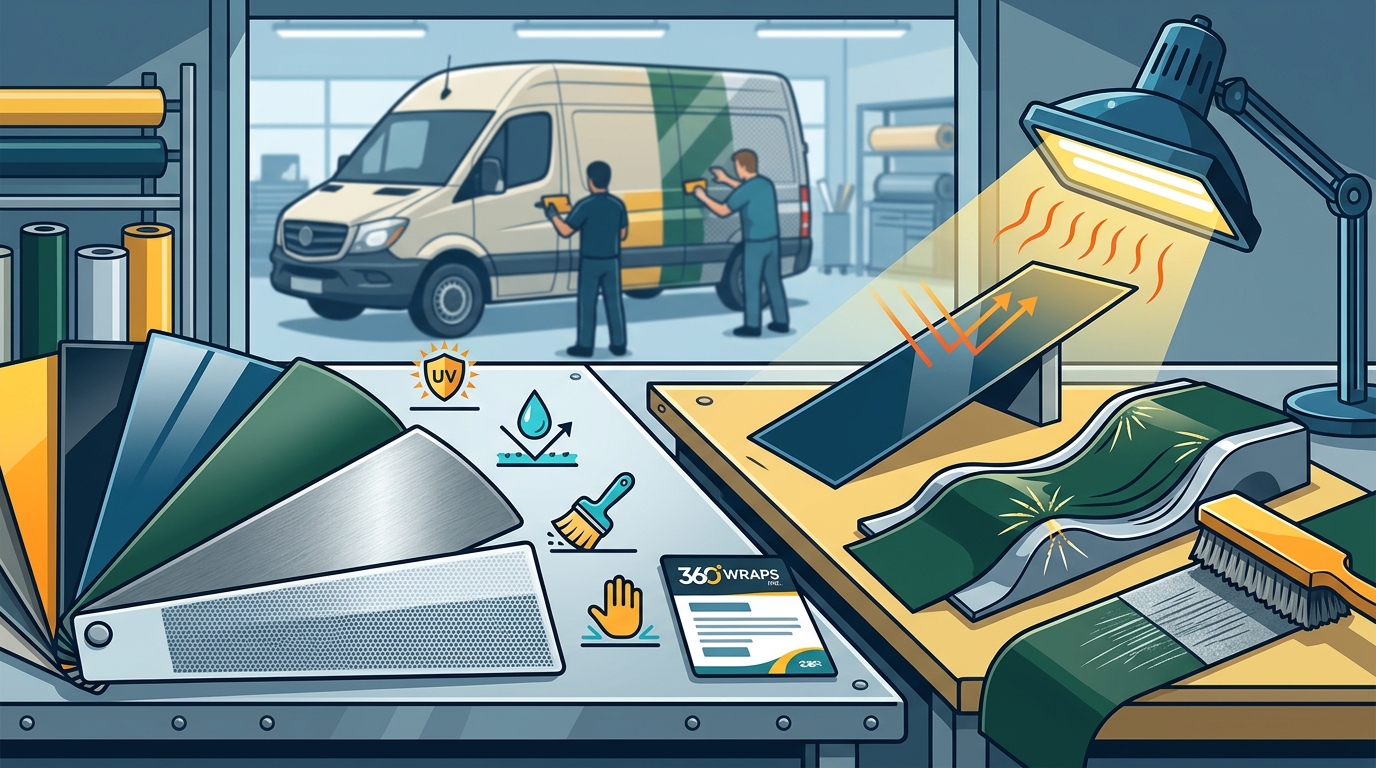
When selecting a material, you must consider the operational environment of your fleet. Vehicles operating in high-heat regions, such as the southern United States, face different challenges than those in colder climates. The material must resist UV radiation, temperature fluctuations, and chemical exposure.
UV Resistance and Color Fastness
Sunlight is the primary enemy of vehicle graphics. Prolonged UV exposure causes inks to fade and vinyl to become brittle. High-quality cast vinyl includes UV inhibitors that protect the graphic integrity for years. According to research on outdoor advertising durability, premium vinyl films retain color accuracy significantly longer than standard materials. If your fleet operates in direct sunlight for eight hours a day, investing in a premium UV-resistant film is non-negotiable.
Adhesive Performance
The adhesive layer determines how well the wrap sticks to the vehicle and how cleanly it removes later. Repositionable adhesives allow installers to adjust the film during application, reducing the risk of tearing. Permanent adhesives provide a stronger bond for long-term use. High-performance adhesives are engineered to withstand temperatures ranging from -40 to 200 degrees Fahrenheit. This range ensures that the wrap remains secure during winter freezing conditions and summer highway heat.
Surface Compatibility and Curvature
Not all vehicle surfaces are created equal. The texture, curvature, and condition of the underlying paint or metal affect which material will perform best. A mismatch between the material and the surface can lead to premature failure.
Conformability to Complex Shapes
Vehicles with sharp creases, rivets, and deep grooves require a material with high elongation properties. Cast vinyl can stretch up to 30 percent or more, allowing it to wrap around these complex geometries smoothly. Calendered vinyl, with its lower elongation, will struggle to conform to these shapes, often resulting in visible seams or lifting edges. For vehicles with complex body lines, cast vinyl is the only viable option for a seamless finish.
Surface Preparation and Primers
Even the best material will fail if applied to a dirty or uneven surface. The vehicle must be thoroughly cleaned and decontaminated before installation. For older vehicles with textured paint or previous wraps, a primer may be necessary to ensure adhesion. Proper surface preparation is the most critical step in ensuring wrap longevity. Ignoring this step can void warranties and lead to costly re-wraps.
Installation and Maintenance Requirements
The choice of material also dictates the installation process and the ongoing maintenance required to keep the fleet looking professional. Professional installation is key to maximizing the lifespan of the wrap.
Professional Installation vs. DIY
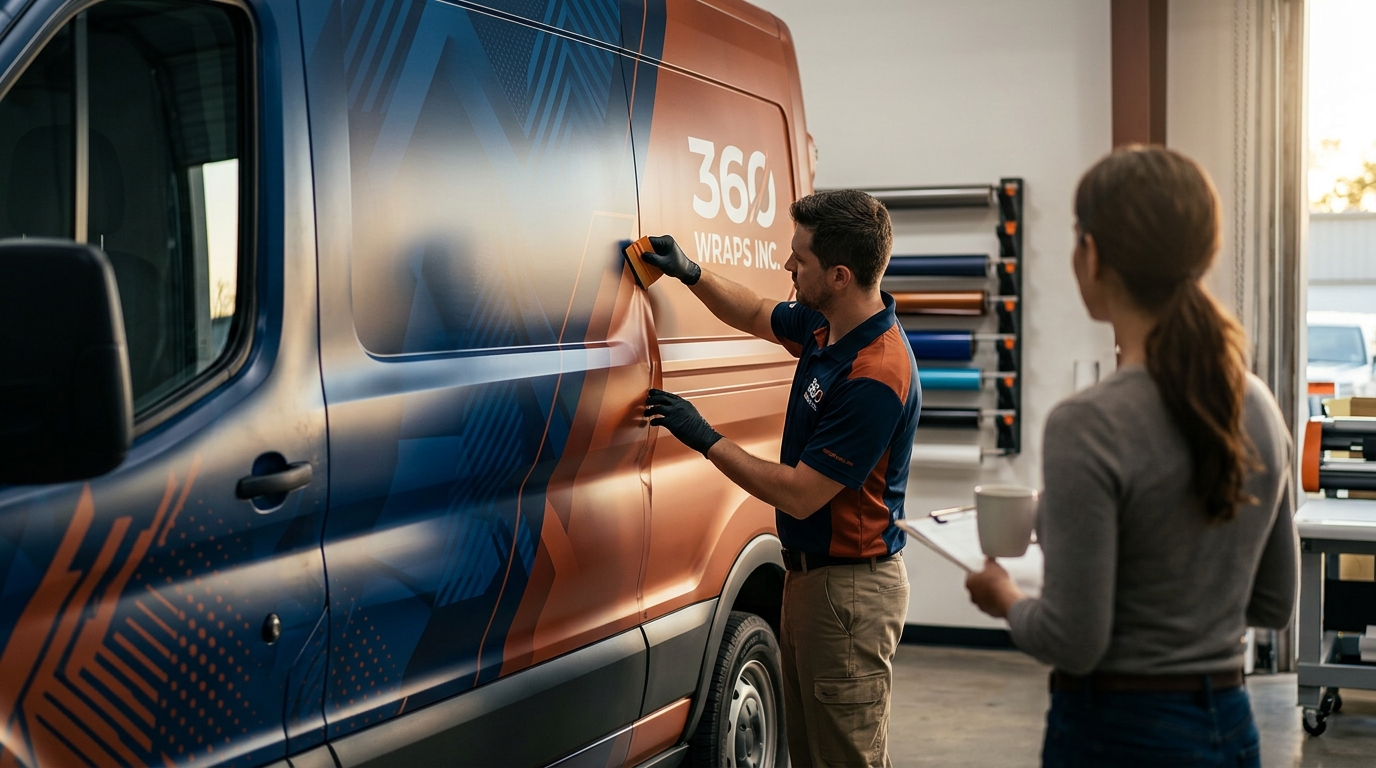
While DIY kits are available for personal vehicles, commercial fleets should always use professional installers. Professional installers have the training and tools to handle complex materials like cast vinyl. Professional installation ensures that the wrap is applied with the correct tension and alignment. Mistakes in DIY applications can lead to bubbles, wrinkles, and adhesive failure, which are difficult and expensive to fix.
Washing and Care Guidelines
Proper maintenance extends the life of the wrap. Hand washing is recommended over automatic car washes, which can use harsh brushes that scratch the film. Use a mild soap and a soft microfiber cloth. Avoid high-pressure washers directly on the edges of the wrap to prevent lifting. Regular cleaning removes road grime and bird droppings that can etch into the vinyl if left untreated.
Cost Analysis and ROI
Choosing the right material involves balancing upfront costs with long-term value. While cast vinyl is more expensive initially, its durability and visual quality often result in a lower cost per year of service.
Comparing Material Costs
| Material Type | Lifespan | Best Use Case | Relative Cost |
|---|---|---|---|
| Cast Vinyl | 5-7 Years | Complex Curves, Long-Term Fleet | High |
| Calendered Vinyl | 3-5 Years | Flat Surfaces, Short-Term | Low |
| Perforated Film | 3-5 Years | Window Graphics, One-Way Vision | Medium |
| Textured Vinyl | 4-6 Years | Specialty Finishes, Carbon Fiber Look | High |
Return on Investment
A vehicle wrap is a mobile billboard with a cost per thousand impressions (CPM) significantly lower than traditional advertising. According to industry benchmarks, the average cost per thousand impressions for a vehicle wrap is approximately $4. By choosing a durable material that lasts longer, you reduce the frequency of re-wrapping, thereby increasing the overall ROI of your advertising spend.
Key Takeaways
- Cast Vinyl is Premium: Use cast vinyl for complex curves and long-term fleet branding to ensure durability and a seamless finish.
- Calendered Vinyl is Budget-Friendly: Opt for calendered vinyl for flat surfaces and short-term campaigns to save on initial costs.
- UV Resistance is Critical: High-quality UV inhibitors prevent fading and keep your brand colors vibrant for years.
- Professional Installation Matters: Expert installers ensure proper tension and alignment, preventing premature failure.
- Maintenance Extends Life: Regular hand washing and avoiding high-pressure edges keep the wrap looking new.
- ROI is High: Vehicle wraps offer a low cost per thousand impressions compared to other advertising channels.
- Surface Prep is Key: Thorough cleaning and priming are essential for adhesion and longevity.
Frequently Asked Questions
How long does a commercial vehicle wrap last?
A commercial vehicle wrap typically lasts between three and seven years, depending on the material type and environmental conditions. Cast vinyl generally lasts longer than calendered vinyl.
Can I wrap a vehicle with textured paint?
Yes, but it requires careful preparation. Textured paint can show through the wrap, so a primer or multiple layers of film may be needed to achieve a smooth finish.
Is perforated vinyl safe for drivers?
Yes, perforated vinyl is designed for one-way vision, allowing drivers to see out clearly while displaying graphics to the outside. It meets safety standards for visibility.
How much does a commercial vehicle wrap cost?
The cost varies based on vehicle size, material type, and design complexity. Full wraps are more expensive than partial wraps but offer greater advertising coverage.
Can I remove a vehicle wrap myself?
While it is possible, it is not recommended. Professional removal ensures that the adhesive is removed cleanly without damaging the underlying paint.
What is the difference between cast and calendered vinyl?
Cast vinyl is thinner, more flexible, and durable, making it ideal for complex curves. Calendered vinyl is thicker and less flexible, suitable for flat surfaces and shorter durations.
Do you offer nationwide fleet branding?
Yes, we provide coast-to-coast consistency for fleet branding, ensuring brand colors and body placement are accurate on every vehicle across all 50 states.
Get Your Fleet Wrapped
Choosing the right material is the first step toward a successful fleet branding campaign. At 360 Wraps, we specialize in nationwide fleet branding, ensuring that your brand looks consistent and professional on every vehicle. Whether you need a single vehicle wrapped or a thousand, our team of designers and installers is ready to help. Get a quote today to start transforming your fleet into a mobile advertising powerhouse.