Selecting the correct vinyl substrate directly impacts fleet longevity, brand visibility, and total cost of ownership. Industry data shows that properly specified commercial wraps deliver an average of 5 to 7 years of outdoor durability while generating millions of daily impressions per vehicle. Businesses that match material specifications to their operational environment consistently report higher retention rates and lower replacement costs. This guide breaks down the exact selection criteria you need to evaluate before committing to a fleet project.
Cast Versus Calendered Vinyl
The foundational decision involves choosing between cast and calendered substrates. Cast vinyl is a flexible polymer film manufactured through a liquid casting process that conforms to complex vehicle curves without memory. Calendered vinyl is a rigid plastic sheet produced by rolling raw materials between heavy cylinders, designed for flat or gently curved surfaces. Fleet managers must match the substrate to the vehicle geometry to prevent edge lifting and premature failure.
Cast materials stretch uniformly during application, allowing installers to heat-form around bumpers, mirrors, and door handles. Calendered films resist stretching, which makes them ideal for box trucks, flatbed trailers, and simple panel applications. Choosing the wrong substrate creates tension points that eventually crack under road vibration. Your project scope should dictate the material tier before pricing discussions begin.
Climate and Environmental Resistance
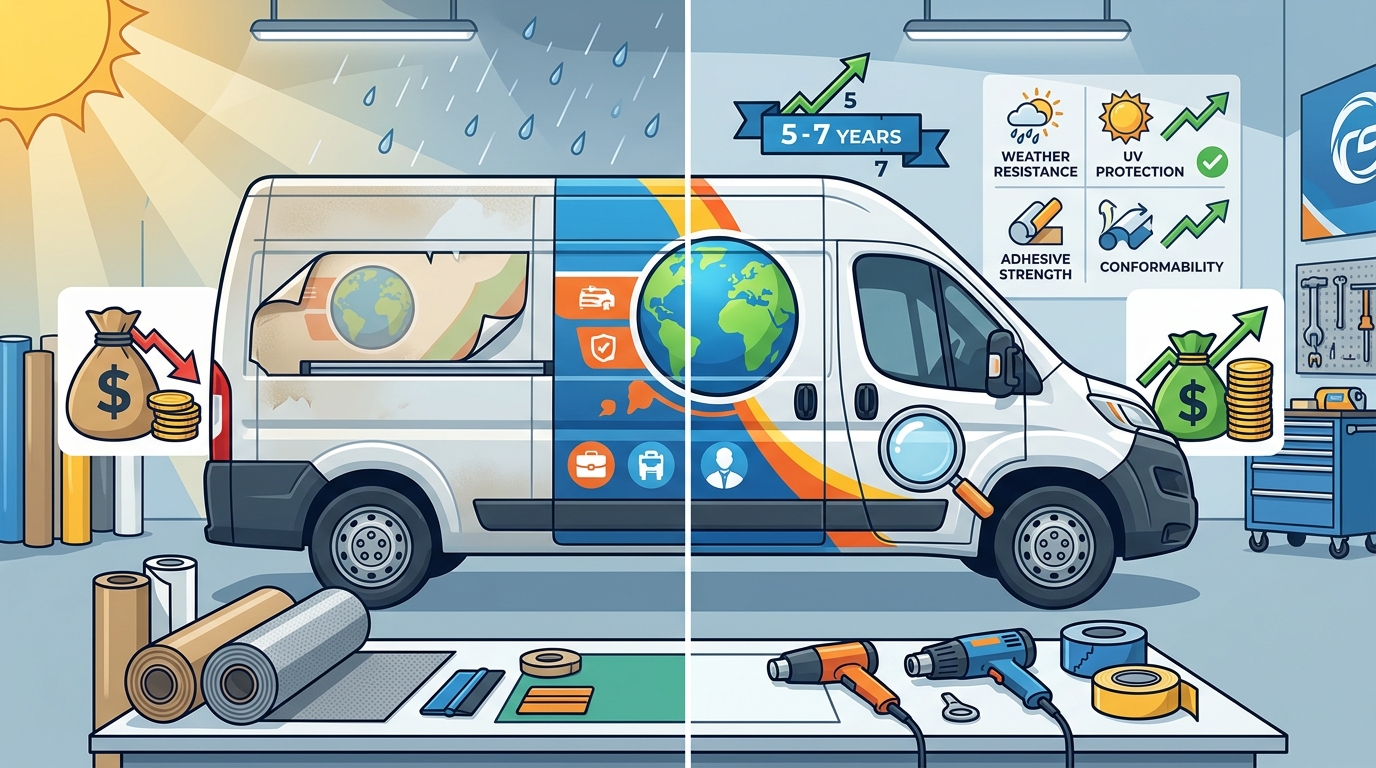
Geographic operating conditions dictate the required adhesive chemistry and topcoat durability. Vehicles stationed in high-UV regions require UV-resistant clear coats to prevent color fading and polymer degradation. Fleet operations in coastal zones need salt-resistant adhesives to avoid corrosion along panel seams. Extreme temperature fluctuations cause standard films to expand and contract at different rates than factory paint.
High-performance wraps incorporate anti-graffiti topcoats that resist chemical solvents and abrasive cleaning agents. These coatings allow routine pressure washing without compromising adhesion or gloss retention. Fleet managers operating in harsh environments should prioritize materials rated for extended outdoor exposure. Matching climate requirements to material specifications eliminates premature replacement cycles.
Brand and Color Management
Consistent color reproduction across diverse vehicle models requires precise spectral matching. Fleet branding is the systematic application of corporate identity elements across multiple vehicles to ensure coast-to-coast consistency. Professional providers utilize spectrophotometers to measure factory paint values and match them to available vinyl formulations. This process eliminates visible shade variations between older and newer fleet additions.
Custom color matching services allow businesses to replicate exact brand guidelines without relying on standard catalog options. Advanced formulation techniques ensure that dark hues, metallic finishes, and high-contrast graphics maintain visual integrity. Color stability directly impacts brand recognition and professional perception. Investing in precise matching protocols protects marketing investments over the long term.
Installation and Warranty Standards
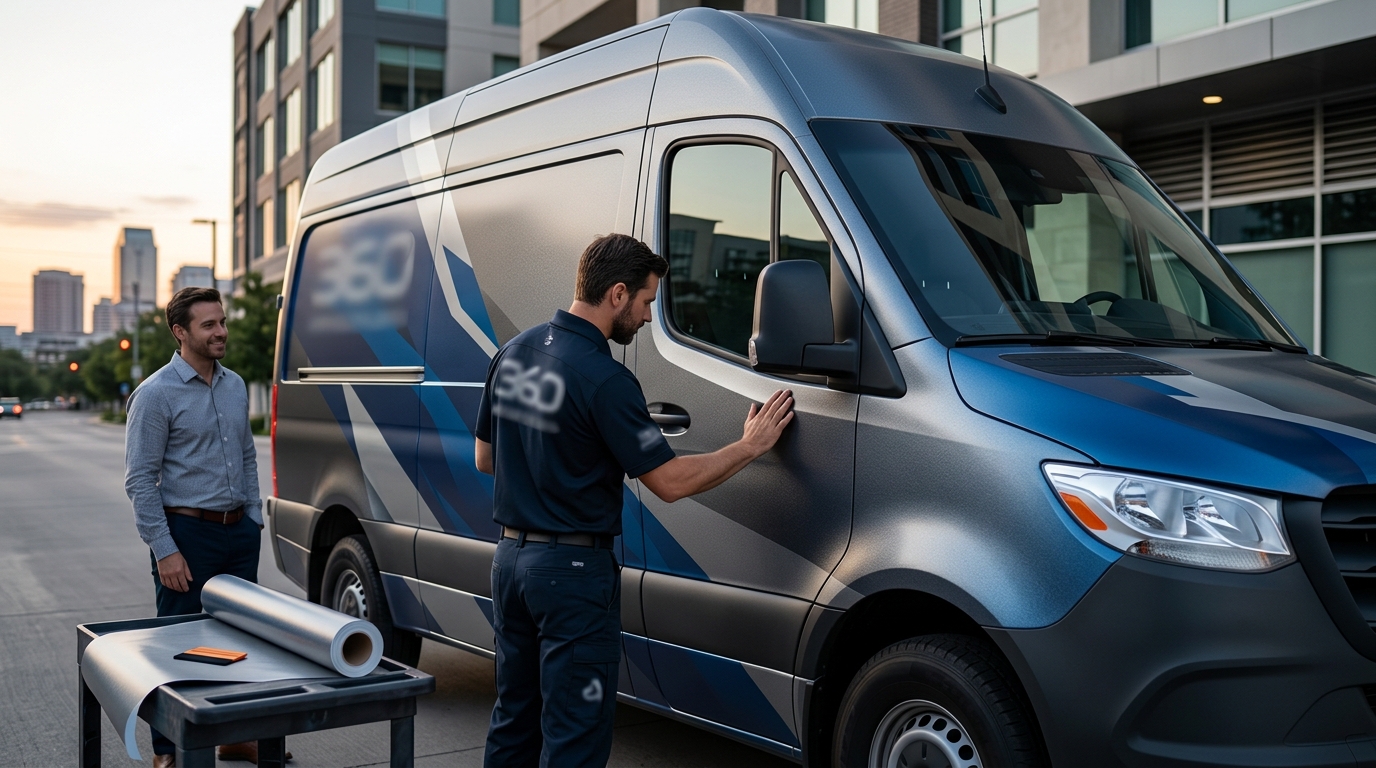
Material quality means nothing without certified installation protocols. Professional wrapping requires temperature-controlled environments, specialized squeegees, and precision cutting techniques. Reputable providers maintain vetted installer networks that follow strict quality control checklists. These standards prevent dust entrapment, misaligned seams, and adhesive failure.
Warranty coverage varies significantly between material grades and installation quality. Premium cast films typically carry extended manufacturer guarantees that cover fading, cracking, and adhesive failure. Fleet operators should verify warranty terms before approving project budgets. Proper installation documentation ensures seamless claims processing if defects emerge during the operational lifecycle.
Cost Analysis and Lifecycle Value
Initial material costs rarely reflect the true financial impact of a wrap project. Businesses must evaluate total cost of ownership rather than upfront pricing. Premium substrates cost more initially but deliver extended service life and reduced maintenance expenses. Fleet managers who prioritize durability consistently achieve lower cost-per-impression metrics.
Material selection also influences removal costs and paint preservation. High-quality films release cleanly without damaging factory finishes. This feature protects asset resale values and simplifies future rebranding initiatives. Strategic material investment aligns directly with long-term operational efficiency and brand consistency.
Material Selection Summary
| Material Type | Best Use Case | Durability Range | Cost Tier |
|---|---|---|---|
| Cast Vinyl | Sedans, SUVs, complex curves | 5 to 7 years | Premium |
| Calendered Vinyl | Box trucks, flat panels | 3 to 5 years | Standard |
| Anti-Graffiti Film | Urban delivery fleets | 4 to 6 years | Mid-Range |
| Custom Color Match | Brand-critical fleets | 5 to 7 years | Premium |
Key Takeaways
- Cast vinyl conforms to complex curves without memory, making it ideal for passenger vehicles.
- Calendered vinyl remains rigid and cost-effective for flat panel applications like box trucks.
- UV-resistant topcoats prevent color fading in high-sunlight operating regions.
- Precise spectral matching ensures consistent brand colors across mixed vehicle models.
- Certified installation networks prevent edge lifting and adhesive failure.
- Extended manufacturer warranties protect fleet investments against premature degradation.
- Total cost of ownership favors premium substrates for long-term operational efficiency.
Frequently Asked Questions
Can I wrap a vehicle with existing factory paint damage?
Wrapping over rust, deep scratches, or peeling clear coat will accelerate failure. Professional installers require smooth, clean surfaces to ensure proper adhesion. Minor surface imperfections can be filled and sanded before application. Severe damage must be repaired to factory standards before wrapping begins.
How does wrap thickness affect durability?
Thicker films generally resist abrasion and chemical exposure better than standard options. Most commercial wraps range from 2.5 to 4 mils in thickness. Thicker substrates provide additional protection against road debris and routine washing. Thickness specifications should align with your expected operational lifespan.
Will wrapping void my vehicle manufacturer warranty?
Vehicle wraps do not affect factory powertrain or component warranties. The Magnuson-Moss Warranty Act protects consumers from blanket warranty denials. Dealerships cannot void coverage simply because a wrap exists. Removal of the film restores the original paint condition without penalty.
How long does the installation process take?
Standard passenger vehicles require two to three business days for complete wrapping. Larger commercial trucks and fleet units require additional time for panel alignment. Custom graphics and multi-layer applications extend project timelines accordingly. Professional providers schedule installations to minimize vehicle downtime.
Can I remove the wrap myself without damaging paint?
DIY removal often results in adhesive residue, paint lifting, or surface damage. Professional removal utilizes controlled heat and specialized solvents to release the film cleanly. Certified installers guarantee paint-safe extraction when following proper protocols. Fleet managers should always schedule professional removal to protect asset values.
What maintenance routine preserves wrap longevity?
Regular washing with pH-neutral cleaners prevents contaminant buildup and adhesive degradation. Avoid abrasive brushes, wax-based polishes, and high-pressure nozzles near edges. Automated car washes with soft brushes are generally safe for properly installed wraps. Consistent maintenance extends the operational lifespan significantly.
Next Steps
Selecting the correct material requires professional assessment of your fleet composition, operating environment, and brand requirements. Our team evaluates every project to match substrates with your exact operational goals. We do not charge design time and focus on building long-lasting relationships. Visit our quote page to schedule a comprehensive fleet assessment. Our specialists will recommend the optimal material tier for your specific use case. Contact our team today to secure your project timeline and pricing.