
Commercial fleet operators now recognize that strategic vehicle graphics deliver measurable returns on advertising spend. Industry data shows that a single wrapped van generates approximately 7,000 daily impressions, transforming static assets into mobile billboards. Selecting the correct vinyl substrate directly impacts longevity, visual fidelity, and total cost of ownership. Business leaders must evaluate polymer composition, adhesive chemistry, and installation protocols before committing to a fleet upgrade. This guide breaks down the technical requirements for selecting the right material for a commercial vehicle wrap.
Understanding Vinyl Base Types
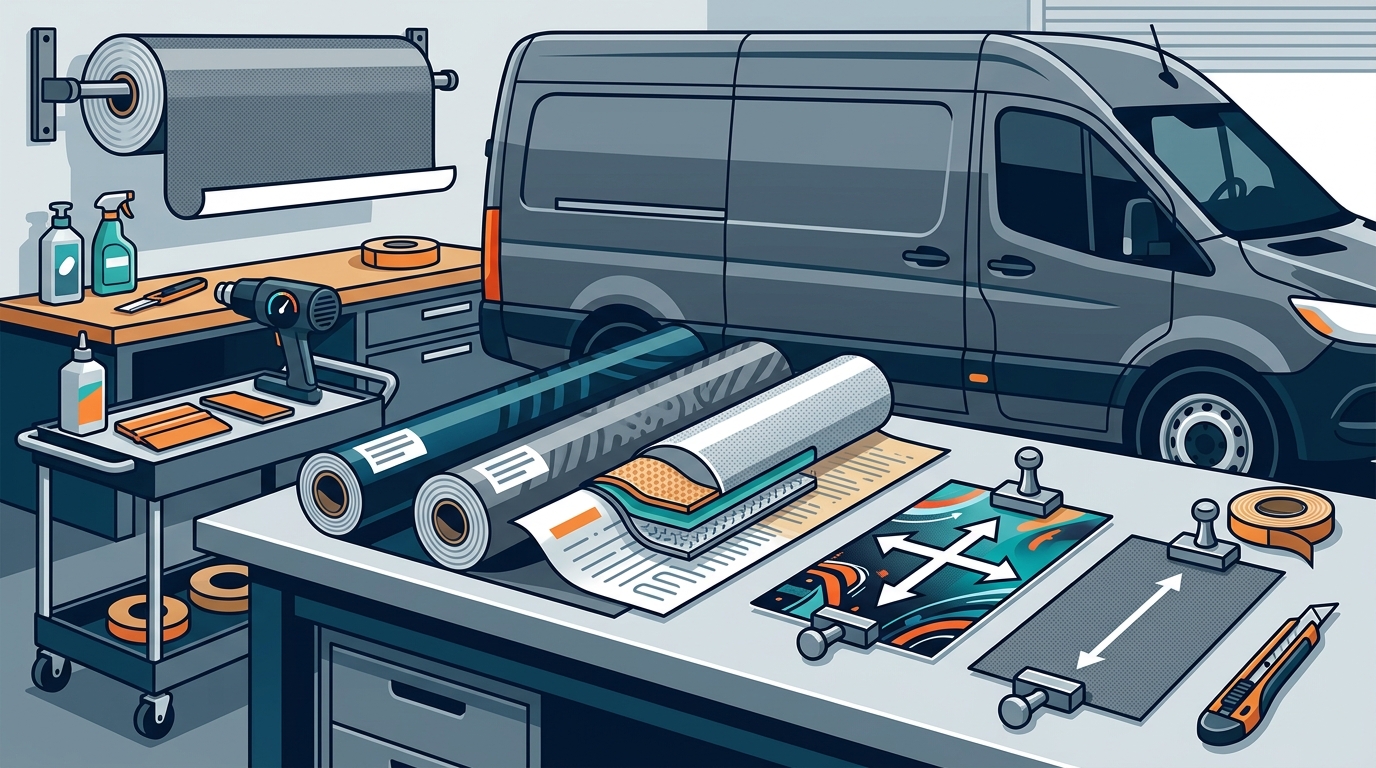
Vehicle wrap vinyl falls into two primary manufacturing categories. Cast vinyl is engineered through a liquid polymer casting process that creates a thin, highly conformable film. Calendered vinyl is produced by mechanically stretching and rolling polymer sheets into precise thicknesses. Fleet managers must understand this distinction before approving procurement orders. Cast vinyl delivers superior conformability around complex curves and sharp body lines. Calendered vinyl offers a cost-effective solution for flat surfaces and short-term promotional campaigns. Your operational timeline dictates which polymer structure serves your business best.
Evaluating Durability and Weather Resistance
Environmental exposure directly degrades unprotected vehicle graphics. UV radiation breaks down polymer chains, causing fading and embrittlement. Moisture infiltration compromises adhesive bonds and triggers edge lifting. Premium cast films incorporate UV inhibitors and protective topcoats to extend service life. Most commercial-grade materials withstand five to seven years of continuous outdoor exposure. Fleet operators operating in high-sun regions should prioritize materials with enhanced weatherability ratings. Regular washing protocols further preserve gloss retention and color vibrancy.
Matching Material to Fleet Use Cases
Different operational environments demand specific material performance characteristics. Delivery vans navigating urban traffic require high conformability and impact resistance. Heavy equipment operating in rural zones needs thicker substrates that resist stone chips and abrasion. Refrigerated transport vehicles benefit from materials that tolerate extreme temperature fluctuations without adhesive failure. You must align your substrate selection with daily driving conditions and cargo requirements. A mismatched material accelerates wear and increases long-term replacement costs.
The Role of Adhesive Technology
Adhesive chemistry determines how securely graphics bond to factory paint or existing coatings. Pressure-sensitive acrylic adhesives provide reliable initial tack and long-term stability. Repositionable adhesives allow installers to adjust positioning during application without damaging the substrate. Permanent adhesives create a permanent bond that resists peeling under high wind pressure. Fleet managers should verify that selected materials utilize removable adhesive formulations. This ensures clean removal without paint damage during future rebranding cycles. Proper adhesive selection protects your asset value and simplifies lifecycle management.
Color Management and Brand Consistency
Brand identity relies on precise color reproduction across every vehicle in your fleet. Cast vinyl accepts complex color matching and gradient applications with exceptional accuracy. Calendered vinyl may exhibit slight color variation between production batches. Professional design teams utilize standardized color libraries to maintain visual consistency. You must verify that your chosen material supports Pantone matching and custom color formulation. Consistent color application reinforces brand recognition and builds consumer trust. Inconsistent graphics undermine professional credibility and dilute marketing impact.
Installation Standards and Warranty Requirements
Material quality means nothing without professional installation protocols. Certified installers follow strict environmental controls, surface preparation steps, and application techniques. Manufacturer warranties typically cover five to seven years against fading, delamination, and bubbling. You must verify that your chosen material carries a legitimate manufacturer warranty. Warranty terms often require installation by certified professionals to remain valid. Partnering with experienced installers ensures compliance with warranty requirements. This protects your investment and provides peace of mind during the operational lifecycle.
Material Comparison Matrix
| Material Type | Expected Lifespan | Best Application Scenario | Recommended Path |
|---|---|---|---|
| Premium Cast Vinyl | 5 to 7 years | Complex curves, long-term branding | Vehicle Graphics |
| Standard Calendered Vinyl | 3 to 5 years | Flat surfaces, short-term campaigns | Request a Quote |
| Textured/Patterned Films | 4 to 6 years | Heavy equipment, industrial fleets | Find an Installer |
| Paint Protection Film | 7 to 10 years | High-impact zones, clear coat preservation | View Gallery |
Key Takeaways
- Premium cast vinyl delivers superior conformability and extends fleet graphics to seven years.
- UV inhibitors and protective topcoats prevent fading and polymer degradation.
- Pressure-sensitive acrylic adhesives ensure secure bonding without paint damage.
- Pantone color matching maintains brand consistency across thousands of vehicles.
- Certified installation protocols are required to activate manufacturer warranties.
- Environmental exposure directly impacts substrate selection and lifecycle costs.
- Professional design teams eliminate batch color variation and ensure visual accuracy.
Frequently Asked Questions
What is the difference between cast and calendered vinyl?
Cast vinyl is manufactured through a liquid polymer casting process that creates a thin, highly conformable film. Calendered vinyl is produced by mechanically stretching and rolling polymer sheets into precise thicknesses. Cast vinyl conforms better to complex curves, while calendered vinyl suits flat surfaces.
How long does a commercial vehicle wrap typically last?
Premium cast materials withstand five to seven years of continuous outdoor exposure. Calendered options generally last three to five years under identical conditions. Environmental factors and maintenance routines directly influence actual service life.
Can vehicle wrap material damage factory paint?
High-quality materials utilize removable adhesive formulations that protect original paint. Proper installation and timely removal prevent adhesive residue and surface damage. Fleet operators should always verify adhesive type before approving procurement.
Do manufacturers require professional installation for warranty coverage?
Most manufacturers mandate installation by certified professionals to validate warranty terms. DIY application voids coverage and eliminates long-term performance guarantees. Certified installers follow strict environmental controls and application protocols.
How do I ensure color consistency across a large fleet?
Professional design teams utilize standardized color libraries to maintain visual consistency. You must verify that your chosen material supports Pantone matching and custom formulation. Consistent color application reinforces brand recognition and builds consumer trust.
What maintenance routines preserve wrap longevity?
Regular washing with pH-neutral cleaners prevents contaminant buildup and preserves gloss. Automated car washes with stiff brushes should be avoided to prevent edge lifting. Proper maintenance routines extend service life and protect your investment.
Ready to Upgrade Your Fleet Graphics?
Selecting the right material for a commercial vehicle wrap requires careful evaluation of polymer composition, adhesive chemistry, and installation protocols. You must align your substrate selection with daily driving conditions and cargo requirements. Partner with experienced professionals who prioritize brand consistency and warranty compliance. Visit our Quote Page to schedule a consultation. Our team handles design, production, and nationwide installation with zero design time charges. Transform your fleet into a high-performance advertising asset today.