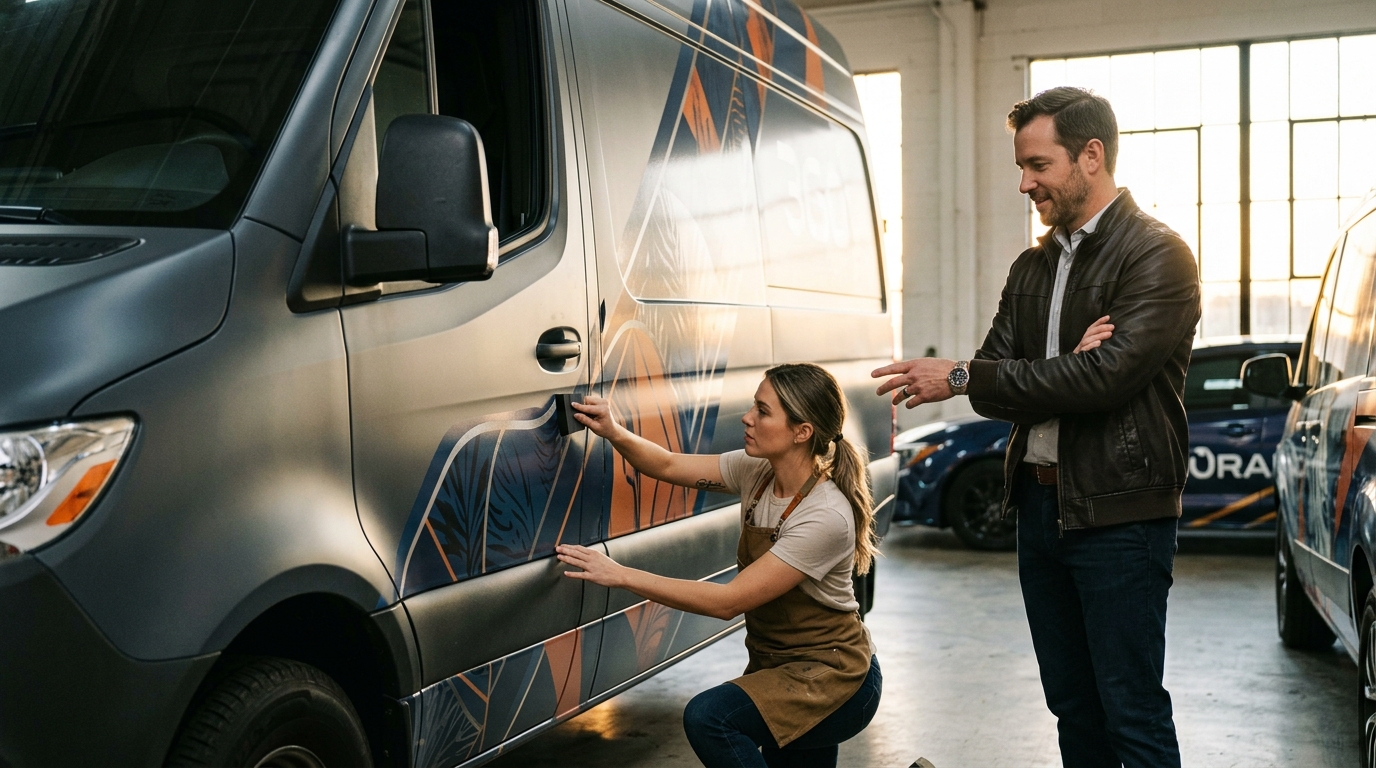
Mobile advertising delivers measurable impressions that traditional static billboards cannot match. According to industry tracking data, a single wrapped vehicle generates roughly daily impressions across urban corridors. This volume transforms everyday commutes into continuous brand exposure. Businesses that prioritize strategic vehicle wrap design capture consistent audience attention without recurring media buy costs. The process requires precise graphic scaling, durable material selection, and strict compliance with local traffic regulations. Organizations that execute these fundamentals consistently outperform competitors in brand recall metrics.
Strategic Layout Planning
Vehicle wrap design is the systematic process of translating static brand assets into three-dimensional automotive surfaces. Successful campaigns begin with a complete vehicle template mapping. Designers must account for door seams, wheel arches, and mirror housings before placing critical messaging. Viewport optimization ensures that logos and contact information remain visible when the vehicle is viewed from standard traffic angles. Negative space utilization prevents visual clutter and directs driver attention to core value propositions. Companies that partner with professional graphic teams eliminate guesswork during the initial layout phase.
Viewport Optimization
Automotive surfaces curve sharply around bumpers and hoods. Designers must flatten these curves digitally to prevent distortion during application. High-resolution vector files guarantee crisp text rendering at highway speeds. Marketing teams should prioritize large typography over intricate illustrations. Drivers process visual information in fractions of a second. Clear messaging windows increase brand retention by measurable margins.
Negative Space Utilization
Empty panels serve as visual breathing room for passing traffic. Overcrowding a vehicle with competing offers reduces overall campaign effectiveness. Strategic spacing allows the eye to rest and absorb primary messaging. This approach aligns with modern minimalist advertising standards. Clean layouts consistently outperform busy designs in controlled testing environments.
Material Selection and Durability
Cast vinyl film is a premium polyvinyl chloride material engineered for long-term conformability and UV resistance. Fleet managers must evaluate climate exposure, mileage volume, and wash frequency before selecting substrates. Premium cast films accommodate complex curves without edge lifting or premature fading. Budget calendered options work adequately for flat panels but lack long-term durability. Organizations that invest in high-grade materials protect their initial graphic investment over multiple years.
Cast Versus Calendered Films
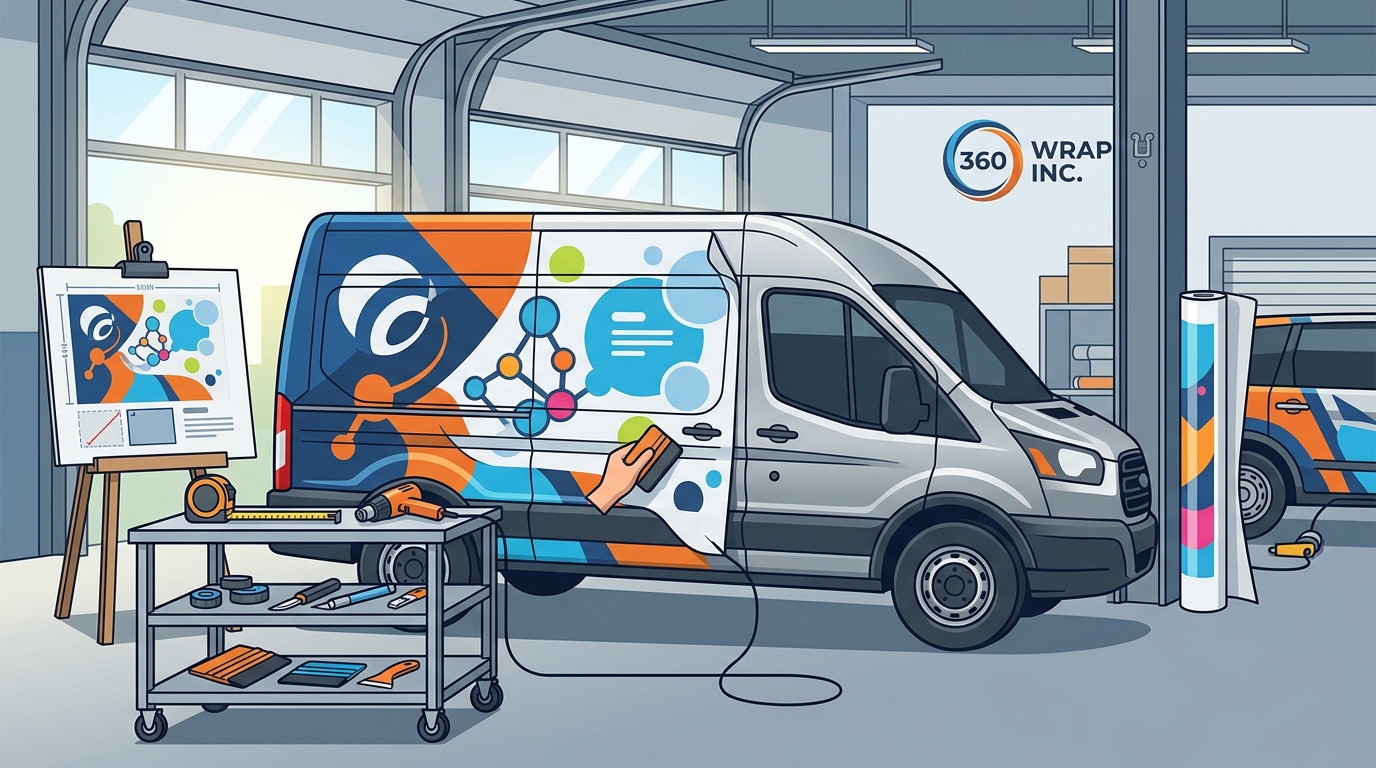
Cast films stretch and recover without memory, allowing seamless application around rivets and door handles. Calendered films remain rigid and are better suited for flat commercial vans. The choice directly impacts warranty coverage and visual longevity. Premium substrates resist solvents, road grime, and harsh weather conditions. Selecting the correct material tier prevents costly reprints and premature removal.
Color Psychology and Brand Alignment
High-contrast palettes drive immediate visual recognition on moving vehicles. Marketing data shows that bold primary colors increase brand recall by nearly thirty percent compared to muted tones. Color psychology dictates how audiences emotionally respond to specific hues. Red commands urgency and action. Blue establishes trust and stability. Green signals sustainability and growth. Teams that align wrap colors with existing brand guidelines maintain cohesive market positioning.
High-Contrast Palettes
Contrast ratios determine how quickly a vehicle registers in peripheral vision. Dark backgrounds paired with bright typography maximize readability during daylight hours. Reflective finishes enhance nighttime visibility without compromising daytime aesthetics. Color matching services guarantee exact Pantone reproduction across every unit. Consistent palettes reinforce brand identity across diverse geographic markets.
Regulatory Compliance and Safety
Fleet branding consistency is the operational standard that guarantees identical color matching and graphic placement across multiple vehicles. Local transportation departments enforce specific rules regarding window coverage and clear glass requirements. Excessive tinting or opaque window films can trigger citations or failed safety inspections. Designers must reserve transparent zones for driver visibility and license plate visibility. Compliance checks prevent costly fines and ensure uninterrupted fleet operations.
Window Transparency Rules
State regulations typically mandate a minimum percentage of transparent material for driver sightlines. Designers must map these transparent zones before finalizing artwork. Perforated window films allow full graphic coverage while preserving outward visibility. These specialized materials balance marketing impact with legal safety requirements. Consulting local department of transportation guidelines prevents deployment delays.
Fleet Deployment and Consistency
Nationwide scaling requires a centralized approval workflow and standardized installation protocols. Companies that manage large fleets benefit from dedicated project managers who track every unit through production. Coast-to-coast consistency ensures that a customer in Seattle receives the same visual experience as a customer in Miami. Centralized color management systems prevent batch variations across different printing facilities. This discipline transforms scattered vehicles into a unified mobile billboard network.
Nationwide Scaling
Large-scale deployments demand rigorous quality control checkpoints. Pre-installation proofs verify color accuracy and text legibility. Certified installers follow strict temperature and humidity guidelines during application. Post-installation inspections catch minor alignment issues before vehicles enter active service. This structured approach minimizes downtime and maximizes campaign ROI.
Wrap Type Comparison Matrix
| Wrap Category | Best Use Case | Estimated Lifespan | Strategic Value |
|---|---|---|---|
| Full Vehicle Graphics | Maximum brand exposure and complete surface coverage | Five to seven years | Premium fleet branding |
| Partial Panel Graphics | Budget-conscious campaigns targeting specific demographics | Three to five years | Targeted advertising |
| Window Perforation | Transit buses and delivery vans requiring outward visibility | Four to six years | Compliance-focused design |
| Color Change Films | Preserving original paint while testing new brand aesthetics | Five to seven years | Experimental branding |
Key Takeaways
- Family-owned operations since 2007 provide seventeen years of industry expertise.
- Single vehicles generate approximately 40,000 daily impressions in metropolitan zones.
- Professional teams eliminate design time charges for qualifying fleet projects.
- Coast-to-coast consistency protocols maintain identical color matching across all fifty states.
- Certified installers handle complex curves without edge lifting or premature fading.
- Centralized project management tracks thousands of units through production pipelines.
- Workplace graphics extend brand consistency from road surfaces to conference rooms.
Frequently Asked Questions
How long does the vehicle wrap design process take?
Standard projects require five to seven business days for initial proofs and revisions. Complex fleet campaigns may require additional time for template mapping and color matching. Rush production options are available for urgent deployment schedules.
Can I update my existing wrap graphics?
Partial updates are possible when only specific panels require messaging changes. Full reprints ensure complete color consistency across the entire vehicle. Teams that specialize in rebranding handle these transitions seamlessly.
What warranty coverage applies to vehicle wraps?
Premium cast films typically carry manufacturer warranties ranging from three to seven years. Coverage protects against fading, delamination, and bubbling under normal operating conditions. Proper maintenance and regular washing extend overall lifespan significantly.
Do you handle local permit applications?
Administrative support varies by jurisdiction and fleet size. Many municipalities require basic registration forms for commercial advertising vehicles. Dedicated account managers can guide clients through regional compliance requirements.
How do you ensure color accuracy across multiple vehicles?
Centralized color management systems calibrate every printer to exact Pantone standards. Batch testing verifies consistency before full production begins. This discipline prevents visible shade variations across large deployments.
What maintenance routines preserve wrap longevity?
Hand washing with pH-neutral cleaners prevents abrasive damage from automatic car washes. UV protectant sprays extend color vibrability in high-sunlight regions. Regular inspections catch minor edge lifting before it escalates.
Can vehicle wraps be removed without damaging factory paint?
Professional removal techniques safely strip adhesive layers without harming original finishes. Factory paint manufactured after 2004 easily withstands standard removal processes. Proper removal preserves resale value and prevents long-term degradation.
Start Your Campaign Today
Transform your fleet into a high-performance marketing asset. Our team handles every phase from initial concept to final installation. Visit our quote request portal to receive a customized project proposal. Explore our project gallery for real-world deployment examples. Schedule a consultation with our certified installation network to begin scaling your mobile advertising strategy. Contact our headquarters directly at contact for immediate support.