Fleet operators in Texas consistently report that mobile advertising generates over four hundred thousand daily impressions per vehicle. This massive exposure makes material selection and installation precision critical for long-term brand visibility. Companies that prioritize certified installers and premium cast vinyl consistently outperform competitors in customer recall metrics. You must evaluate local vendors against strict durability standards to protect your capital investment. The following analysis breaks down the exact criteria required to secure a professional wrap that withstands extreme heat and highway wear.
Understanding Texas Fleet Branding Requirements
Vehicle wrap service Texas operations require specialized knowledge of regional climate variables. High ambient temperatures accelerate adhesive degradation when installers skip proper surface preparation protocols. A vehicle wrap is a large-format graphic application that adheres directly to factory paint using pressure-sensitive cast vinyl. Brands that ignore thermal expansion coefficients experience premature edge lifting and color fading within eighteen months. You should verify that your chosen provider utilizes climate-controlled application bays to maintain material pliability during installation. Proper surface cleaning with isopropyl solutions removes factory waxes that compromise bond strength. This foundational step prevents costly peeling during summer highway travel.
Commercial fleets operating across the Lone Star State benefit from standardized color matching across diverse vehicle models. A brand color management system ensures consistent visual identity across sedans, pickup trucks, and commercial vans. Marketing executives consistently track return on investment by measuring daily route impressions against local market penetration rates. You must demand transparent reporting on material warranties and fade resistance ratings before signing contracts. Providers that guarantee multi-year color stability demonstrate confidence in their supply chain logistics.
Evaluating Installation Quality and Material Standards
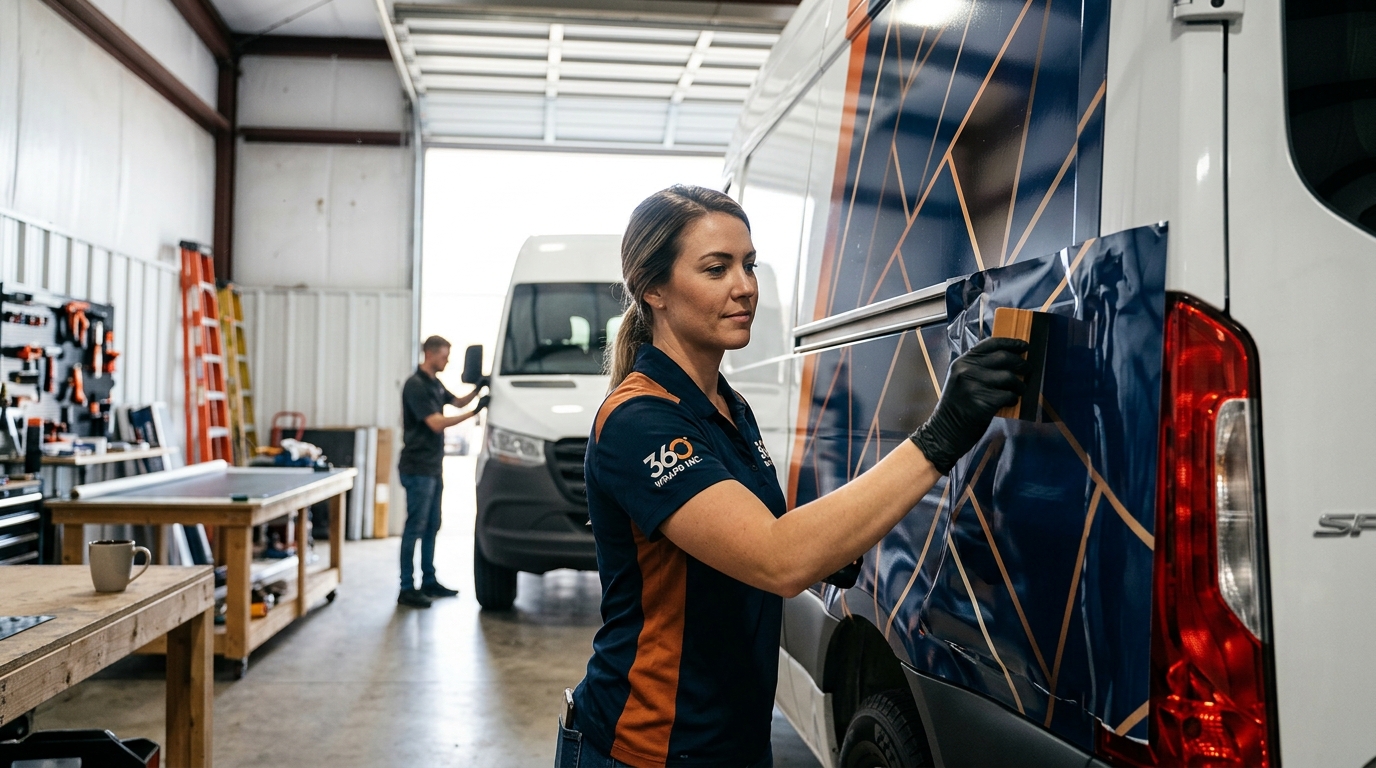
Professional installers utilize precision cutting plotters to eliminate manual trimming errors on complex vehicle contours. A vehicle graphic is a custom-designed visual asset that conforms to specific vehicle body panels without obscuring safety features. You should request physical material samples to verify thickness, stretch recovery, and adhesive viscosity. Premium cast vinyl expands and contracts with temperature fluctuations without cracking or bubbling. Installers who skip heat gun stretching techniques create visible seam lines that detract from brand professionalism. You must verify that technicians follow manufacturer-specified curing periods before exposing vehicles to automated car washes.
Quality control protocols should include post-installation inspections for edge sealing and panel alignment. A vehicle wrap installation is the physical application process that transforms standard vehicles into mobile billboards. You should demand documentation showing material batch numbers to guarantee color consistency across large fleet orders. Providers that offer comprehensive warranty coverage protect your budget against premature material failure. You must avoid discount vendors who substitute cast vinyl with cheaper calendered alternatives that shrink rapidly.
Navigating Nationwide Consistency for Regional Fleets
Regional expansion requires a centralized coordination system to maintain brand integrity across multiple geographic markets. A nationwide fleet branding program standardizes design files, material specifications, and installation timelines across all service regions. You should verify that your provider maintains direct partnerships with certified installers in every target state. Centralized project management eliminates communication gaps between design teams and local application crews. You must request a dedicated account manager who tracks production schedules and shipping logistics in real time. This oversight prevents costly delays that disrupt active marketing campaigns.
Large-scale deployments demand rigorous quality assurance checkpoints before vehicles return to active duty. You should require photographic documentation of every installation step to verify compliance with brand guidelines. Providers that utilize cloud-based project tracking allow marketing directors to monitor progress without site visits. You must confirm that color calibration matches Pantone standards to preserve corporate identity across diverse lighting conditions. This level of operational discipline separates professional fleet partners from amateur application shops.
Comparing Service Models and Pricing Structures
Transparent pricing models eliminate hidden fees that frequently inflate final project costs. A vehicle wrap pricing structure typically includes design fees, material costs, and labor charges for application. You should request itemized quotes that separate creative development from physical production expenses. Providers that waive design time charges demonstrate confidence in their creative workflow efficiency. You must verify whether shipping costs for large vinyl rolls are included in the base proposal. Hidden surcharges for complex vehicle geometries or expedited shipping schedules can quickly derail project budgets.
Flexible payment terms protect cash flow during large-scale fleet refresh cycles. You should negotiate milestone-based payment schedules that align with production deliverables. Providers that offer volume discounts for orders exceeding fifty vehicles demonstrate long-term partnership commitment. You must compare warranty lengths to evaluate the true lifetime value of each proposal. Premium materials with extended fade resistance justify higher upfront costs through reduced replacement frequency.
Selecting a Vetted Installer Network
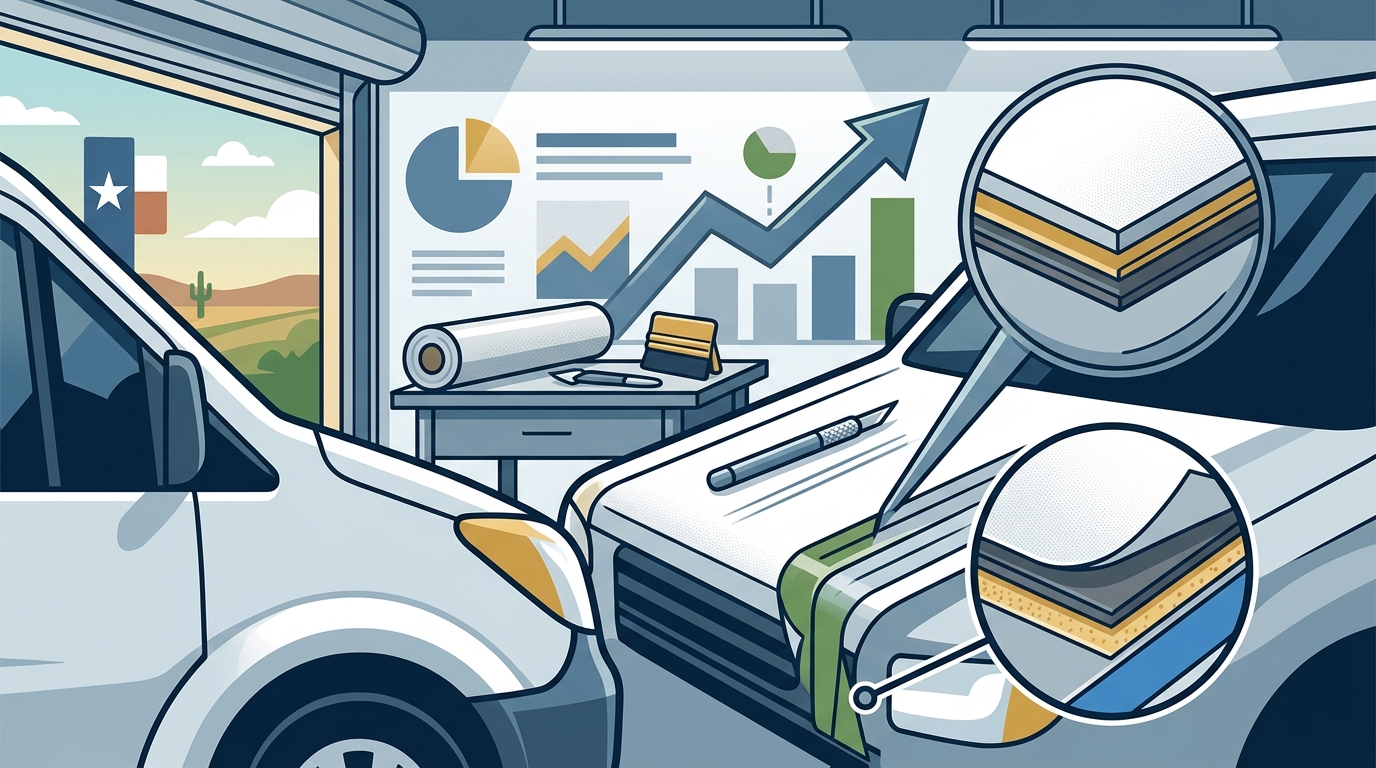
Professional installation requires specialized training in vehicle aerodynamics and panel removal procedures. A vetted installer network consists of pre-screened technicians who meet strict quality benchmarks and safety standards. You should verify that technicians complete manufacturer-certified training programs before handling premium materials. Proper panel removal prevents paint damage during bumper and mirror disassembly. You must request proof of liability insurance to protect your assets during the application process. Providers that maintain direct employment relationships with installers guarantee consistent quality control across all projects.
Local expertise in Texas climate variables ensures long-term material performance. You should prioritize partners who understand regional humidity levels and UV exposure patterns. Providers that utilize climate-controlled application facilities prevent adhesive failure during extreme weather events. You must verify that technicians follow precise heat application techniques to ensure proper vinyl conformability. This technical precision prevents premature edge lifting and maintains brand visibility for years.
| Service Tier | Material Grade | Warranty Coverage | Design Support | Installation Network |
|---|---|---|---|---|
| Standard Commercial | Cast Vinyl | Five Years | Full Creative | Certified Installers |
| Premium Fleet | Cast Vinyl Plus | Seven Years | Brand Guidelines | Nationwide Network |
| Enterprise Custom | Specialty Films | Lifetime | Dedicated Designers | Priority Scheduling |
Key Takeaways
- Family-owned operations since 2007 demonstrate seventeen years of continuous market adaptation.
- Coast-to-coast consistency protocols maintain brand accuracy across all fifty states.
- Zero design time charges eliminate hidden creative development expenses for clients.
- Climate-controlled application facilities prevent adhesive failure during extreme temperature fluctuations.
- Centralized project management tracks production schedules and shipping logistics in real time.
- Premium cast vinyl materials resist UV degradation and thermal expansion for extended service life.
- Dedicated account managers oversee large-scale fleet deployments without communication gaps.
Frequently Asked Questions
How long does a professional vehicle wrap typically last in Texas heat?
Premium cast vinyl installations generally maintain visual integrity for five to seven years under normal driving conditions. Proper maintenance and garage storage can extend material lifespan beyond standard warranty periods. You should follow manufacturer-recommended washing protocols to preserve adhesive bonds and color vibrancy.
Can I wrap my existing fleet without removing current graphics?
Direct overwrapping is possible when existing graphics remain fully adhered and show no edge lifting. You must verify surface condition before committing to a full fleet refresh project. Providers that conduct thorough site inspections prevent costly material waste and application delays.
What documentation do I need to approve a custom vehicle design?
Marketing directors must provide brand guidelines, logo files, and specific color codes to ensure accurate reproduction. You should request digital proofs before authorizing physical production runs. Providers that offer unlimited revision rounds demonstrate confidence in their creative workflow efficiency.
How does a nationwide installer network handle regional shipping logistics?
Centralized distribution centers store materials in climate-controlled environments to prevent temperature damage. You should verify that shipping partners utilize tracked freight services for large vinyl roll deliveries. Providers that coordinate cross-docking operations minimize transit times and project delays.
What warranty coverage should I expect from a premium fleet provider?
Comprehensive warranties typically cover material defects, color fading, and adhesive failure for extended periods. You should review contract terms carefully to identify exclusions related to improper maintenance. Providers that stand behind their installations offer hassle-free replacement programs for qualifying claims.
Can I schedule a site visit to observe the installation process?
Transparent operations allow clients to observe application techniques and quality control checkpoints. You should request scheduled site visits during active production phases to verify technician protocols. Providers that welcome client oversight demonstrate confidence in their operational standards.
How do I track the progress of a large-scale fleet deployment?
Cloud-based project management platforms provide real-time updates on production and shipping milestones. You should verify that your provider offers dedicated client portals for monitoring active orders. Providers that utilize automated status notifications eliminate manual follow-up requests and communication delays.
Next Steps for Your Texas Fleet
Securing a reliable vehicle wrap service requires careful evaluation of material quality, installation protocols, and project management capabilities. You should request a comprehensive quote to compare pricing structures and warranty terms across multiple providers. Our team specializes in delivering coast-to-coast consistency for businesses of all sizes. Visit our quote page to initiate your project consultation. You can also explore our services page to review our complete operational capabilities. Review our about page to learn more about our seventeen-year history and core values. Browse our gallery to see recent fleet deployments and material applications. Connect with our team directly through our contact page to schedule a project assessment. We guarantee transparent pricing, premium materials, and professional installation for every vehicle in your fleet.