Vehicle advertising delivers an average of 30,000 to 70,000 impressions per month for local businesses, making it one of the most cost-effective marketing channels available. However, the return on investment collapses when the initial budgeting phase ignores critical variables like material longevity, design complexity, and installation labor. According to industry data from the Advertising Specialty Institute, branded vehicles generate significantly higher engagement rates than digital ads, but only if the wrap remains intact and visually sharp. Many fleet managers and vehicle owners underestimate the total cost of ownership, leading to premature peeling, color mismatch, or unexpected overages. This guide outlines the specific financial traps that derail wrap projects and provides the strategic framework to protect your investment.
Understanding Material Costs and Lifespan
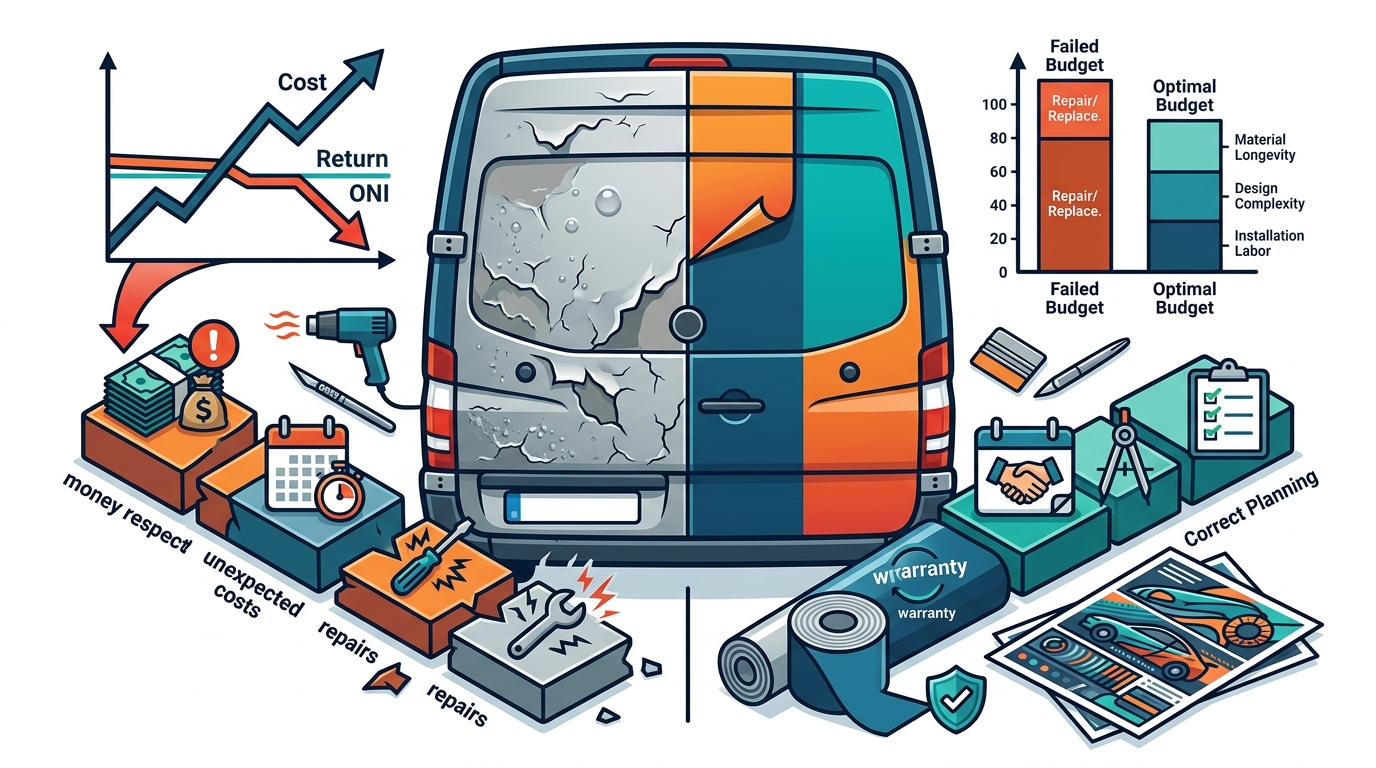
The most frequent budgeting error is comparing quotes based solely on the upfront price per vehicle without accounting for material grade. Vinyl wraps are not a single commodity. They range from cast vinyl, which conforms to complex curves and lasts five to seven years, to calendered vinyl, which is cheaper but may shrink or fade in two to three years. Choosing the lower-grade material to save money initially often results in costly removal and re-wrapping within a few years.
Cast vinyl is defined as a premium material engineered for durability and conformability on curved surfaces. Calendered vinyl is defined as a cost-effective material suitable for flat panels and short-term branding needs. When budgeting, you must factor in the total cost of ownership. A cheaper wrap that fails after two years costs more per year than a premium wrap that lasts five. Additionally, specialty finishes like chrome, matte, or satin often require more precise installation and higher-grade films, which increases the base material cost. Ignoring these distinctions leads to budget shortfalls when the installer reveals the need for premium materials to achieve the desired look.
According to data from the International Sign Association, high-quality vehicle graphics can last up to seven years with proper care, significantly extending the amortized cost of the advertising campaign. Failing to budget for this longevity means you are underestimating the value of the initial investment. Always request a detailed breakdown of the vinyl brand and type in your quote. Reputable companies like 360 Wraps provide transparent material specifications to ensure you are paying for quality that matches your timeline.
Design Complexity and Hidden Fees
Many clients assume that design is included in the installation price. While some companies offer basic design services, complex custom artwork often incurs separate fees. A budgeting mistake occurs when you approve a design without understanding the technical requirements for printing and installation. Intricate designs with multiple colors, gradients, or fine text require high-resolution printing and precise alignment, which increases production time and cost.
Another hidden cost is the revision cycle. If you request multiple design changes after the initial proof, you may face additional charges. To avoid this, finalize your brand guidelines and artwork before requesting a quote. Clear communication reduces the risk of scope creep. Furthermore, some designs may require additional materials, such as air-release films for complex curves, which add to the material cost. Understanding these variables upfront allows you to adjust your budget accordingly. For businesses looking to streamline this process, 360 Wraps offers a seamless design-to-install workflow that minimizes unexpected fees by aligning on goals early.
Research from the Graphic Arts Technical Foundation indicates that print production errors account for a significant portion of project overruns. By ensuring your design is production-ready before printing begins, you can avoid costly reprints. Always ask your provider about their design revision policy and whether they charge for additional proofs. This transparency is crucial for accurate budgeting.
Installation Labor and Surface Prep
Installation is not a one-size-fits-all service. The complexity of the vehicle surface directly impacts labor costs. Vehicles with many seams, rivets, or complex curves require more time and skill to wrap correctly. A budgeting mistake is assuming that all vehicles will cost the same to wrap. A flat-sided van will cost less to wrap than a sports car with aerodynamic contours. Additionally, surface preparation is critical. If the vehicle has existing damage, rust, or old adhesive residue, it must be repaired or cleaned before installation. These prep costs are often excluded from initial quotes.
Surface prep is defined as the process of cleaning, repairing, and preparing a vehicle's surface to ensure proper vinyl adhesion and longevity. Skipping this step can lead to premature wrap failure. Always include a line item in your budget for potential surface repairs. If you are wrapping a fleet, ensure that all vehicles are in similar condition to avoid variable costs. Certified installers, such as those in the 360 Wraps installer network, are trained to handle these complexities efficiently, but their expertise comes at a premium that reflects the quality of the final result.
According to the National Institute for Automotive Service Excellence, proper surface preparation is the most critical factor in the longevity of automotive coatings. Investing in proper prep work saves money in the long run by preventing wrap failure. Do not choose an installer based solely on the lowest labor rate. The skill of the installer directly affects the durability and appearance of the wrap.
Fleet Scaling and Consistency Errors
For fleet owners, budgeting mistakes often arise from failing to account for consistency across multiple vehicles. Wrapping a fleet is not simply multiplying the cost of a single vehicle by the number of units. There are economies of scale, but also logistical challenges. Color matching across different vehicle makes and models can be difficult. If you wrap vehicles in different batches, slight color variations may occur, damaging brand consistency.
Brand color management is defined as the systematic process of ensuring that brand colors remain consistent across all applications, including vehicle wraps, regardless of the vehicle's original paint color. To maintain consistency, you must budget for a centralized production process. Companies like 360 Wraps specialize in nationwide fleet branding, ensuring that every vehicle, whether in Dallas or New York, receives the same high-quality finish. Ignoring this need for centralized quality control can lead to a fragmented brand image, which undermines the marketing value of the fleet.
Data from the American Trucking Associations shows that consistent fleet branding increases brand recognition by up to 50 percent. To achieve this, you must budget for a provider with a robust quality assurance system. Ask your installer about their process for color matching and batch production. This due diligence prevents costly rework and ensures your fleet looks cohesive and professional.
Maintenance and Removal Costs
Many clients forget to budget for the end-of-life phase of the wrap. Removal costs are often overlooked. If you plan to remove the wrap in the future, you must budget for professional removal to avoid damaging the underlying paint. DIY removal can lead to paint damage, which is far more expensive to repair than the wrap itself. Additionally, regular maintenance is required to keep the wrap looking new. This includes specialized washing techniques and occasional touch-ups for minor damage.
Wrap removal is defined as the professional process of safely stripping vinyl graphics from a vehicle without damaging the original paint. This process requires heat guns and specialized solvents to ensure clean removal. Budgeting for professional removal ensures that your vehicle retains its value when you decide to change the look or sell the vehicle. Furthermore, consider the cost of maintenance products. Standard car washes may use harsh chemicals that degrade the vinyl. Investing in wrap-safe cleaning products is a small but necessary part of the budget.
According to the Paint Protection Film Institute, professional removal extends the life of the underlying paint and maintains the vehicle's resale value. Neglecting this aspect of the budget can result in unexpected costs down the line. Always ask your provider about their removal policy and recommended maintenance practices. This foresight protects your investment and ensures a smooth transition when you are ready for a new look.
Calculating True ROI and Impressions
A major budgeting mistake is viewing the wrap as a one-time expense rather than a marketing asset. To accurately budget, you must calculate the return on investment. This involves estimating the number of impressions the vehicle will generate and comparing that to the cost of other advertising channels. A well-budgeted wrap project should show a clear path to profitability through increased brand visibility and customer engagement.
Impression tracking is defined as the measurement of the number of times a vehicle wrap is seen by potential customers during its operational life. By estimating daily mileage and average traffic density, you can calculate the total impressions. Compare this to the cost per thousand impressions (CPM) of digital or print ads. Typically, vehicle wraps offer a lower CPM, making them a highly efficient marketing tool. However, this efficiency is only realized if the wrap is high-quality and durable. Budgeting for quality upfront ensures that the impressions are valuable and not wasted on a faded or peeling graphic.
Research from the Advertising Specialty Institute highlights that branded vehicles are seen by millions of people daily, providing unparalleled exposure. To maximize this exposure, you must budget for a wrap that stands out. This means investing in bold design and premium materials. A cheap wrap that looks unprofessional can actually harm your brand image. Therefore, the budget should reflect the value of the brand representation, not just the cost of the vinyl.
Key Takeaways
- Material Grade Matters: Cast vinyl lasts longer and conforms better than calendered vinyl, offering better long-term value.
- Design Fees Are Real: Complex custom designs often incur separate charges; clarify this in your initial quote.
- Surface Prep is Critical: Budget for repairs and cleaning to ensure proper adhesion and longevity.
- Fleet Consistency: Centralized production is essential for maintaining brand color accuracy across multiple vehicles.
- Removal Costs: Professional removal is necessary to protect the underlying paint and maintain resale value.
- ROI Calculation: Compare the cost of the wrap to the estimated impressions to determine true marketing efficiency.
- Quality Over Price: Investing in premium materials and certified installers reduces the risk of costly rework.
Frequently Asked Questions
How long does a vehicle wrap typically last?
A high-quality cast vinyl wrap typically lasts five to seven years, depending on environmental conditions and maintenance. Calendered vinyl may last two to three years. Regular washing and parking in shaded areas can extend the lifespan.
Can I remove a vehicle wrap myself?
While DIY removal is possible, it is not recommended. Professional removal requires specialized tools and expertise to prevent paint damage. DIY attempts often result in adhesive residue or paint peeling, which is costly to repair.
Do you charge for design services?
Design fees vary by provider. Some companies include basic design in the installation cost, while others charge for custom artwork. It is important to clarify this in your initial quote to avoid unexpected costs.
How do I calculate the ROI of a vehicle wrap?
Calculate the total impressions by multiplying daily mileage by the number of days the wrap will be active. Compare the cost of the wrap to the cost per thousand impressions (CPM) of other advertising channels. Vehicle wraps often offer a lower CPM, making them a cost-effective marketing tool.
What is the difference between cast and calendered vinyl?
Cast vinyl is a premium material that conforms to complex curves and lasts longer. Calendered vinyl is a cost-effective material suitable for flat panels and short-term use. Cast vinyl is recommended for long-term branding.
Do you offer nationwide fleet branding?
Yes, we offer nationwide fleet branding services. Our network of certified installers ensures consistent quality and color matching across all 50 states. This centralized approach maintains brand integrity for large fleets.
How do I maintain my vehicle wrap?
Wash your wrap regularly with wrap-safe cleaning products. Avoid using harsh chemicals or abrasive tools. Park in shaded areas when possible to protect the vinyl from UV damage. Regular maintenance extends the life and appearance of the wrap.
Start Your Project
Avoiding budgeting mistakes starts with choosing a partner who values transparency and quality. At 360 Wraps, we combine design, production, and installation under one roof to ensure your project stays on budget and on schedule. Our team of experts is ready to help you navigate the complexities of vehicle branding. Get a quote today and see how we can bring your vision to life with precision and care.