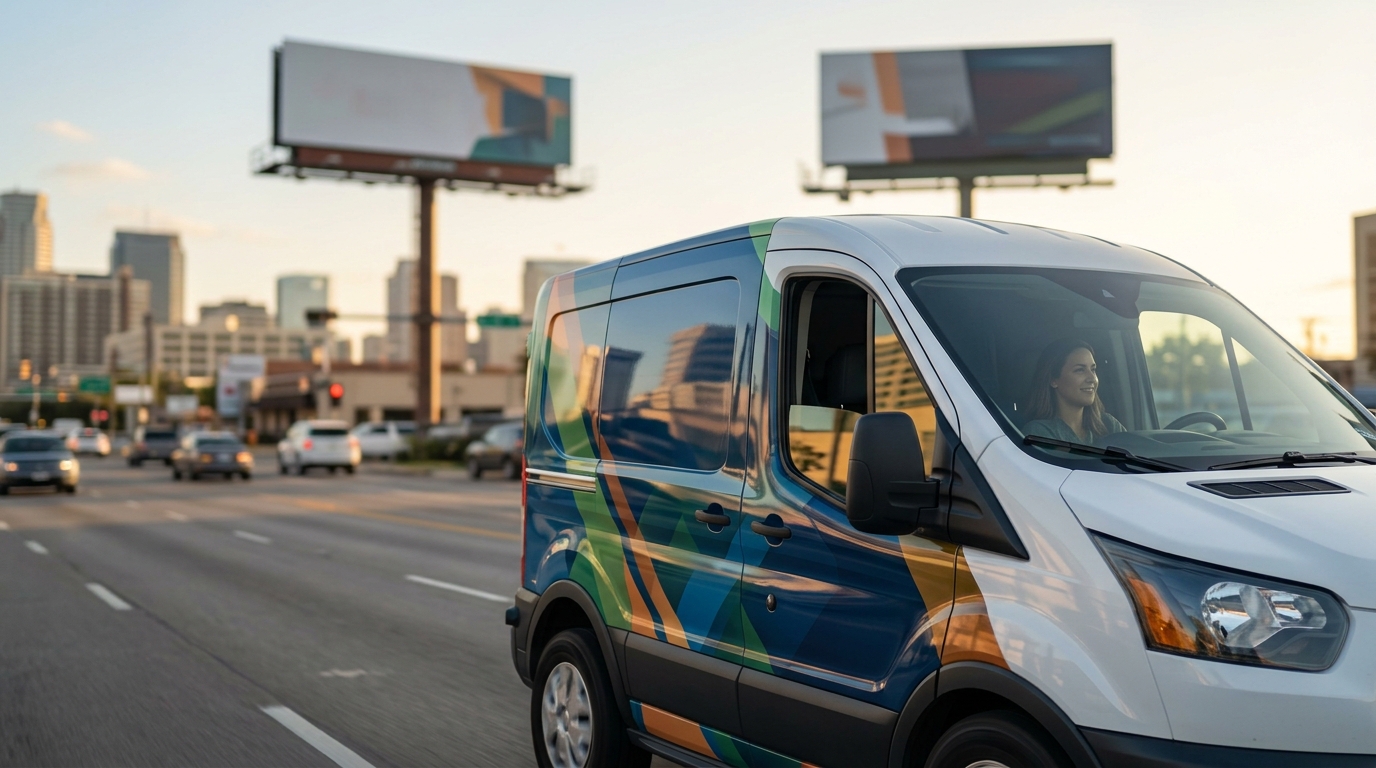
Traditional outdoor advertising has long relied on static billboards to capture public attention, but the landscape is shifting rapidly. According to the Outdoor Advertising Association of America, the industry generated approximately $8.6 billion in revenue in 2023, yet growth has plateaued compared to dynamic digital alternatives. This stagnation highlights a critical question for modern marketing directors: does a full vehicle wrap provide better ROI than traditional billboards? The answer lies in mobility, frequency, and targeted reach. While billboards offer massive visibility in fixed locations, vehicle wraps transform every client vehicle into a moving billboard that penetrates neighborhoods, traffic patterns, and demographics that static signs simply cannot reach.
Cost Analysis: Upfront Investment vs. Long-Term Value
When evaluating return on investment, the initial cost barrier is often the first point of comparison. Traditional billboards require significant monthly lease fees that accumulate over the contract term, typically ranging from $1,500 to $5,000 per month depending on the market's Tier 1 status. In contrast, a high-quality vehicle wrap is a one-time capital expenditure. For a standard sedan or van, the cost ranges from $2,500 to $5,000, while larger fleet vehicles may cost slightly more. However, a well-maintained wrap lasts three to five years. This means the annualized cost of a vehicle wrap is a fraction of a single month of billboard rental.
Furthermore, vehicle wraps eliminate the recurring media buy. Once the design is approved and the vinyl is applied, the advertising continues 24/7 without additional monthly invoices. This predictability allows marketing teams to allocate budget toward other growth channels. 360 Wraps specializes in this cost-efficient model, ensuring that every dollar spent on materials and installation translates directly into long-term brand exposure rather than temporary lease rights.
Reach and Frequency: Static Visibility vs. Mobile Penetration
The most significant advantage of vehicle wraps is their ability to move. A billboard is limited to the traffic passing by a specific intersection. If that intersection has low traffic volume or is bypassed by commuters, the ad is effectively invisible. Vehicle wraps, however, travel. They enter residential driveways, park at local businesses, and sit in traffic jams where drivers have hours to absorb the message. This mobility drastically increases the frequency of impressions. A single vehicle wrap can generate between 30,000 and 70,000 impressions per month, depending on the city and driving patterns.
This dynamic reach is crucial for local businesses. A billboard in Dallas might reach millions, but a fleet of wrapped vehicles can target specific neighborhoods, business parks, and event venues with precision. The 360 Wraps team has observed that clients often see higher engagement rates because the vehicle becomes a conversation starter. People notice the mobile ad more than the static one because it is unexpected and personal.
Targeting Precision: Geographic Flexibility
Traditional billboards suffer from a lack of control over who sees the message. You cannot choose which demographic passes by your sign. Vehicle wraps offer superior targeting capabilities. By deploying wrapped vehicles in specific geographic areas, businesses can focus their advertising spend on high-value markets. For example, a real estate agency can wrap their sales team's cars and deploy them exclusively in affluent neighborhoods where their target clients live.
This flexibility extends to campaign adjustments. If a business wants to promote a new service in a different city, they can simply move the wrapped vehicles. There is no need to negotiate new leases or wait for production of new static signs. This agility is particularly valuable for national brands that need to maintain consistent branding across all 50 states while allowing for local market nuances. The ability to shift resources quickly in response to market conditions is a key driver of superior ROI.
Credibility and Trust: The Mobile Brand Effect
Visibility does not always equal trust. A billboard is often perceived as a generic advertisement. A vehicle wrap, however, signals legitimacy and scale. When consumers see multiple branded vehicles in their area, they perceive the business as established and active. This psychological effect is known as the "bandwagon effect." It builds trust before the customer even makes contact.
Moreover, vehicle wraps are less intrusive than billboards. They do not block views or create visual clutter in the same way. Instead, they integrate into the daily life of the community. This positive association enhances brand perception. View our gallery to see how premium vinyl and precise installation contribute to a professional image that commands respect on the road.
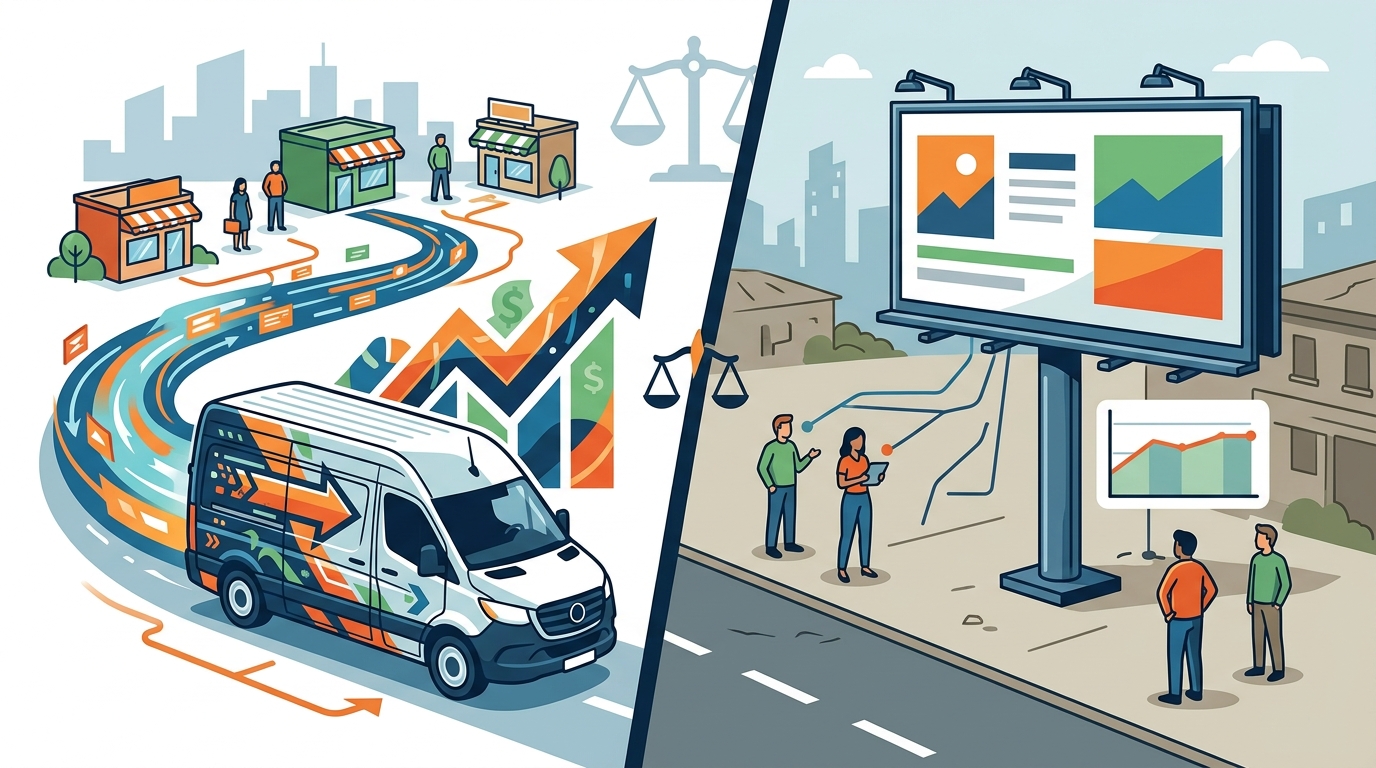
Comparative ROI Metrics
To visualize the differences, consider the following comparison of key performance indicators for both advertising mediums.
| Factor | Traditional Billboard | Full Vehicle Wrap |
|---|---|---|
| Monthly Cost | $1,500 - $5,000+ | $0 (Amortized one-time cost) |
| Lifespan | Contract dependent (1-12 months) | 3-5 years |
| Monthly Impressions | 10,000 - 50,000 | 30,000 - 70,000+ |
| Geographic Flexibility | Fixed Location | Mobile / Nationwide |
| Targeting | Demographic estimation | Active Deployment |
Key Takeaways
- Cost Efficiency: Vehicle wraps offer a lower cost per thousand impressions (CPM) over a three to five-year period compared to recurring billboard leases.
- Mobile Reach: Wrapped vehicles generate 30,000 to 70,000 monthly impressions by entering neighborhoods and traffic patterns static signs cannot reach.
- Brand Trust: A fleet of professional wraps signals business scale and legitimacy, enhancing consumer trust more effectively than a single static sign.
- Geographic Control: Businesses can deploy wrapped vehicles to specific high-value markets, allowing for precise local targeting.
- Longevity: High-quality vinyl from providers like 360 Wraps ensures the investment lasts for years, providing sustained ROI.
- Flexibility: Campaigns can be adjusted by moving vehicles, unlike the rigid nature of billboard leases.
- Visual Impact: Premium finishes and color management create a striking visual presence that stands out in daily commutes.
Frequently Asked Questions
How long does a vehicle wrap last?
A professionally installed vehicle wrap using premium vinyl typically lasts between three to five years. The lifespan depends on driving conditions, maintenance, and sun exposure. Regular washing and parking in the shade can extend its life.
Can a vehicle wrap damage my car's paint?
No, a vehicle wrap actually protects the underlying paint from UV rays, minor scratches, and road debris. When removed by professionals, it leaves the original paint in pristine condition.
Is a vehicle wrap more effective than a billboard?
For most local and regional businesses, yes. Vehicle wraps offer higher frequency, mobile targeting, and lower long-term costs. Billboards may still be effective for massive national awareness campaigns in specific high-traffic corridors.
How much does a full vehicle wrap cost?
Costs vary by vehicle size and design complexity. A standard sedan or van typically ranges from $2,500 to $5,000. Larger commercial vehicles may cost more. Get a quote for precise pricing.
Do vehicle wraps expire?
Unlike billboards which have fixed lease terms, vehicle wraps do not expire. They remain effective as long as the vinyl is intact and the vehicle is in use. This provides indefinite advertising value.
Can I remove a vehicle wrap myself?
It is not recommended. DIY removal can damage paint or leave adhesive residue. Professional removal ensures the wrap comes off cleanly and safely, preserving your vehicle's value.
How many impressions does a wrapped vehicle get?
On average, a wrapped vehicle generates between 30,000 and 70,000 impressions per month. This number fluctuates based on the city, route, and time spent driving.
What is the best vinyl for vehicle wraps?
Premium cast vinyl is the industry standard for durability and conformability to complex curves. It resists fading, cracking, and peeling better than cheaper calendared options.
Start Your Fleet Branding Journey
Stop renting visibility and start owning it. Transitioning from traditional billboards to mobile vehicle branding is a strategic move that maximizes your marketing budget while building lasting brand trust. With 17 years of experience and a network of certified installers across the nation, 360 Wraps ensures your fleet looks sharp and performs reliably. Visit our quote page to design your first wrap today.