Vehicle wraps have become the dominant branding tool for modern fleets, with industry data showing that a single wrapped vehicle can generate between 30,000 and 70,000 impressions daily depending on traffic density. This visibility creates a massive return on investment that traditional paint simply cannot match. However, many business owners and vehicle enthusiasts still debate whether a high-quality paint job or a full vinyl wrap is the superior choice for their specific needs. Understanding the technical differences, financial implications, and long-term maintenance requirements is critical for making an informed decision.
Cost Analysis: Upfront Investment vs. Long-Term Value
The most immediate difference between vehicle wraps and paint is the initial financial outlay. A professional full vehicle wrap typically costs between $3,500 and $7,000 for a standard sedan or SUV, while fleet pricing scales based on volume and complexity. In contrast, a high-quality, multi-stage paint job can range from $5,000 to over $15,000 depending on the materials used and the labor intensity required.
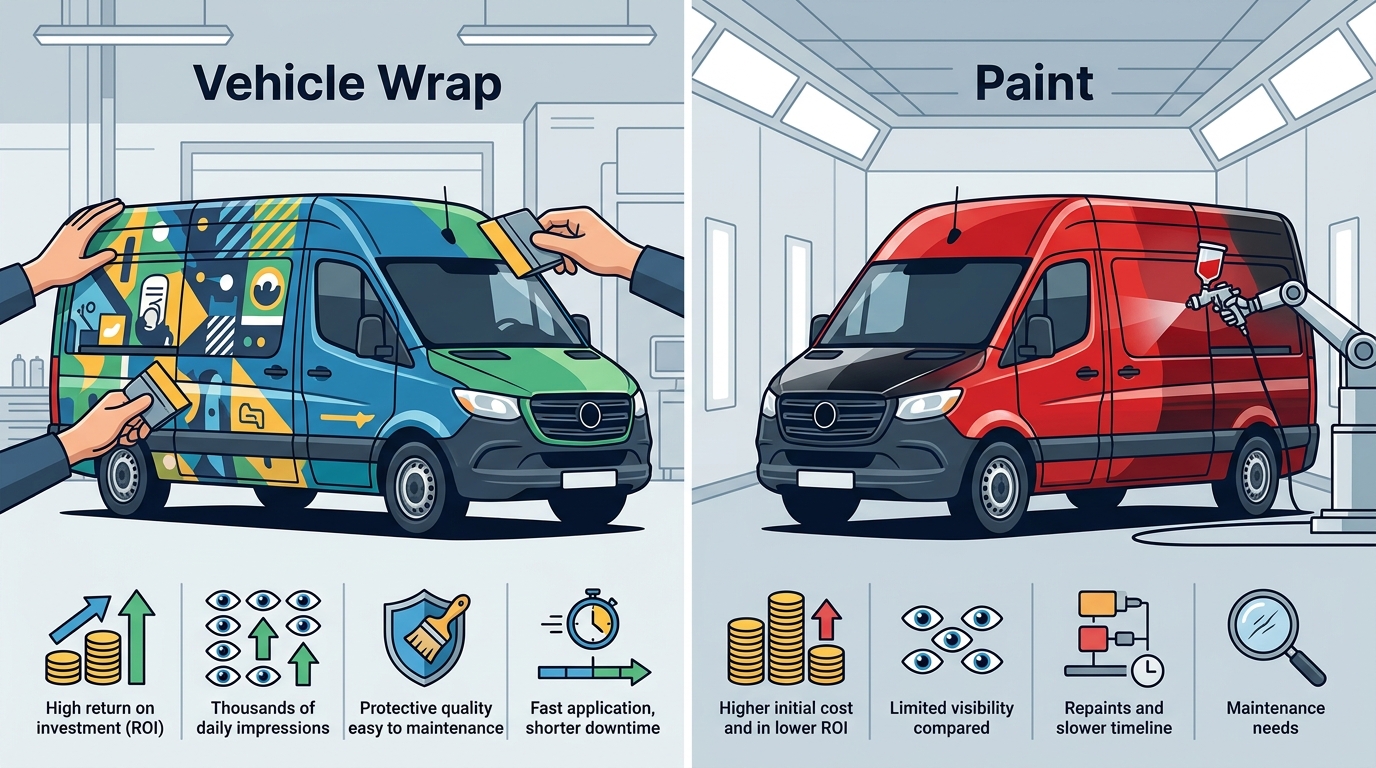
While the upfront cost of a premium paint job may seem comparable to a wrap for a single vehicle, the value proposition shifts dramatically when considering fleet branding. According to industry reports on advertising effectiveness, the cost per thousand impressions (CPM) for vehicle wraps is significantly lower than traditional media like radio or print. A wrapped vehicle acts as a 24/7 billboard, generating millions of impressions over its lifespan. Paint, while aesthetically pleasing, offers zero direct advertising return on investment. Furthermore, wraps are removable, allowing businesses to refresh their marketing message without the permanent commitment of paint.
For personal vehicles, the cost argument favors wraps when resale value is a concern. Repainting a vehicle can drastically reduce its resale value because the original factory finish is lost. A wrap preserves the original paint, ensuring that when the film is removed, the car looks brand new. This preservation of asset value is a critical financial factor often overlooked in initial comparisons.
Durability and Maintenance: Which Lasts Longer?
Vehicle wraps are engineered from high-grade cast vinyl designed to withstand environmental stressors. A professionally installed wrap from a reputable provider like 360 Wraps typically lasts between five and seven years with proper care. The material is resistant to UV rays, which prevents fading and cracking, ensuring the graphics remain vibrant for the duration of the contract or ownership period.
Maintenance for both wraps and paint is relatively straightforward but requires specific techniques. Wraps should be washed by hand or in a touchless car wash using pH-neutral cleaners. Abrasive brushes or high-pressure nozzles held too close to the edges can lift the vinyl. Paint, particularly clear-coated finishes, requires regular waxing and polishing to maintain its gloss and protect against oxidation. Over time, paint will chip, fade, and dull, requiring periodic touch-ups or full resprays to maintain a showroom appearance.
The durability of a wrap is also dependent on the quality of the installation. Certified installers ensure that edges are properly tucked and sealed, preventing water intrusion and debris accumulation. This level of precision is what distinguishes a long-lasting wrap from one that fails prematurely. Certified installers across the network adhere to strict quality control standards to ensure every panel is aligned perfectly.
Paint Protection: Preserving the Original Finish
One of the most significant advantages of vehicle wraps is their ability to protect the underlying paint. The vinyl film acts as a sacrificial layer, shielding the original finish from stone chips, road debris, bird droppings, and UV radiation. This protection is particularly valuable for luxury vehicles, classic cars, or any vehicle where the original paint is a key component of its value.
When the wrap is eventually removed, the paint underneath is often in better condition than when the wrap was applied. This is because the wrap has absorbed the wear and tear that would otherwise damage the clear coat. For businesses, this means that leased or company vehicles retain a higher residual value. For individuals, it means the option to return the vehicle to its factory state without any restoration work needed.
In contrast, paint jobs offer no protective benefit beyond the clear coat itself. Once the clear coat is compromised by chips or scratches, the underlying metal or primer is exposed to corrosion. Repairing these damages often requires blending into adjacent panels, which can be difficult and expensive. A wrap eliminates the need for such repairs by preventing the damage from occurring in the first place.
Branding Flexibility and Design Complexity
Vehicle wraps offer unparalleled flexibility in design and branding. They allow for full-color graphics, complex patterns, and custom artwork that would be impossible or prohibitively expensive to achieve with paint. Businesses can update their messaging, logos, or contact information by simply applying a new layer of vinyl over the existing wrap, provided the surface is in good condition.
This flexibility extends to color changes as well. A wrap can transform the appearance of a vehicle from white to black, or from silver to a vibrant brand color, without the permanence of paint. This is ideal for companies that want to test different marketing strategies or rebrand without the hassle of repainting. Vehicle graphics services provide design support to ensure that the final output is production-ready and visually impactful.
Paint, while offering a deep, glossy finish, is limited by the available color options and the difficulty of achieving complex gradients or patterns. Custom paint colors require mixing and matching, which can lead to inconsistencies. Additionally, changing a paint color is a permanent decision that requires extensive preparation and application, making it a less agile option for dynamic branding needs.
Installation Process and Downtime
The installation process for vehicle wraps is generally faster and less invasive than a full paint job. A professional wrap can be completed in two to four days, depending on the number of vehicles and the complexity of the design. During this time, the vehicle is typically available for limited use, or a loaner can be provided.
Paint jobs, on the other hand, require significant downtime. The process involves stripping the old paint, prepping the surface, applying multiple layers of primer and base coat, and finishing with clear coat. Each layer must cure properly, which can take several days to weeks. During this time, the vehicle is completely unusable. For businesses, this downtime translates to lost revenue and operational disruptions.
The installation process also involves less environmental impact. Vinyl wrapping generates minimal waste compared to the chemical solvents, paints, and clear coats used in automotive painting. Properly disposed vinyl is less harmful to the environment than the volatile organic compounds (VOCs) released during painting. This makes wraps a more sustainable choice for environmentally conscious brands.
Detailed Comparison Summary
| Feature | Vehicle Wrap | Professional Paint |
|---|---|---|
| Typical Cost (Sedan) | $3,500 - $7,000 | $5,000 - $15,000+ |
| Lifespan | 5 - 7 Years | 10+ Years (with maintenance) |
| Installation Time | 2 - 4 Days | 1 - 3 Weeks |
| Resale Value Impact | Neutral (Preserves Paint) | Often Negative |
| Design Flexibility | High (Full Graphics) | Low (Solid Colors) |
| Removability | Yes | No |
| Paint Protection | Yes | No |
Key Takeaways
- Cost Efficiency: Wraps are generally more cost-effective for fleet branding due to lower upfront costs and higher advertising ROI.
- Asset Protection: Wraps preserve the original factory paint, maintaining higher resale values for both personal and commercial vehicles.
- Brand Agility: Wraps allow for easy updates to marketing messages and color schemes without permanent commitment.
- Installation Speed: Wraps require significantly less downtime than paint jobs, minimizing operational disruptions for businesses.
- Quality Matters: The longevity of a wrap depends heavily on the quality of the vinyl and the expertise of the installer.
- Maintenance: Both options require regular care, but wraps need specific pH-neutral cleaners to avoid damaging the film.
- Environmental Impact: Wraps produce less hazardous waste and VOCs compared to traditional automotive painting processes.
Frequently Asked Questions
How long does a vehicle wrap last?
A professionally installed vehicle wrap typically lasts between five and seven years, depending on the quality of the vinyl and the maintenance routine. Exposure to extreme weather conditions can affect longevity, but proper care ensures the wrap remains vibrant throughout its lifespan.
Can a vehicle wrap damage the original paint?
No, a high-quality vinyl wrap protects the original paint rather than damaging it. When removed by a professional, the wrap should come off cleanly, leaving the factory finish intact. Poor quality materials or improper removal techniques can potentially cause issues, which is why choosing a certified installer is crucial.
Is a vehicle wrap more expensive than paint?
For a single vehicle, the cost can be comparable, but wraps are often more affordable for complex designs or fleet branding. Paint jobs can become exponentially more expensive with custom colors and multi-stage finishes. Additionally, the advertising value of a wrap provides a return on investment that paint cannot match.
Can I wash my wrapped vehicle in an automatic car wash?
It is recommended to use a touchless car wash or hand wash your wrapped vehicle. Brush-style automatic car washes can catch the edges of the vinyl and cause peeling or lifting. Touchless systems use high-pressure water and chemicals that are safe for the wrap when used correctly.
How does a wrap protect the paint?
The vinyl film acts as a sacrificial layer, absorbing the impact of road debris, stone chips, and UV radiation. This prevents these elements from reaching the clear coat and underlying paint. When the wrap is removed, the paint underneath is often in better condition than when the wrap was applied.
Can I change the color of my vehicle with a wrap?
Yes, vehicle wraps allow for complete color changes. You can transform your vehicle from one color to another without the permanence of paint. This is ideal for businesses that want to refresh their brand image or individuals who want a new look without committing to a repaint.
What is the installation process for a vehicle wrap?
The installation process involves cleaning the vehicle surface, applying the vinyl film in sections, and using heat guns to conform the material to the vehicle's contours. Edges are trimmed and tucked for a seamless finish. The entire process typically takes two to four days for a standard vehicle.
Get Your Custom Quote Today
Whether you are looking to brand your fleet, protect your personal vehicle, or execute a complete color change, the right choice depends on your specific goals and budget. 360 Wraps offers nationwide fleet branding and premium installation services to ensure your vehicle looks its best. Contact us today to get a quote and discover how our seamless wraps can elevate your brand.