

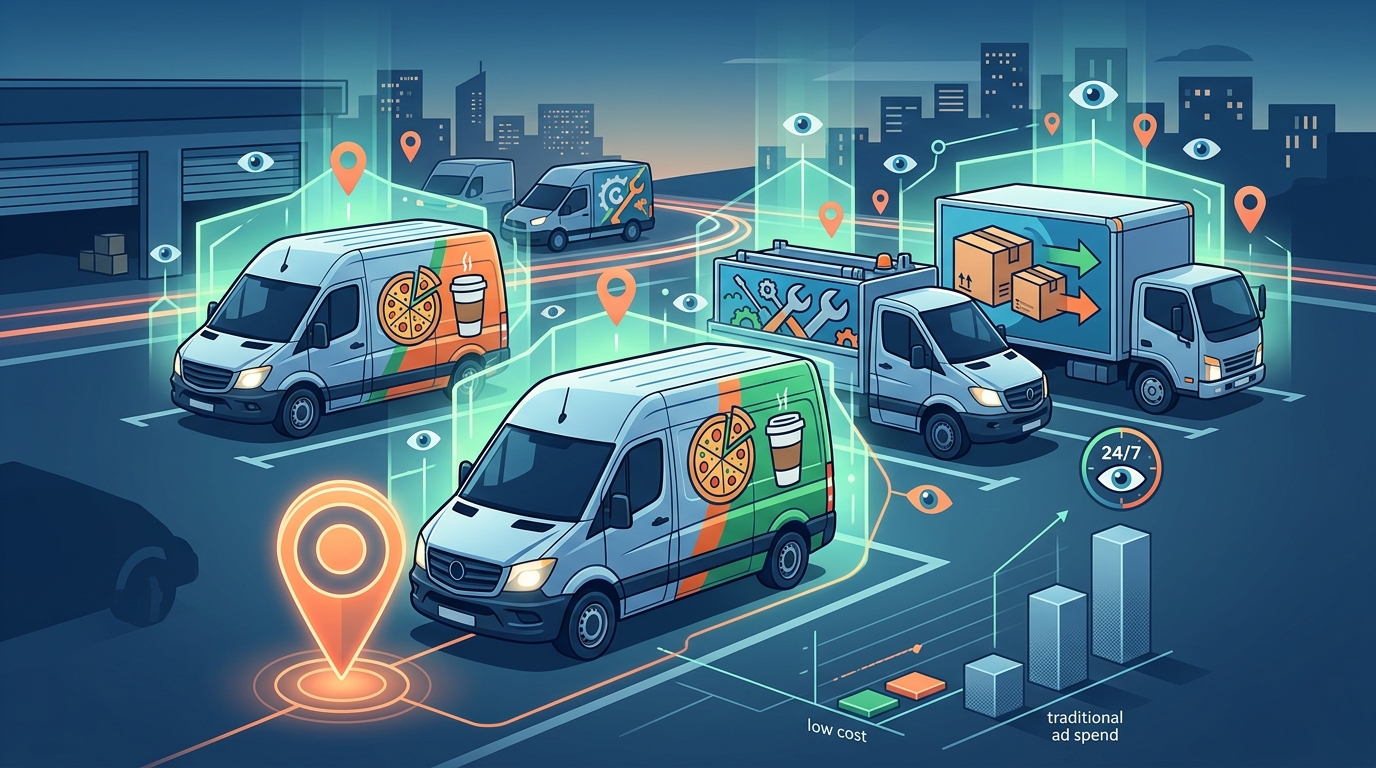
Mobile billboards are no longer just a marketing add-on; they are a primary driver of local brand visibility. According to recent industry data, a single wrapped vehicle can generate between 30,000 and 70,000 impressions per month depending on its route density. This level of exposure transforms every company car into a 24/7 sales representative that never sleeps, never calls in sick, and costs a fraction of traditional digital ad spend. For business owners in 2026, leveraging fleet branding is not just about aesthetics; it is about maximizing return on investment through consistent, high-visibility brand reinforcement. (About Us 360 Wraps)
Why Fleet Advertising Dominates Modern Marketing
In an era where digital ad fatigue is real, physical presence cuts through the noise. Fleet vehicle advertising works because it is unavoidable. Unlike a social media post that gets scrolled past in seconds, a vehicle wrap occupies a large physical space in the viewer's peripheral vision for minutes at a time. This repeated exposure builds brand familiarity, which is a critical precursor to purchase decisions.
Vehicle wraps are defined as large-scale vinyl graphics applied to the exterior of a vehicle to display branding, logos, and contact information. They serve as a mobile canvas that travels through high-traffic corridors, residential neighborhoods, and commercial districts. The effectiveness of this medium is rooted in its longevity and durability. High-quality vinyl can last five to seven years, providing continuous advertising coverage without the recurring costs of digital campaigns.
Furthermore, fleet branding humanizes a business. When customers see a branded vehicle, they perceive the company as established, professional, and active in their community. This perception of legitimacy is invaluable for small and medium-sized enterprises looking to compete with larger corporations. The trust factor is amplified when the vehicle is well-maintained and the graphics are crisp and vibrant.
Design Strategies for Maximum Impact
Designing a fleet wrap requires a balance between aesthetic appeal and functional clarity. The goal is not to create art for art's sake but to communicate a message quickly to drivers moving at 35 to 60 miles per hour. This means using bold colors, large fonts, and concise messaging. If a driver cannot read your phone number or service offering in three seconds, the design has failed.
One effective strategy is the use of color psychology. Brands should select colors that align with their industry and evoke the desired emotional response. For example, blue often conveys trust and professionalism, while orange or red can signal urgency and energy. Consistency in color palette across all vehicles reinforces brand identity and makes the fleet instantly recognizable.
Another critical design element is the inclusion of a clear call to action (CTA). Whether it is a website URL, a phone number, or a QR code, the CTA must be prominent and easy to read. QR codes have become particularly effective in 2026, allowing passersby to instantly access a landing page, view a portfolio, or request a quote directly from their smartphones. This bridges the gap between physical advertising and digital conversion.
It is also essential to consider the vehicle's contours. Wraps should follow the lines of the vehicle to enhance its shape rather than fight against it. This creates a polished, custom look that suggests attention to detail. Poorly designed wraps that ignore vehicle geometry can look amateurish and detract from the brand's perceived quality.
The Critical Role of Installation Quality
The best design in the world is worthless if the installation is flawed. Bubbles, wrinkles, and misaligned seams are immediate red flags that suggest a lack of professionalism. This is where the expertise of the installer becomes paramount. Professional installers use heat guns, squeegees, and precision cutting tools to ensure the vinyl adheres perfectly to every curve and edge of the vehicle.
Color management is another technical aspect that separates professional installations from DIY attempts. Premium vinyl films are color-managed to match the brand's exact Pantone specifications. This ensures that the blue on the wrap is the same blue as the logo on the business card and the website. Inconsistent colors can confuse customers and dilute brand recognition.
Quality installation also protects the vehicle's original paint. High-quality vinyl is designed to be removable without damaging the underlying surface. This is important for fleet managers who may need to update graphics or remove them when the vehicle is sold. It also preserves the resale value of the vehicle, as the original paint remains intact beneath the wrap.
Regular maintenance of the wraps is also part of the installation strategy. Fleet managers should establish a cleaning protocol that avoids harsh chemicals and high-pressure washes near the edges of the graphics. This extends the life of the wrap and keeps the brand looking fresh and new for years.
Extending the Brand Indoors
While exterior wraps grab attention on the road, interior branding reinforces the brand experience for employees and clients. This is particularly important for service vehicles where customers may interact with the interior, such as in food trucks, mobile clinics, or luxury transport.
Interior branding includes wall graphics, floor decals, and branded uniforms. These elements create a cohesive environment that immerses the customer in the brand story. For example, a food truck with branded interior walls and menu boards creates a memorable dining experience that encourages social media sharing and word-of-mouth referrals.
Corporate offices also benefit from interior branding. Wall graphics in lobbies, hallways, and conference rooms can display company values, mission statements, and key performance metrics. This not only enhances the aesthetic of the workspace but also reinforces company culture and aligns employees with the brand's goals.
Consistency between exterior and interior branding is key. The same color palette, typography, and design elements should be used throughout. This creates a seamless brand experience that feels professional and intentional. It also helps to establish a strong visual identity that is easily recognizable in any context.
Managing Nationwide Fleet Consistency
For businesses with fleets spread across multiple locations, maintaining consistency is a significant challenge. This is where a centralized management system becomes invaluable. A robust fleet branding program ensures that every vehicle, regardless of location, adheres to the same brand standards.
This involves strict guidelines for design, materials, and installation. Fleet managers should work with a single provider or a vetted network of installers who understand the brand's requirements. This ensures that the brand colors and body placement are accurate on every vehicle, whether it is in New York or Los Angeles.
Technology plays a crucial role in fleet management. Digital asset management systems allow for easy access to design files and brand guidelines. This ensures that everyone involved in the process, from designers to installers, is working with the latest approved materials. It also streamlines the approval process, reducing delays and errors.
Regular audits of the fleet are also necessary to ensure compliance. This involves checking for worn or damaged wraps, outdated graphics, and non-compliant vehicles. By addressing these issues promptly, businesses can maintain a professional image and avoid the negative perception associated with poorly maintained fleets.
Calculating the Return on Investment
One of the most compelling arguments for fleet vehicle advertising is its cost-effectiveness. When compared to traditional media like radio, television, or print, vehicle wraps offer a significantly lower cost per thousand impressions (CPM). This is because the cost is a one-time investment, while the exposure is continuous over several years.
To calculate the ROI, businesses should compare the cost of the wrap to the cost of equivalent advertising space. For example, if a wrap costs $3,000 and generates 50,000 impressions per month for five years, the cost per impression is a fraction of a cent. This is far lower than the cost of digital ads or billboards, which require ongoing monthly payments.
Additionally, fleet branding can lead to direct business growth. By increasing brand visibility and awareness, businesses can attract more customers and generate more leads. This is particularly true for service-based businesses that rely on local visibility, such as plumbers, electricians, and HVAC contractors.
It is also important to consider the intangible benefits of fleet branding. These include increased brand credibility, employee pride, and competitive differentiation. These factors contribute to long-term business success and cannot be easily quantified but are nonetheless valuable.
Key Takeaways
- High Visibility: A single wrapped vehicle generates 30,000 to 70,000 impressions monthly, offering unparalleled local exposure.
- Cost Efficiency: Vehicle wraps provide a lower cost per thousand impressions compared to traditional digital and print advertising.
- Design Clarity: Effective wraps use bold colors and concise messaging readable in three seconds at highway speeds.
- Installation Quality: Professional installation ensures color accuracy, durability, and protection of the vehicle's original paint.
- Brand Consistency: Centralized management systems are essential for maintaining brand standards across nationwide fleets.
- Interior Integration: Extending branding to vehicle interiors and corporate offices creates a cohesive brand experience.
- Long-Term Value: High-quality vinyl lasts five to seven years, providing continuous advertising coverage with minimal maintenance.
Frequently Asked Questions
How long does a vehicle wrap last?
High-quality vehicle wraps typically last between five and seven years, depending on environmental conditions and maintenance. Regular washing and parking in shaded areas can extend their lifespan.
Can a vehicle wrap damage the original paint?
No, when installed correctly with premium vinyl, a wrap protects the original paint. It can be removed without leaving residue or damaging the surface, preserving the vehicle's resale value.
Is fleet branding only for large corporations?
Not at all. Small and medium-sized businesses benefit greatly from fleet branding as it enhances local visibility and credibility. It is a cost-effective way for smaller companies to compete with larger rivals.
How do I calculate the ROI of my fleet wraps?
Calculate the total cost of the wraps and divide it by the number of impressions generated over their lifespan. Compare this cost per impression to your other advertising channels to determine efficiency.
What is the best design for a fleet wrap?
The best design is simple, bold, and clear. It should include your logo, contact information, and a clear call to action. Avoid clutter and ensure text is readable from a distance.
Do you offer nationwide installation services?
Yes, we work with a network of certified installers across all 50 states to ensure consistent quality and brand alignment regardless of your fleet's location.
Can you help with interior branding?
Absolutely. We provide comprehensive interior branding solutions, including wall graphics, floor decals, and office branding, to create a cohesive brand experience.
Start Your Fleet Transformation
Ready to turn your fleet into a powerful marketing asset? Contact 360 Wraps today to get a custom quote for your vehicle graphics. Our team of experts is ready to help you design, print, and install wraps that drive results. Visit our services page to learn more about our comprehensive branding solutions. Join the thousands of businesses that trust us for their fleet advertising needs. Get in touch with us now to start your journey toward greater brand visibility.