The automotive advertising industry has exploded in recent years, with data showing that vehicle wraps generate an average of 7,000 to 10,000 impressions per day for local businesses. This massive visibility makes wraps a highly attractive marketing tool, but the price tag can vary wildly from a few thousand to over ten thousand dollars. Understanding the specific variables that drive these costs is essential for budgeting accurately. This guide breaks down the primary factors influencing the total cost of a full vehicle wrap, from vehicle size to material quality, ensuring you get the best value for your investment. (Contact Us 360 Wraps)
Vehicle Size and Complexity
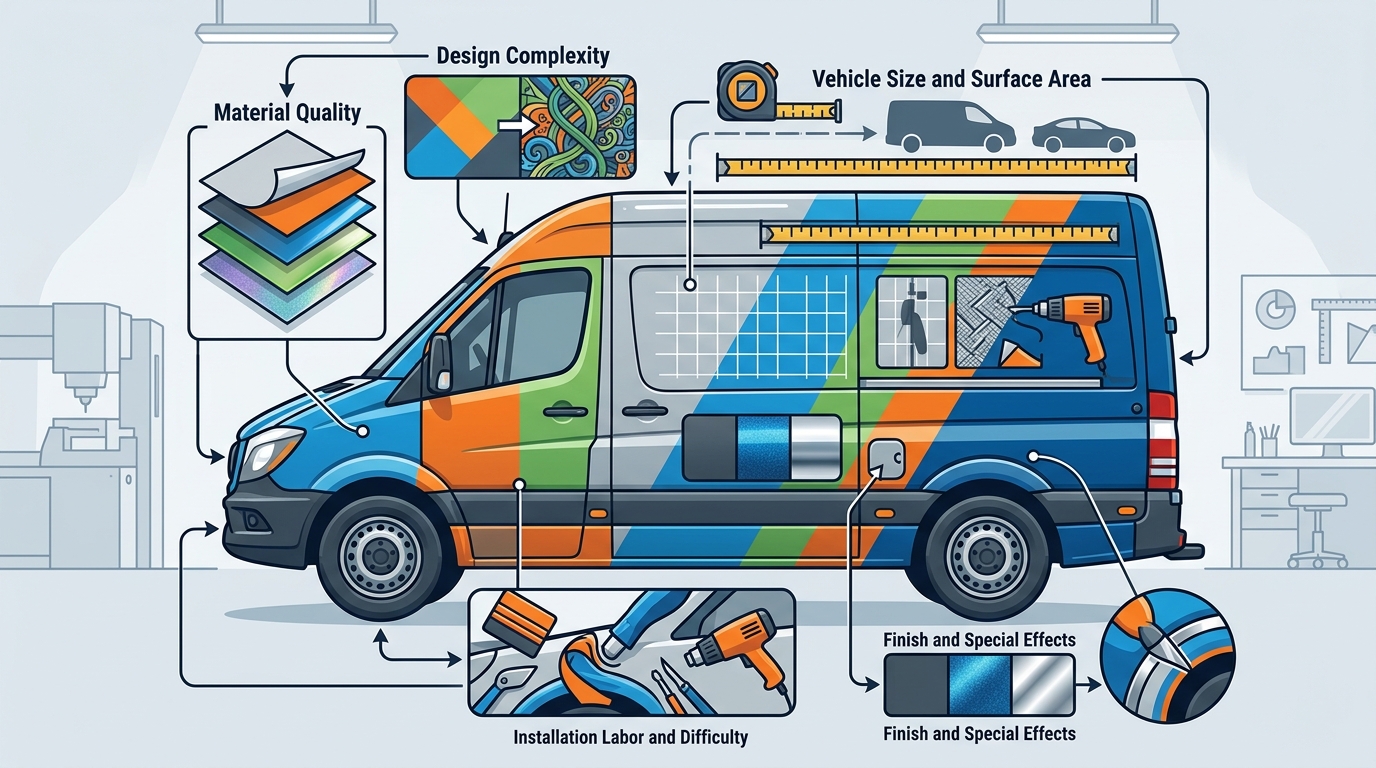
The most immediate factor in pricing is the physical dimensions of the vehicle. A full wrap requires significantly more vinyl than a partial one, and the surface area dictates the material cost. Vehicle size is the baseline determinant of material usage. A compact sedan like a Honda Civic will cost less to wrap than a full-size pickup truck or a commercial box truck. This is not just about the square footage of the body panels. It also includes the complexity of the curves, edges, and recessed areas that require more skilled labor to navigate. (About Us 360 Wraps)
For example, wrapping a large SUV or a van involves more seams and longer panels, which can increase installation time. The geometry of the vehicle plays a crucial role. A vehicle with many creases, bumpers, and mirrors requires more precise cutting and stretching of the vinyl. This increases the labor hours required for the install. Consequently, the total cost rises proportionally with the vehicle's surface area and geometric complexity. (Services 360 Wraps)
Material Quality and Type
Not all vinyl is created equal. The grade of the material you choose directly impacts both the durability and the final price. Material quality is defined by its longevity, finish, and resistance to environmental factors. Premium cast vinyl, such as the materials used by industry leaders like 360 Wraps, offers superior conformability to complex curves and lasts significantly longer than cheaper calendered alternatives. (360 Wraps Seamless Wraps)
Cast vinyl is manufactured by pouring a liquid polymer between rollers, resulting in a film that is thinner, stronger, and more durable. It can last five to seven years or more with proper care. In contrast, calendered vinyl is stretched during manufacturing, making it thicker and less flexible. It is typically cheaper but may shrink or fade after two to three years. The finish also matters. Specialty finishes like satin, matte, chrome, or textured films often cost more due to the specialized manufacturing processes and the higher skill level required to install them without visible defects.
Design Complexity and Customization
Design is another major cost driver. A simple color change or a basic logo placement is far less expensive than a full custom graphic design. Design complexity refers to the amount of custom artwork, color matching, and layout planning required. If you need a brand new logo created, custom illustrations, or precise color matching to an existing brand palette, you will incur design fees.
Some companies charge for design time, while others, like 360 Wraps, include design services in the package to build long-term relationships. However, even with "free" design, the complexity of the artwork affects the installation. Intricate designs with many colors, gradients, or fine details require more precise alignment during installation. This increases the risk of errors and the time needed to ensure every panel is perfect. Simple, bold graphics are easier and faster to install, keeping costs lower.
Surface Preparation and Removal
The condition of the vehicle's current paint and any existing graphics significantly influence the final price. Surface preparation is the process of cleaning, decontaminating, and sometimes repairing the vehicle before application. If the vehicle has old wraps, decals, or significant dirt and grease, the installer must remove them thoroughly. Poor preparation can lead to bubbling, peeling, or adhesion failure.
Removing old wraps can be time-consuming and may require specialized heat guns and solvents. If the previous wrap was low quality, it might have damaged the paint, requiring minor paint correction or repair before the new wrap can be applied. This adds to the labor cost. Additionally, if the vehicle has deep scratches or dents, these imperfections will show through the new wrap. Addressing these issues beforehand ensures a smooth, professional finish but adds to the overall project cost.
Installer Expertise and Network
The skill level of the installer is perhaps the most critical factor in the longevity and appearance of the wrap. Installer expertise is measured by certification, experience, and adherence to quality control standards. Certified installers have undergone rigorous training to handle vinyl correctly. They know how to manage tension, heat, and stretching to avoid wrinkles and bubbles.
Companies with a vast network of certified installers, such as 360 Wraps with over 3,000 certified installers across all 50 states, can offer consistent quality nationwide. However, this expertise comes at a premium. A highly skilled installer commands higher labor rates because they guarantee a flawless finish. Cheap, uncertified installers may offer lower prices, but the risk of poor application is much higher. A poorly installed wrap can fail prematurely, costing you more in the long run due to early replacement.
Fleet Volume and Discounts
For businesses with multiple vehicles, the cost per unit often decreases with volume. Fleet discounts are price reductions applied to the total cost based on the number of vehicles wrapped. Wrapping a fleet of ten trucks is more efficient than wrapping ten individual cars because the design and production processes can be streamlined.
When you wrap a fleet, you benefit from economies of scale. The design is created once and replicated across all vehicles. The production process can be batched, and the installation can be scheduled more efficiently. 360 Wraps specializes in nationwide fleet branding, ensuring coast-to-coast consistency for large fleets. This means that whether you have one vehicle or a thousand, the brand colors and body placement remain accurate. For fleet clients, the cost per vehicle can be significantly lower than for single-vehicle wraps, making it a more cost-effective marketing strategy.
Summary of Cost Factors
| Factor | Impact on Cost | Key Consideration |
|---|---|---|
| Vehicle Size | High | Larger surface area requires more vinyl and labor. |
| Material Type | Medium | Premium cast vinyl lasts longer but costs more upfront. |
| Design Complexity | Medium | Custom graphics and color matching increase design fees. |
| Surface Prep | Low to Medium | Old wrap removal or paint repair adds labor hours. |
| Installer Skill | High | Certified installers ensure quality but charge premium rates. |
| Fleet Volume | Discount | Higher volume leads to lower per-unit costs. |
Key Takeaways
- Vehicle size and geometric complexity are the primary drivers of material and labor costs.
- Premium cast vinyl offers superior durability and conformability compared to cheaper calendered options.
- Custom design work and intricate graphics increase both design and installation time.
- Proper surface preparation, including old wrap removal, is essential for adhesion and longevity.
- Certified installers provide higher quality results but may charge more for their expertise.
- Fleet clients benefit from significant per-unit discounts due to economies of scale.
- 360 Wraps has been defining the vehicle wrap industry since 2007, ensuring consistent quality.
Frequently Asked Questions
How long does a full vehicle wrap last?
A high-quality full vehicle wrap, when installed with premium cast vinyl and maintained properly, typically lasts five to seven years. The longevity depends on environmental factors, driving habits, and the quality of the material used.
Does a vehicle wrap damage the original paint?
No, a properly installed and removed vehicle wrap protects the original paint from UV rays, minor scratches, and road debris. When removed by a professional, it should leave the paint in the same condition as when the wrap was applied.
Can I wrap a vehicle with existing dents or scratches?
While it is possible, it is not recommended. Imperfections in the paint will show through the vinyl. For the best result, minor paint repairs should be completed before the wrap is applied to ensure a smooth, professional finish.
How much does a full vehicle wrap cost on average?
The average cost of a full vehicle wrap ranges from $2,500 to $5,000 for a standard sedan. Larger vehicles like trucks or vans can cost $5,000 to $10,000 or more, depending on the complexity and materials used.
Do you offer design services for vehicle wraps?
Yes, many wrap companies offer design services. Some, like 360 Wraps, do not charge design time to build long-lasting relationships with their clients. They help translate your brand standards into production-ready layouts.
Is it cheaper to wrap a fleet of vehicles?
Yes, wrapping a fleet is generally more cost-effective per vehicle. Companies often offer fleet discounts due to the efficiency of batch production and streamlined design processes. This makes fleet branding a highly efficient marketing strategy.
How do I find a certified installer near me?
You can find certified installers through the networks of major wrap companies. For example, 360 Wraps has over 3,000 certified installers across all 50 states, ensuring you can find a pro near you for consistent quality.
Get Your Quote Today
Understanding the factors that influence the cost of a full vehicle wrap helps you make an informed decision. Whether you are looking for a personal color change or nationwide fleet branding, choosing a reputable provider ensures your investment pays off. 360 Wraps combines design, production, and install under one roof to deliver exceptional quality. Get a quote today to start your project.