A vehicle wrap is a large vinyl graphic applied to a car, truck, or van that transforms it into a mobile billboard. When designed well, a single wrapped vehicle can generate between 30,000 and 70,000 daily impressions, according to 3M research. That kind of reach makes vehicle wraps one of the most cost-effective advertising tools available today. But reaching those numbers depends on smart design choices. In this guide, we walk through every step of creating a vehicle wrap that captures attention, communicates your brand, and drives real business results for companies across Texas and beyond.
Why Vehicle Wraps Work for Marketing
Vehicle wrap advertising is a form of out-of-home (OOH) marketing that uses branded vinyl graphics on vehicles to reach consumers as they drive, park, or sit in traffic. The numbers behind this medium are striking. According to the Outdoor Advertising Association of America, vehicle wraps can reach 95% of Americans and generate up to 600 impressions per mile.
The cost efficiency is equally impressive. Fleet graphics can achieve a cost per thousand impressions (CPM) as low as $0.15, compared to up to $21 for online ads, based on data compiled by 3M. For Texas businesses looking to stretch their marketing budget, wraps deliver unmatched value. The team at 360 Wraps Inc. has seen this firsthand since 2007, helping businesses across Dallas/Fort Worth turn their fleets into revenue-generating assets.
Core Design Principles for Vehicle Wraps
Keep It Simple and Readable
Viewers typically have only a few seconds to absorb your message. A vehicle wrap design should feature no more than seven words in the primary headline. Use large, bold fonts that are legible from at least 100 feet away. Avoid script fonts or thin typefaces that disappear at a distance.
Use High-Contrast Colors
Color contrast is the difference in lightness between foreground text and the background. High contrast (dark text on a light background or vice versa) ensures readability in all lighting conditions. Stick to two or three brand colors to avoid visual clutter. Bright, saturated hues tend to draw the eye more effectively on the road.
Include a Clear Call to Action
Research from ZipDo found that wraps with clear calls to action can increase customer engagement by 35%. Your phone number, website URL, or a QR code should be prominent and easy to capture in a quick glance. Place key contact details on both sides and the rear of the vehicle.
Keeping Brand Consistency Across Your Fleet
Brand consistency is the practice of presenting your visual identity (logo, colors, fonts, and messaging) uniformly across all marketing channels. For businesses with multiple vehicles, maintaining this consistency builds recognition and trust. Studies show that vehicle wraps create name recognition 15 times more effectively than other advertising types.
If you are rebranding or expanding your fleet, work with a team experienced in nationwide fleet branding to ensure every vehicle aligns with your current brand guidelines. The designers at 360 Wraps Inc. specialize in building cohesive fleet identities that look sharp whether you have two trucks or two hundred.
Choosing Between Full, Partial, and Decal Wraps
Not every vehicle needs a full wrap. The right choice depends on your budget, vehicle type, and marketing goals. Here is a quick comparison:
| Wrap Type | Coverage | Typical Cost Range | Best For |
|---|---|---|---|
| Full Wrap | 100% of painted surfaces | $2,000 - $5,000+ | Maximum brand impact and paint protection |
| Partial Wrap | 25% - 75% of surfaces | $500 - $2,000 | Budget-conscious branding with strong visibility |
| Decals/Lettering | Logo and text only | $200 - $800 | Simple identification and contact info |
Full wraps deliver the highest visual impact and also protect your vehicle's original paint from UV damage and minor scratches. Browse real examples in the 360 Wraps gallery to see how each option looks on different vehicle types.
Common Vehicle Wrap Design Mistakes to Avoid
Overcrowding the Design
Trying to fit too much information onto a wrap is the most frequent mistake businesses make. Remember, a vehicle wrap is not a brochure. Focus on your logo, tagline, one key service, and contact information. Everything else is noise.
Ignoring Vehicle Contours
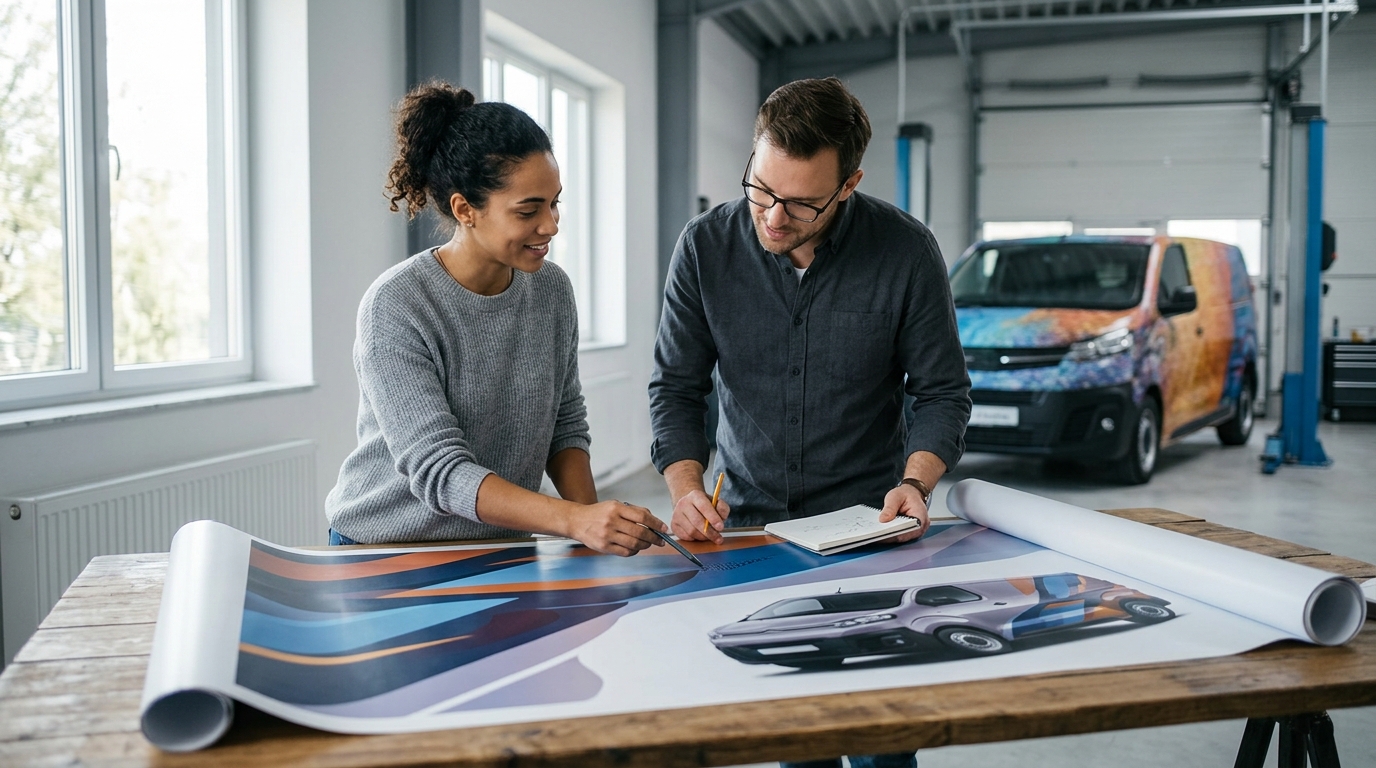
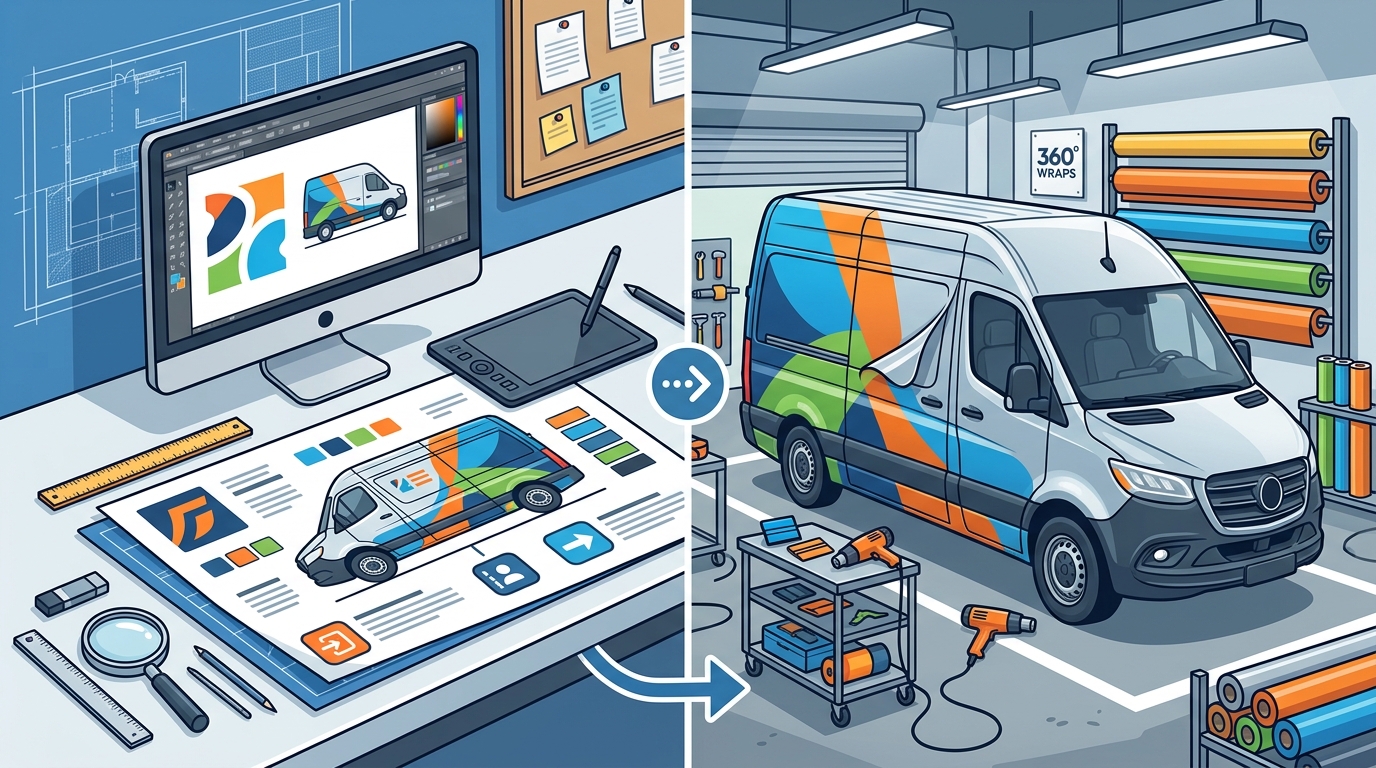
Door handles, mirrors, curves, and wheel wells all interrupt flat artwork. A skilled designer templates the exact vehicle model and positions key elements where they will not be distorted or hidden. This is why working with experienced installers, like the team behind custom car wraps in Dallas, matters so much.
Low-Resolution Images
Graphics printed at low resolution look blurry and unprofessional when scaled to vehicle size. All artwork should be at least 300 DPI at full print size, and vector formats (AI, EPS, SVG) are preferred for logos and text.
Working with a Professional Wrap Company
A great design means nothing without expert installation. Bubbles, wrinkles, and peeling edges undermine your brand credibility. Look for a wrap provider that offers in-house design, uses premium vinyl materials from brands like 3M or Avery Dennison, and employs certified installers.
360 Wraps Inc., based in the heart of Dallas/Fort Worth, has been a full-service vehicle wrap shop since 2007. They handle everything from initial concept and truck wraps in Dallas to nationwide fleet rollouts. With over 100 years of combined vehicle advertising experience on staff, their team ensures every wrap is designed for maximum marketing ROI and installed to last.
Key Takeaways
- A single vehicle wrap can generate 30,000 to 70,000 impressions per day, making it one of the highest-reach marketing tools available.
- Keep designs simple: bold fonts, high-contrast colors, and no more than seven words in the main message.
- Always include a clear call to action such as a phone number, website, or QR code to drive engagement.
- Choose between full, partial, or decal wraps based on budget and desired impact.
- Design around the vehicle's contours to prevent key elements from being hidden or distorted.
- Use high-resolution, vector-based artwork to ensure a crisp, professional appearance.
- Partner with an experienced wrap company that offers in-house design and certified installation.
Frequently Asked Questions
How much does a vehicle wrap cost for marketing purposes?
Costs vary based on vehicle size and coverage. Full wraps typically range from $2,000 to $5,000 or more, while partial wraps start around $500. The investment pays for itself quickly given the low cost per impression, which can be as little as $0.15 per thousand views.
How long does a vehicle wrap last?
A professionally installed wrap using premium vinyl from manufacturers like 3M or Avery Dennison typically lasts five to seven years. Longevity depends on climate, sun exposure, and vehicle care.
Will a vehicle wrap damage my paint?
No. High-quality vinyl wraps actually protect the original paint from UV rays and minor abrasions. When removed by a professional, the paint underneath is typically in better condition than exposed areas.
What file formats should I provide to my wrap designer?
Vector formats like AI, EPS, or SVG are ideal for logos and text. Supporting images should be high-resolution (300 DPI or higher). Your wrap company's design team can convert most formats if needed.
Can I wrap a leased vehicle?
Yes. Because wraps are removable without damaging paint, they are an excellent branding option for leased vehicles. Always check your lease agreement for any specific restrictions.
How many impressions can a wrapped vehicle generate?
According to industry data, a single wrapped vehicle generates 30,000 to 70,000 impressions daily and up to 600 impressions per mile traveled. A wrapped intra-city truck can accumulate up to 16 million visual impressions per year.
Do vehicle wraps work for small businesses?
Absolutely. Small businesses often see the greatest relative impact because wraps provide continuous local exposure without recurring ad spend. Studies indicate small businesses experience an average 15% increase in sales after implementing wrap advertising.
How long does installation take?
Most wraps can be designed and installed within one to seven days, depending on vehicle size, design complexity, and the chosen material.
Ready to Turn Your Vehicle into a Marketing Machine?
Whether you need a single custom car wrap or a full fleet rollout, the experts at 360 Wraps Inc. in Dallas/Fort Worth are ready to help. Contact 360 Wraps today to start your project and get a free consultation on a wrap design built to maximize your brand visibility.