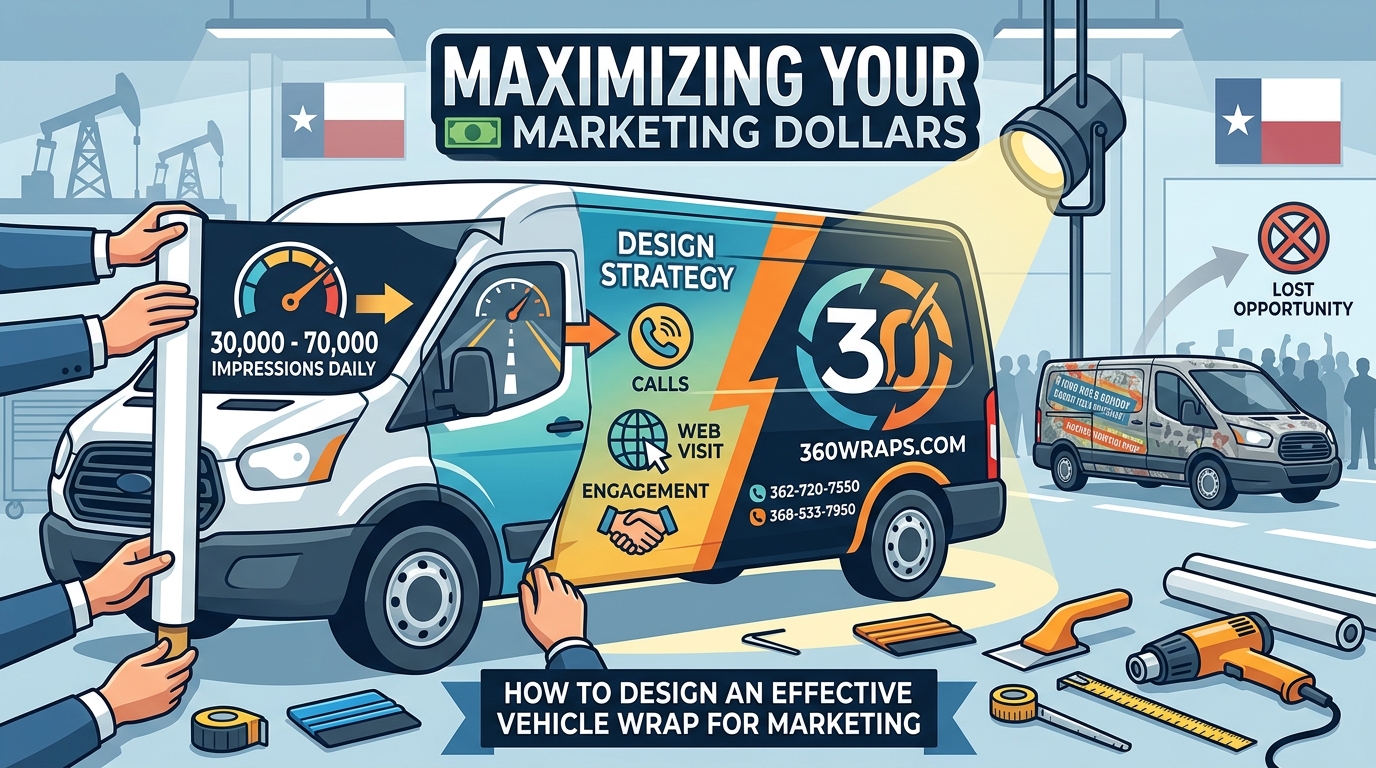
A vehicle wrap is a large vinyl graphic applied to the surface of a car, truck, or van that turns it into a mobile billboard for your brand. When designed well, a single wrapped vehicle can generate between 30,000 and 70,000 impressions every day, according to the Outdoor Advertising Association of America (OAAA). But not all wraps deliver the same results. The difference between a wrap that drives phone calls and one that blends into traffic comes down to design strategy. In this guide, we walk you through the essential steps to create a vehicle wrap that captures attention, communicates your message, and maximizes your marketing investment.
Why Vehicle Wraps Work as Marketing Tools
Vehicle wrap advertising is one of the most cost-effective forms of out-of-home marketing available today. A study by 3M found that fleet graphics deliver an average cost of just $0.48 per thousand impressions, far below the $3.56 CPM for billboards. That means a $3,500 wrap can produce the equivalent impact of $130,000 in traditional advertising spend.
Research also shows that 97% of survey respondents recall ads they see on vehicles, and 66% of consumers take action after seeing a vehicle wrap. These numbers make wraps one of the highest-performing advertising formats for local businesses, especially service companies operating across areas like the Dallas-Fort Worth metroplex.
Step 1: Define Your Goals and Audience
Before opening a design tool, clarify what you want your wrap to accomplish. Are you building brand awareness for a new business? Driving phone calls for an established service company? Promoting a specific product line?
Identify Your Target Viewer
Consider who will see your vehicle most often. A plumbing company driving through residential neighborhoods needs a different message than a catering business parked at corporate events. Your wrap should speak directly to the people most likely to become customers.
Set a Clear Call to Action
A call to action (CTA) is the specific next step you want viewers to take after seeing your wrap. Include a phone number, website URL, or QR code. Wraps with clear calls to action can increase customer engagement by up to 35%, according to ZipDo research.
Step 2: Prioritize Key Brand Elements
Your vehicle wrap needs to communicate your brand identity in seconds. Drivers and pedestrians get roughly 3 to 6 seconds of viewing time, so every design choice should serve clarity.
Must-Have Elements
- Company logo: Place it prominently on both sides and the rear of the vehicle.
- Business name: Use large, readable type that is legible from at least 50 feet away.
- Contact information: A phone number and website are essential. Keep it to two contact methods maximum.
- Brand colors: Consistency is non-negotiable. Your wrap should match your other marketing materials exactly.
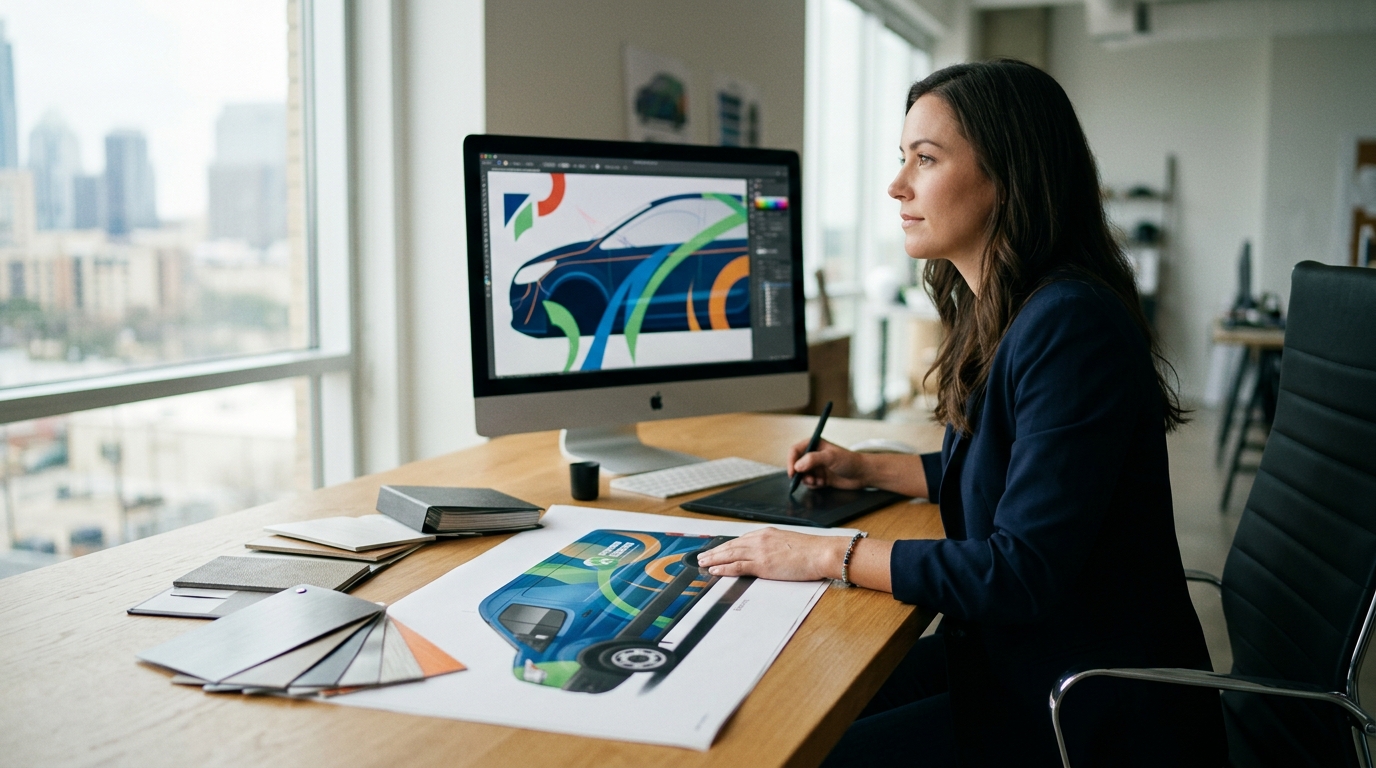
At 360 Wraps, the design team takes your brand identity and translates it onto a digital canvas, showing you exactly what the wrap will look like before anything is printed.
Step 3: Follow Proven Design Principles
A well-designed vehicle wrap balances visual impact with information delivery. Here are the principles that separate great wraps from forgettable ones.
Keep It Simple
Simplicity is the foundation of effective wrap design. Limit your message to seven words or fewer for the primary headline. Avoid cluttering the design with too many images, excessive text, or competing visual elements. The most effective wraps convey their message quickly and clearly.
Use High-Contrast Colors
Color contrast is the degree of difference between your text, graphics, and background. High contrast (such as white text on a dark background) ensures readability at speed and distance. Avoid placing dark text on dark backgrounds or light text on light backgrounds.
Design for the Vehicle Shape
A vehicle is not a flat billboard. Door handles, wheel wells, windows, and body lines all affect how your design is perceived. Work with your designer to create a layout that flows naturally around these features rather than fighting them.
Step 4: Choose the Right Wrap Type
A wrap type is the extent of coverage applied to your vehicle. Choosing the right option depends on your budget, goals, and vehicle type.
| Wrap Type | Coverage | Best For | Typical Cost Range |
|---|---|---|---|
| Full Wrap | 100% of vehicle body | Maximum brand impact and color change | $2,000 - $3,500 |
| Partial Wrap | 25-75% of vehicle body | Budget-conscious branding | $1,000 - $2,000 |
| Spot Graphics / Decals | Logo and text only | Simple identification and fleet consistency | $300 - $1,000 |
| Perforated Window Film | Rear and side windows | Additional messaging without blocking driver visibility | $150 - $500 |
Full wraps deliver the strongest visual impact. As noted on the 360 Wraps services page, wraps are priced by the square foot, and the team uses premium materials with state-of-the-art printing technology for long-lasting results.
Step 5: Work With Professional Designers and Installers
Even the best design fails if it is poorly installed. Bubbles, wrinkles, and misaligned graphics undermine your brand credibility. Professional installation is the process of meticulously applying printed vinyl to your vehicle so it conforms perfectly to every contour and curve.
Custom car wrap specialists like the team at 360 Wraps use digital vehicle templates to preview your design before printing. This step eliminates guesswork and ensures accurate placement of every element. Founded in 2007, 360 Wraps Inc. brings over 100 years of combined vehicle advertising experience, handling everything from single vehicles to nationwide fleet branding programs.
A properly installed wrap can last five to seven years, protecting your original paint while delivering continuous advertising value.
Vehicle Wrap Cost vs. ROI
Vehicle wraps offer one of the best returns on investment in advertising. Here is how they compare to other common formats:
| Advertising Medium | Avg. CPM (Cost per 1,000 Impressions) | Recurring Cost |
|---|---|---|
| Vehicle Wrap | $0.48 | One-time purchase |
| Billboard | $3.56 | Monthly rental |
| Transit Advertising | $7.45 | Monthly rental |
| Radio | $8.00 - $12.00 | Per campaign |
The data is clear: vehicle wraps generate the lowest cost per impression of any out-of-home advertising method. You buy a wrap once, and it works for you around the clock for years. For Texas businesses looking to stretch their marketing budget, wraps are hard to beat.
Key Takeaways
- A single wrapped vehicle can generate 30,000 to 70,000 daily impressions at the lowest CPM in out-of-home advertising.
- Define your marketing goal and target audience before starting the design process.
- Keep designs simple: limit your headline to seven words or fewer and use high-contrast colors.
- Include a clear call to action such as a phone number, website, or QR code.
- Choose a wrap type (full, partial, or spot graphics) that fits your budget and branding goals.
- Always work with professional designers and certified installers to ensure quality and longevity.
- A well-installed wrap lasts five to seven years, delivering continuous ROI with no recurring fees.
Frequently Asked Questions
What is a vehicle wrap?
A vehicle wrap is a large printed vinyl graphic that is applied directly to the exterior surfaces of a car, truck, van, or other vehicle. It transforms the vehicle into a mobile advertisement that displays your brand, logo, and messaging wherever you drive.
How much does a vehicle wrap cost?
A full vehicle wrap typically costs between $2,000 and $3,500, depending on the size of the vehicle and complexity of the design. Partial wraps and spot graphics cost less. At 360 Wraps, design time is included at no additional charge.
How long does a vehicle wrap last?
A high-quality vehicle wrap that is professionally installed can last five to seven years. You will typically see about five years of excellent appearance before any noticeable wear. Proper maintenance, such as hand washing and avoiding prolonged sun exposure, extends its lifespan.
How many impressions does a wrapped vehicle generate?
According to industry data, a single wrapped vehicle generates between 30,000 and 70,000 impressions per day, or 400 to 600 impressions per mile driven. That can translate to millions of views annually.
Will a vehicle wrap damage my paint?
No. When applied to a vehicle with a quality factory paint job, a vinyl wrap actually protects the paint underneath from UV exposure, minor scratches, and weather. When removed properly by a professional, the original paint is preserved.
How long does installation take?
Most vehicle wraps are designed and installed within one to five days. Simple wraps can be completed in a few hours, while complex full wraps on larger vehicles may take up to five days.
What makes a vehicle wrap design effective for marketing?
The most effective wraps are simple, high-contrast, and include a clear call to action. They prioritize the company name, logo, and one primary contact method. Designs should account for the specific curves and body lines of the vehicle.
Can I wrap any type of vehicle?
Yes. Professional wrap companies like 360 Wraps can wrap cars, trucks, vans, trailers, box trucks, SUVs, boats, and even 18-wheelers. If it has a surface, it can be wrapped.
Ready to Turn Your Vehicle Into a Marketing Machine?
Your vehicle is already on the road every day. Make every mile count with a professionally designed wrap from 360 Wraps Inc. The team offers free design consultations, no design fees, and expert installation backed by nearly two decades of experience. Request a free quote today and start generating thousands of daily impressions for your business.