A vehicle wrap is one of the most powerful and cost-effective marketing tools available to businesses today. A single wrapped vehicle can generate between 30,000 and 70,000 impressions per day, turning every mile driven into a brand-building opportunity. But not all wraps deliver equal results. The difference between a forgettable design and one that drives real leads comes down to strategy, clarity, and professional execution. In this guide, we walk you through the key principles of designing a vehicle wrap that actually works for your business.
Why Vehicle Wraps Work for Marketing
Vehicle wrap advertising is a marketing practice that involves covering a vehicle in large vinyl graphics, effectively turning it into a mobile billboard. According to the Outdoor Advertising Association of America (OAAA), 95% of Americans are reached by media targeting vehicle drivers and passengers. That reach is hard to match with any other single advertising channel.
The numbers back it up. A study by 3M found that fleet graphics generate an average cost of just $0.48 per thousand impressions, making wraps far cheaper than billboards, radio, or digital ads. Research also shows that 97% of survey respondents recalled vehicle advertisements, and 75% of viewers formed impressions about a company based on its vehicle graphics.
For Texas businesses looking to maximize their marketing budget, vehicle branding is a strategy that pays for itself many times over.
Start with Your Brand Strategy
Before a single pixel is placed, you need clarity on your brand identity. What is the one message you want viewers to remember after a three-second glance? A vehicle wrap is not a brochure. It is a high-speed impression tool that must communicate your brand instantly.
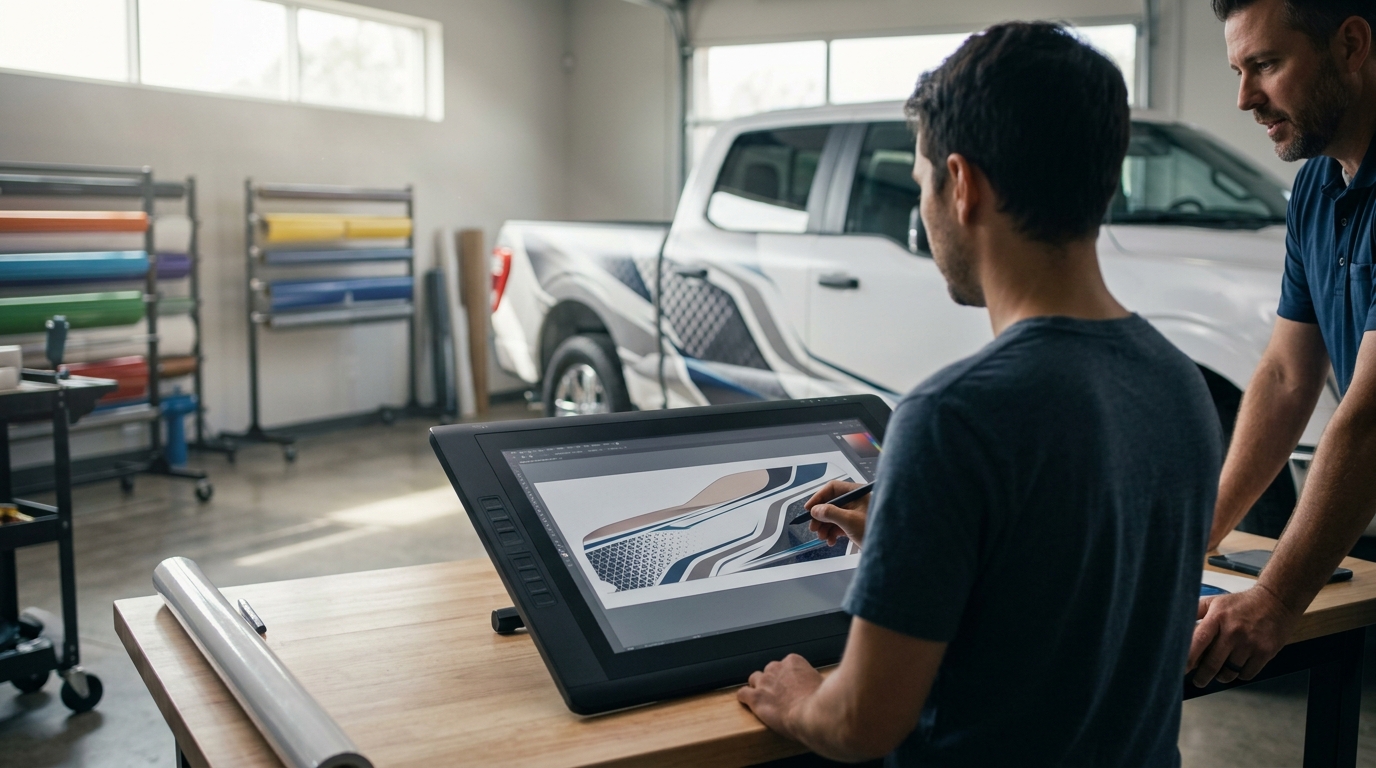
Start by defining your logo placement, tagline, phone number, and website URL. These are your non-negotiable elements. At 360 Wraps, the design process begins with a consultation to discuss your goals, brand, and vision. Their team creates custom designs tailored to your brand identity with no design fees.
Define Your Hierarchy of Information
Rank your content by importance: company name first, then your primary service, followed by contact details. Everything else is secondary. Resist the urge to add too many details. Simplicity wins on the road.
Core Design Principles for Effective Wraps
Designing an effective vehicle wrap is both an art and a science. It requires a keen understanding of branding, visual communication, and the unique canvas of a vehicle's body. Here are the principles that separate great wraps from forgettable ones.
Keep It Simple
Viewers typically have only 3 to 5 seconds to absorb your message in traffic. Limit your design to one clear headline, your logo, and a call to action. Cluttered wraps with excessive text are ignored.
Use High-Resolution Imagery
All graphics should be at least 300 DPI at print size. Low-resolution images look pixelated at scale and undermine your brand's credibility. A professional wrap provider like 360 Wraps in Dallas uses premium materials and state-of-the-art printing technology to ensure crystal-clear output.
Account for Vehicle Contours
A vehicle is not a flat billboard. Door handles, mirrors, wheel wells, and body lines all interrupt the design surface. Experienced designers position key branding elements where they will not be distorted or hidden. Testing designs on a digital vehicle model before printing is a best practice that prevents costly mistakes.
Typography and Readability at Speed
Typography is the backbone of any effective wrap. A call to action is the specific element that tells a viewer what to do next, such as "Call Now" or "Visit Our Website." It must be legible from at least 30 feet away.
Use bold, sans-serif fonts for maximum legibility. Limit yourself to two font families at most. Ensure strong contrast between text color and background. White text on a dark background or dark text on a light background both work well.
Size Matters
Your company name should be readable from 100 feet. Your phone number and URL should be legible from at least 30 to 50 feet. If a viewer cannot read your contact info at a stoplight, you have lost a lead.
Color Psychology and Contrast
Color choice directly affects how people perceive your brand. Bright, saturated colors attract attention, while muted tones convey sophistication. The key is to match your wrap colors to your existing brand palette for consistency.
High contrast between the wrap background and text is essential. A wrap that blends into the vehicle's original color will not stand out in traffic. Bold color blocking, where large areas of solid color frame your message, is one of the most effective techniques for roadside visibility.
At 360 Wraps, the proprietary system ensures that every vehicle in a fleet branding program maintains correct brand colors and accurate body placement across every vehicle.
Full Wrap vs. Partial Wrap vs. Decals
Choosing the right coverage level depends on your budget, vehicle type, and marketing goals. Here is a quick comparison:
| Wrap Type | Coverage | Typical Cost | Best For |
|---|---|---|---|
| Full Wrap | 100% of vehicle surface | $2,000 - $5,000+ | Maximum brand impact, fleet vehicles |
| Partial Wrap | 25-75% of vehicle surface | $500 - $2,000 | Budget-conscious businesses, targeted messaging |
| Vinyl Decals/Lettering | Logos and text only | $200 - $800 | Basic identification, service vehicles |
A full wrap delivers the highest visual impact and can last 3 to 5 years or more with proper care. 360 Wraps uses Avery wrap film and laminate, with manufacturer durability estimates of up to 5 years on vertical surfaces.
Why Professional Installation Matters
Even the best design fails if it is poorly installed. Bubbles, wrinkles, and misaligned graphics destroy credibility and shorten the wrap's lifespan. Professional installation is the process of applying vinyl graphics using specialized tools and techniques to achieve a seamless, paint-like finish.
360 Wraps Inc. was founded in 2007 by Tommy Strader, drawing on over 12 years of marketing and graphic design experience. Today the company has over 100 years of combined vehicle advertising experience on staff and handles more vehicles each week than any other specialty wrap shop in the DFW Metroplex. Their truck wrap services and expert installers ensure a flawless, long-lasting finish every time.
Key Takeaways
- Vehicle wraps generate 30,000 to 70,000 daily impressions at a fraction of the cost of traditional ads.
- Keep your design simple: one headline, your logo, and a clear call to action.
- Use bold, high-contrast colors and large sans-serif fonts readable from 100 feet.
- Account for vehicle contours by testing designs on digital mockups before printing.
- Full wraps deliver maximum impact, but partial wraps and decals offer budget-friendly alternatives.
- Professional installation is essential for longevity and brand credibility.
- Work with an experienced provider like 360 Wraps Inc. that offers free design consultation and premium materials.
Frequently Asked Questions
How much does a vehicle wrap cost?
A full vehicle wrap typically ranges from $2,000 to $5,000 depending on vehicle size and design complexity. Partial wraps and decals cost significantly less. At 360 Wraps, wraps are priced by the square foot, with an average full wrap ranging from $2,000 to $3,500.
How long does a vehicle wrap last?
A professionally installed wrap using premium materials like Avery vinyl can last 3 to 5 years or longer. Proper care, including hand washing and avoiding prolonged sun exposure, extends the wrap's life.
Can I design my own vehicle wrap?
While you can provide input on branding and messaging, professional designers understand how to adapt artwork to a vehicle's unique shape. 360 Wraps does not charge for design time and works collaboratively with clients from concept to completion.
How many impressions does a vehicle wrap generate?
Industry data shows a single wrapped vehicle generates 30,000 to 70,000 impressions per day. According to 3M research, a wrapped fleet vehicle can generate up to 6 million impressions per year.
Do vehicle wraps damage the paint underneath?
No. High-quality vinyl wraps actually protect the original paint from UV rays and minor scratches. When removed by a professional, the paint underneath is typically in better condition than exposed areas.
How long does it take to install a vehicle wrap?
Most wraps can be designed and installed within 1 to 5 days depending on complexity. Simple wraps may be completed in just a few hours.
What is the best color for a marketing vehicle wrap?
The best color is one that aligns with your brand while creating high contrast against text elements. Bold, saturated colors like red, blue, and orange tend to attract the most attention on the road.
Are vehicle wraps better than billboards?
Yes, in terms of cost per impression. Vehicle wraps average $0.48 per thousand impressions compared to $3.56 for billboards. They also offer mobility and 24/7 exposure without recurring rental fees.
Ready to Design Your Vehicle Wrap?
Turning your vehicle into a mobile marketing machine starts with the right partner. 360 Wraps Inc. offers free design consultation, premium Avery materials, and expert installation from their Dallas/Fort Worth headquarters with nationwide service capabilities. Whether you need a single car wrap or a full fleet branding program, their team is ready to help.
Request a free quote from 360 Wraps today and start generating thousands of daily impressions for your business.