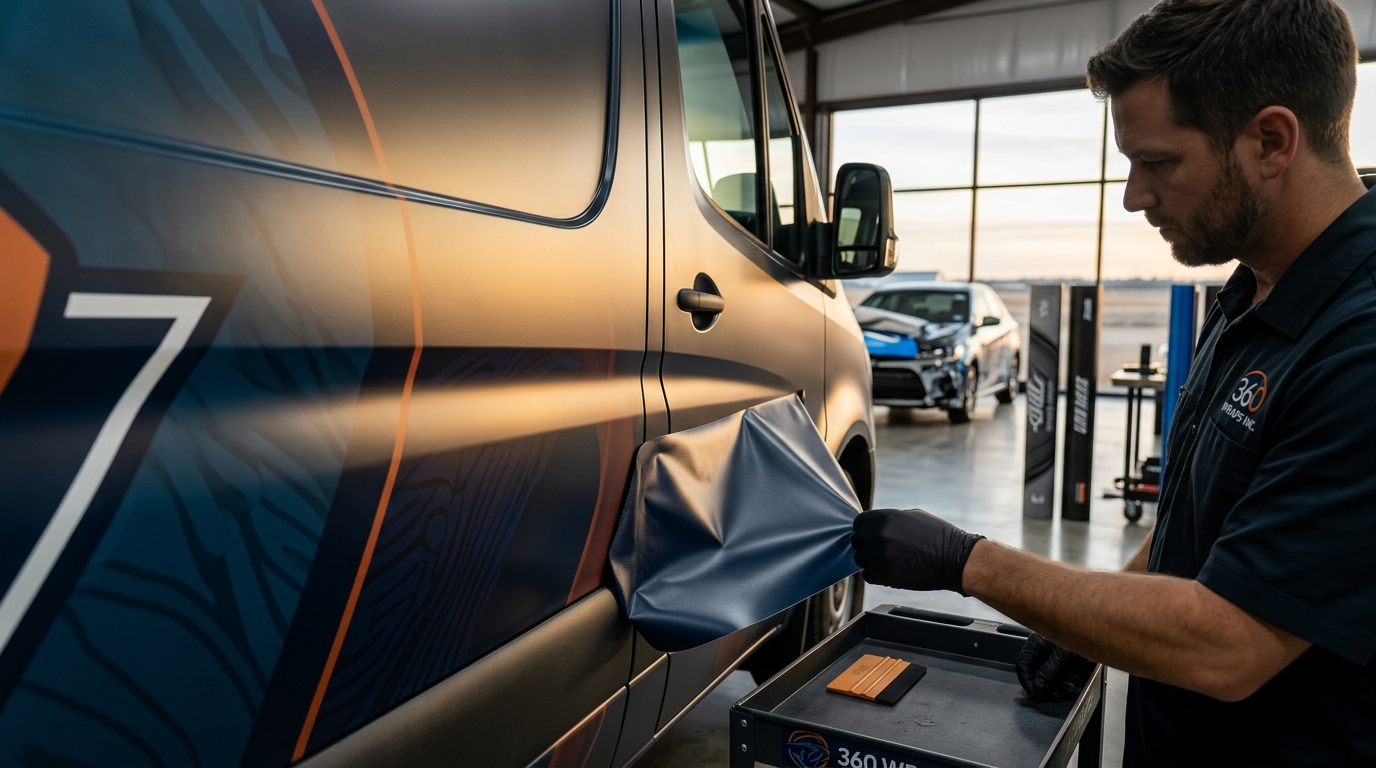
Picking the right wrap material is the single most important decision you will make when branding a commercial vehicle. The wrong choice can lead to premature fading, lifting edges, and wasted budget. The right choice delivers years of vibrant, on-brand advertising at one of the lowest costs per impression in marketing. In this guide, the team at 360 Wraps Inc. breaks down every factor you need to consider so your fleet looks sharp from day one through year five and beyond.
Why Wrap Material Matters for Commercial Vehicles
A commercial vehicle wrap is a large vinyl graphic applied to the exterior of a car, truck, or van to display branding and advertising. According to the Outdoor Advertising Association of America (OAAA), a single wrapped vehicle can generate 30,000 to 70,000 daily impressions in urban areas. That level of exposure makes material quality non-negotiable.
Choosing the wrong material can shorten a wrap's lifespan by 40 to 65 percent, increase maintenance costs, and cause peeling or color fading within months. For businesses running service fleets across Texas, every dollar spent on subpar vinyl is a dollar lost in brand credibility. At 360 Wraps, we use premium materials and state-of-the-art printing technology to avoid those pitfalls.
Cast Vinyl vs. Calendered Vinyl: The Core Choice
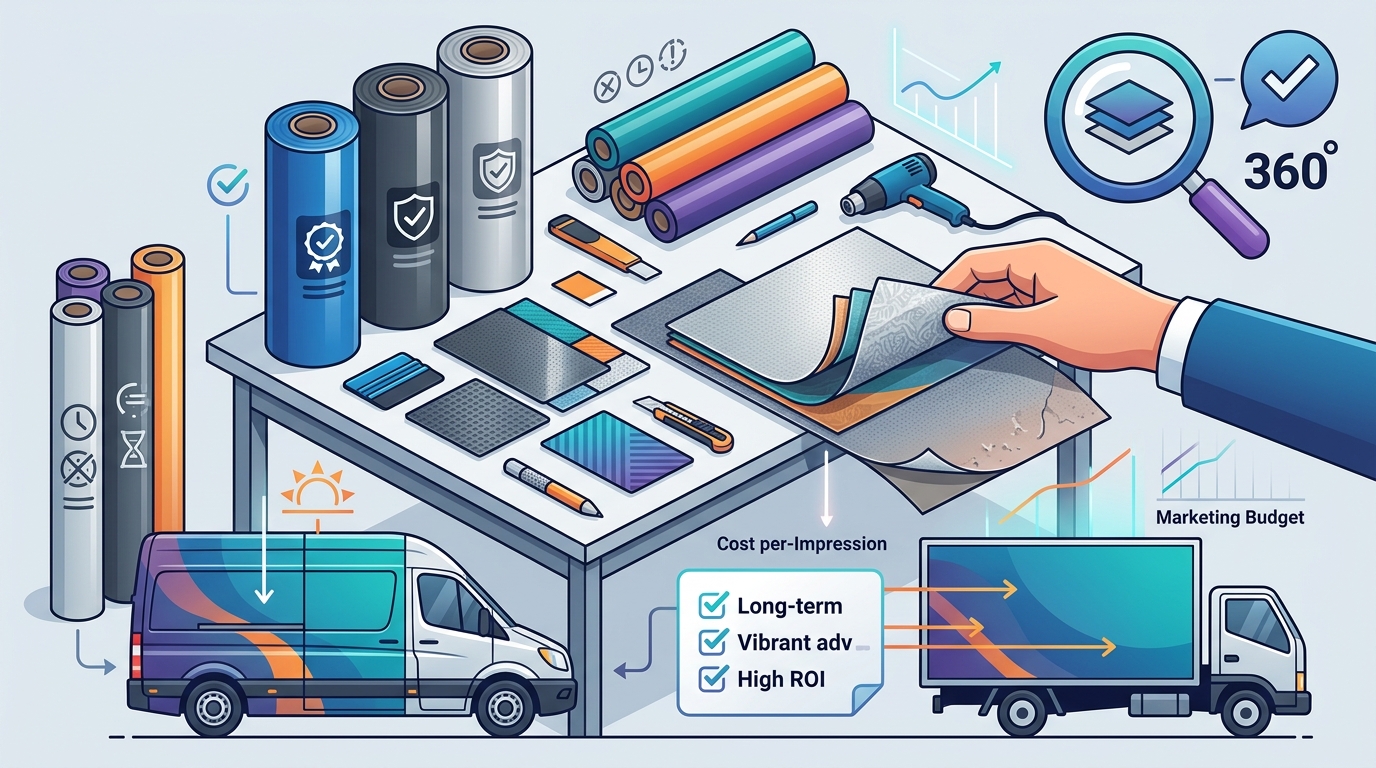
Nearly all vehicle wrap films fall into two manufacturing categories: cast vinyl and calendered vinyl. Understanding the difference is the first step toward a smart purchase.
What Is Cast Vinyl?
Cast vinyl is a premium wrap film manufactured by pouring liquid polyvinyl chloride (PVC) into a mold and curing it slowly. This process produces a thin (2.5 to 3.5 mil), flexible, and dimensionally stable film that conforms easily to complex curves, rivets, and recesses. Popular cast film brands include 3M IJ180/2080 series, Avery Dennison Supreme Wrapping Film, and Oracal 970RA.
What Is Calendered Vinyl?
Calendered vinyl is a more affordable wrap material produced by forcing heated PVC through a series of rollers, stretching and flattening it into a sheet. It is thicker (3 to 4 mil), stiffer, and more prone to shrinkage over time. This makes it best suited for flat or gently curved surfaces like box truck sides or short-term promotional graphics.
Head-to-Head Comparison
| Feature | Cast Vinyl | Calendered Vinyl |
|---|---|---|
| Thickness | 2.5 to 3.5 mil | 3 to 4+ mil |
| Conformability | Excellent on complex curves | Best on flat surfaces |
| Expected Lifespan | 5 to 7 years | 1 to 3 years |
| Shrinkage Risk | Minimal | Moderate to high |
| Cost | Higher upfront | Lower upfront |
| Best Use Case | Full wraps, long-term fleet branding | Flat-panel graphics, short-term promos |
| Removal | Clean with controlled heat | May crack, higher labor cost |
For most commercial fleets, cast vinyl is the clear winner. Its extended lifespan and maintained appearance make it more cost-effective over time, even with the higher initial price.
Choosing a Finish: Gloss, Matte, Satin, and More
A wrap finish is the surface texture applied to the printed or colored vinyl film. Modern automotive vinyl can replicate or even exceed traditional paint finishes. Here are the most common options:
- Gloss: Closely resembles factory automotive paint and reflects light well. It is the most popular choice for commercial branding because it makes colors pop.
- Matte: Offers a soft, non-reflective look that is trending for both personal and fleet vehicles. It hides minor surface imperfections better than gloss.
- Satin: Falls between gloss and matte, providing a subtle sheen that balances professionalism with a modern aesthetic.
- Textured (brushed metal, carbon fiber): Provides unique appearances impossible to achieve with paint. These require professional installation and can be harder to maintain.
For custom car wraps, the finish you pick should align with your brand identity. A law firm may prefer satin for understated elegance, while a landscaping company might choose a high-gloss green to stand out on every block.
Climate Considerations for Texas and Beyond
Climate directly impacts wrap performance. A cast vinyl wrap rated for seven years in a mild northern climate might last only four to five years under intense Texas sun without proper care. UV exposure, heat, and humidity all accelerate vinyl degradation.
For hot, sunny regions like Dallas and Houston, cast vinyl with UV-protective laminate is the recommended choice. Calendered vinyl may shrink and fade faster under intense sunlight. At 360 Wraps' 25,000-square-foot climate-controlled facility near DFW Airport, every installation is done in controlled conditions to ensure proper adhesion from the start.
Routine maintenance also extends wrap life. Hand wash with a mild, pH-neutral soap. Avoid automated car washes with stiff brushes. Remove bird droppings and tree sap promptly.
Top Vinyl Brands Compared
Not all vinyl is created equal. Here is a quick look at the industry-leading brands professional installers trust:
| Brand | Popular Product Lines | Type | Typical Warranty |
|---|---|---|---|
| 3M | IJ180, 2080 Series | Cast | 5 to 7 years |
| Avery Dennison | MPI 1105, Supreme Wrapping Film | Cast | 5 to 7 years |
| Oracal (ORAFOL) | 970RA, 3951RA | Cast | 5 to 7 years |
| Hexis | HX Series | Cast | 5+ years |
| Arlon | DPF Series | Calendered/Cast | 3 to 5 years |
360 Wraps uses Avery wrap film and laminate, with the manufacturer estimating durability of up to five years on vertical surfaces. Combined with expert installation, this delivers a reliable, long-lasting result for nationwide fleet branding projects.
Full Wrap, Partial Wrap, or Vinyl Lettering
Material choice also depends on how much of the vehicle you plan to cover.
Full Wraps
A full wrap covers the entire vehicle surface, including windows (using perforated window film). This demands high-quality cast vinyl for seamless results across every curve and panel. Full wraps deliver maximum brand impact and typically range from $2,000 to $3,500 for an average vehicle.
Partial Wraps
Partial wraps cover select panels, usually the sides and rear. They are a budget-friendly alternative that still makes a strong visual statement. A blend of cast and calendered vinyl can work here, depending on surface complexity.
Vinyl Lettering and Spot Graphics
Simple lettering and logos use cut vinyl or small printed panels. Calendered vinyl is often sufficient for these flat, straightforward applications. It is the most affordable entry point into truck wrap advertising in Dallas and beyond.
Key Takeaways
- Cast vinyl is the best material for full commercial vehicle wraps due to its flexibility, durability, and 5-to-7-year lifespan.
- Calendered vinyl is acceptable for flat surfaces, short-term promotions, and simple lettering at a lower price point.
- In hot Texas climates, always pair your wrap with a UV-protective laminate to prevent premature fading.
- Leading brands like 3M, Avery Dennison, and Oracal set the industry standard for commercial-grade films.
- Professional installation in a climate-controlled facility is critical for long-term performance.
- A wrapped vehicle generates 30,000 to 70,000 impressions per day, making material quality a direct investment in your marketing ROI.
- Always match your finish (gloss, matte, satin) to your brand identity and the vehicle's intended use.
Frequently Asked Questions
What is the best material for a commercial vehicle wrap?
Cast vinyl is widely regarded as the best material for commercial vehicle wraps. It is thinner, more flexible, and more durable than calendered vinyl, with a typical lifespan of five to seven years when properly installed and maintained.
How long does a commercial vehicle wrap last?
A quality commercial wrap made with cast vinyl and a proper laminate can last five to seven years with good care. In hot climates like Texas, regular maintenance and covered parking can help maximize that lifespan.
Is calendered vinyl ever a good choice for commercial vehicles?
Yes. Calendered vinyl works well for flat surfaces like box truck sides, trailers, and short-term promotional campaigns lasting up to three years. It is significantly more affordable than cast vinyl.
What vinyl brand does 360 Wraps use?
360 Wraps uses Avery Dennison wrap film and laminate, a trusted industry-standard brand. The manufacturer estimates wrap durability of up to five years on vertical surfaces.
How much does a commercial vehicle wrap cost?
An average full wrap ranges from $2,000 to $3,500 depending on vehicle size and design complexity. Wraps are priced by the square foot, and partial wraps or vinyl lettering cost less.
Does a vehicle wrap damage the original paint?
No. A professionally installed vehicle wrap will not damage OEM paint. In fact, wraps protect the original finish from UV rays, minor scratches, and road debris, helping preserve resale value.
What finish should I choose for my fleet?
Gloss is the most common finish for commercial fleets because it resembles factory paint and makes brand colors vibrant. Matte and satin finishes are growing in popularity for companies seeking a modern, upscale look.
Can I wrap just part of my vehicle?
Absolutely. Partial wraps and vinyl lettering are cost-effective alternatives to a full wrap. They still generate strong brand visibility while keeping costs lower for businesses on a tighter budget.
Get Started With 360 Wraps
Choosing the right wrap material does not have to be overwhelming. With over 100 years of combined vehicle advertising experience on staff and a 25,000-square-foot climate-controlled shop near DFW Airport, 360 Wraps Inc. is ready to guide you from design to installation. We do not charge for design time, and we work with everyone from single-vehicle businesses to nationwide fleets across all 50 states. Request a free quote today and turn your vehicles into your hardest-working marketing assets.