A vehicle wrap is a large vinyl graphic applied to a vehicle's exterior, turning it into a mobile billboard that advertises your brand everywhere it goes. With studies showing that a single wrapped vehicle can generate between 30,000 and 70,000 impressions every day, getting the design right is not optional. A poorly designed wrap wastes money, while a strategic one builds recognition, drives leads, and pays for itself many times over. In this guide, we walk through the key steps to designing a vehicle wrap that actually converts viewers into customers.
Why Vehicle Wraps Work for Marketing
Vehicle wrap advertising is a marketing practice that involves covering a vehicle in large vinyl graphics, effectively turning it into a mobile billboard. The numbers behind this medium are staggering. According to the Outdoor Advertising Association of America (OAAA), vehicle wraps generate up to 600 impressions per mile, with a cost per thousand impressions (CPM) of just $0.48, compared to $3.56 for traditional billboards.
Research also shows that wraps create name recognition 15 times more effectively than other advertising types. And 97% of people remember seeing a vehicle wrap ad, making recall rates far higher than static signage. For Texas businesses in particular, the high volume of highway commuters in cities like Dallas and Houston amplifies this effect.
Define Your Marketing Goals First
Before opening a design tool, clarify what the wrap needs to accomplish. Are you building brand awareness for a new company? Promoting a specific service? Generating phone calls? Your goal directly shapes every design decision.
Brand Awareness vs. Direct Response
A brand-awareness wrap emphasizes logo size, brand colors, and a memorable tagline. A direct-response wrap prioritizes a phone number, website URL, or QR code. Most effective wraps blend both, but one objective should lead.
Know Your Audience and Routes
Consider where the vehicle will spend most of its time. A truck wrap driven through Dallas neighborhoods targets a different audience than a fleet vehicle running interstate routes. Tailor font sizes and messaging complexity accordingly.
Core Design Principles for Wraps
Designing an effective vehicle wrap is both an art and a science, requiring a keen understanding of branding, visual communication, and a vehicle's unique canvas. Follow these principles to maximize impact.
Simplicity Wins
Viewers see your vehicle for only a few seconds. Limit your design to one headline, your logo, and one contact method. Cluttered wraps confuse the eye and reduce recall. A clean, modern design communicates credibility and professionalism.
Scale and Readability
Text should be legible from at least 30 feet away. Use bold, sans-serif fonts with high contrast against the background. Your company name should be the largest text element, readable even at highway speeds.
Test Digitally Before Printing
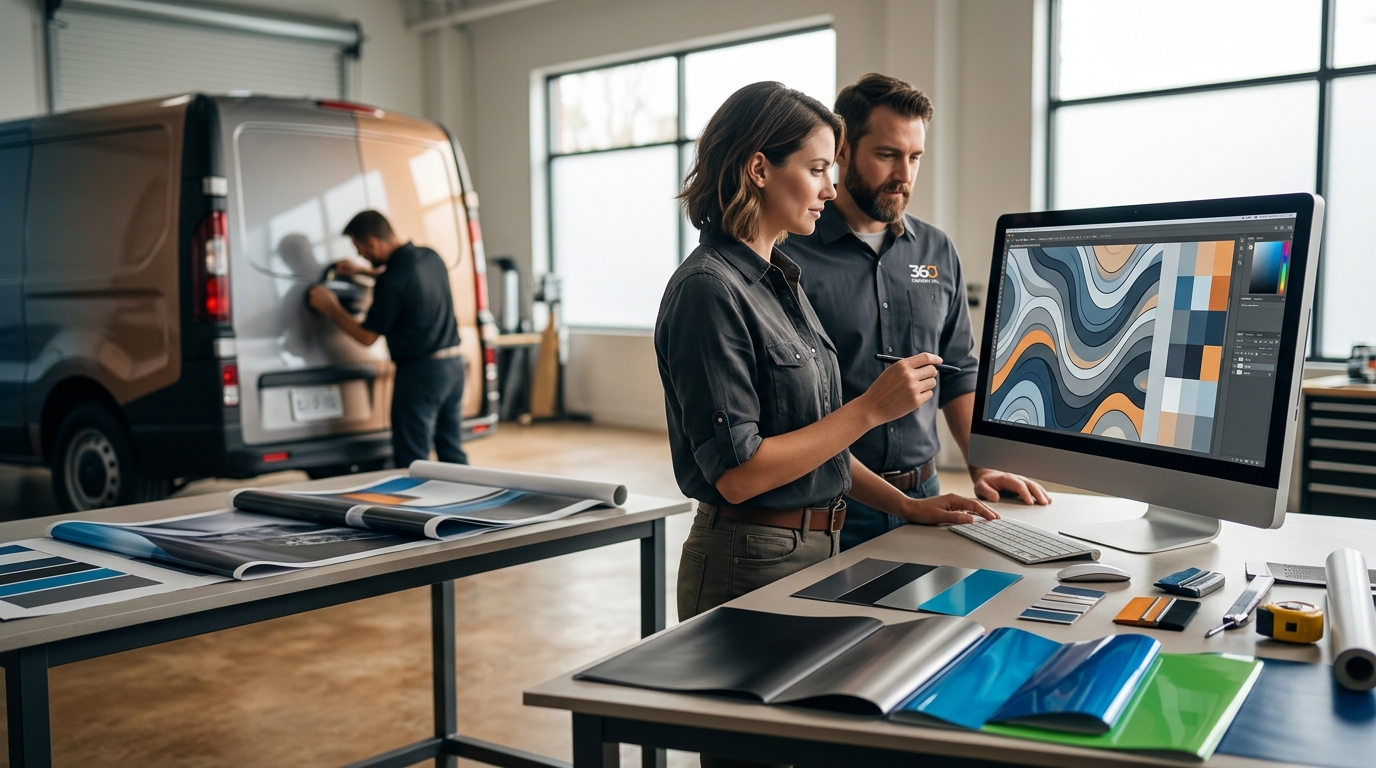
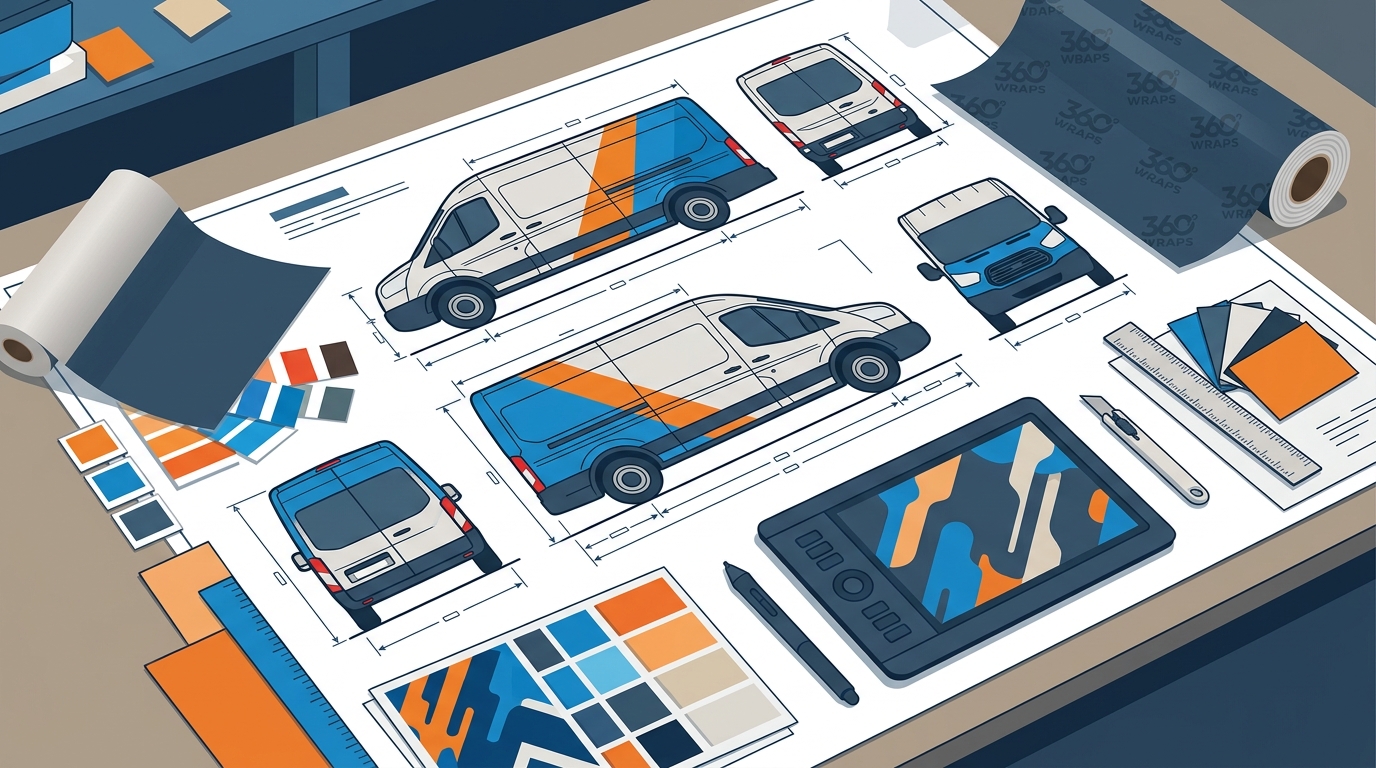
Always simulate the design on a digital vehicle model before production. This allows for adjustments around door handles, wheel wells, and windows, ensuring the final product is as impactful as possible. Professional wrap shops typically include digital mockups as part of their process.
Color Theory and Brand Consistency
Color is the first thing a viewer processes. High-contrast color combinations (dark text on light backgrounds or vice versa) increase readability by up to 40%. Choose colors that align with your existing brand identity so the wrap reinforces recognition across all touchpoints.
Brand consistency is non-negotiable. At 360 Wraps, the production system ensures that every vehicle in a fleet maintains the correct brand colors and accurate body placement, whether it is one vehicle or a thousand across all 50 states.
Messaging and Call-to-Action Placement
A call to action (CTA) is the specific instruction you give viewers, such as "Call Now" or "Visit Our Website." Place your primary CTA on the rear of the vehicle, where following drivers have the longest viewing time. Secondary contact information works well on the sides.
Include no more than two contact methods. A phone number and a short URL or QR code are sufficient. Too many options create decision paralysis. Research shows that 66% of consumers take action after seeing a vehicle wrap, so make that action obvious.
Full Wrap vs. Partial Wrap vs. Decals
Choosing the right coverage level depends on your budget and goals. Here is a quick comparison:
| Wrap Type | Coverage | Typical Cost Range | Best For |
|---|---|---|---|
| Full Wrap | 100% of vehicle surface | $2,000 - $5,000+ | Maximum brand impact, fleet branding |
| Partial Wrap | 25% - 75% of surface | $500 - $2,000 | Budget-conscious campaigns |
| Decals/Lettering | Logo and text only | $200 - $800 | Simple identification, service vehicles |
Full wraps deliver the strongest visual impact and also protect the vehicle's original paint from UV exposure and minor damage. For businesses exploring custom car wraps in Dallas, a full wrap is often the best long-term investment.
Common Vehicle Wrap Design Mistakes
Even well-intentioned designs can fail. Avoid these pitfalls:
- Too much text: Treat the wrap like a billboard, not a brochure. Fewer words mean faster comprehension.
- Low-resolution images: Graphics must be at least 300 DPI at print size. Pixelated images destroy credibility.
- Ignoring the vehicle's shape: Designs must account for curves, seams, and windows. What looks great on a flat screen may distort on a curved panel.
- Forgetting the rear: The back of the vehicle is prime real estate in traffic. Never leave it blank.
- Skipping professional installation: Even the best design fails with bubbles, wrinkles, or misalignment. Work with experienced installers who understand material behavior.
Key Takeaways
- Vehicle wraps generate up to 70,000 daily impressions at a CPM of just $0.48, making them one of the most cost-efficient marketing tools available.
- Define a single primary goal (awareness or direct response) before starting any design work.
- Keep designs simple: one headline, your logo, and one clear call to action.
- Use high-contrast colors that match your brand identity for maximum readability and consistency.
- Always test designs on a digital vehicle mockup before printing to catch layout issues.
- Place your strongest CTA on the rear of the vehicle where it gets the longest viewing time.
- Partner with a professional wrap shop that handles design, printing, and installation under one roof.
Frequently Asked Questions
How much does a vehicle wrap cost?
Full vehicle wraps typically range from $2,000 to $5,000 or more depending on vehicle size, design complexity, and material quality. Partial wraps and decals offer lower-cost alternatives starting around $200.
How long does a vehicle wrap last?
High-quality vinyl wraps generally last 5 to 7 years with proper care. Factors like sun exposure, wash frequency, and material grade affect longevity.
Do vehicle wraps damage the paint?
No. When applied to factory or high-quality paint and removed correctly, vinyl wraps actually protect the original paint from UV rays, minor scratches, and debris.
How many impressions does a vehicle wrap generate?
According to the OAAA, a single wrapped vehicle generates 30,000 to 70,000 impressions daily and up to 600 impressions per mile driven.
What file format should I provide for a wrap design?
Most wrap shops prefer vector files (AI, EPS, or PDF) for logos and scalable elements. Raster images should be at least 300 DPI at the final print size.
Can I wrap a leased vehicle?
Yes. Vinyl wraps are removable and, when removed properly, leave no residue or damage. This makes them ideal for leased or financed vehicles.
How long does installation take?
Most full wraps can be designed and installed in 1 to 7 days depending on vehicle size and design complexity. Partial wraps and decals often take just a few hours.
Is a vehicle wrap better than a paint job for branding?
For marketing purposes, yes. Wraps cost roughly half the price of a quality paint job, can be changed or updated easily, and serve the dual purpose of advertising while protecting the original paint.
Ready to Design Your Vehicle Wrap?
Designing an effective marketing wrap takes strategy, creativity, and expert installation. With over 100 years of combined vehicle advertising experience, 360 Wraps handles everything from initial concept to final installation. Request a free quote today and turn your vehicle into a revenue-generating marketing machine.