Choosing the right material for your commercial vehicle wrap is one of the most important decisions you will make for your mobile advertising investment. The wrong vinyl can lead to premature fading, edge lifting, and wasted budget. The right material keeps your brand looking sharp for years while protecting the paint underneath. In this guide, the team at 360 Wraps Inc. breaks down everything you need to know about wrap materials so you can make a confident, informed choice for your fleet or single vehicle.
Why Material Choice Matters for Commercial Wraps
A commercial vehicle wrap is a vinyl graphic applied to the exterior of a business vehicle to display branding, contact information, and marketing messages. According to the Outdoor Advertising Association of America, a single wrapped vehicle can generate 30,000 to 70,000 impressions per day in urban areas. With that level of visibility, the quality of your wrap material directly affects how your brand is perceived.
Low-quality vinyl can shrink, crack, or fade within months. Premium materials maintain vivid color and adhesion for five to seven years. For businesses investing in vehicle branding, the material is not a place to cut corners.
Cast Vinyl vs. Calendered Vinyl Explained
What Is Cast Vinyl?
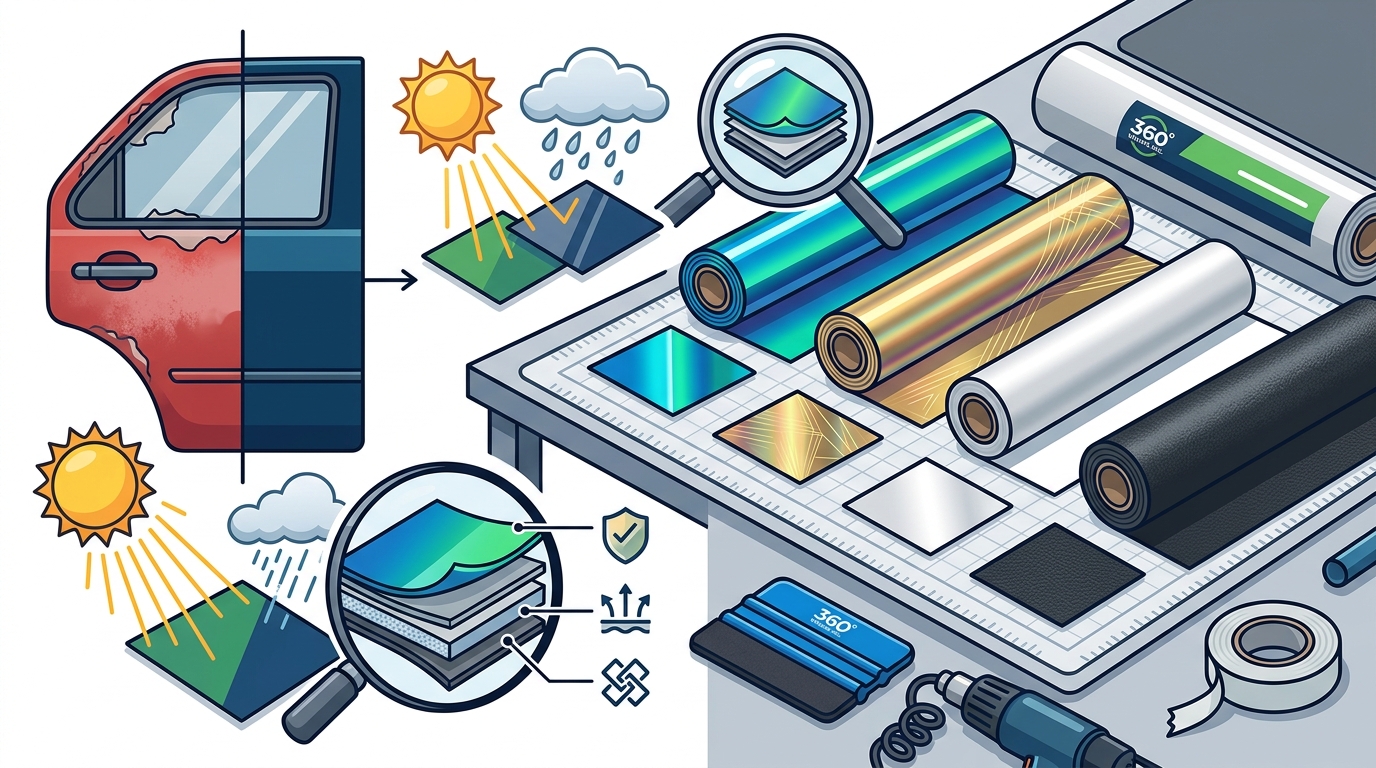
Cast vinyl is a thin, flexible film manufactured by pouring liquid PVC into a mold and allowing it to cure. This process produces a dimensionally stable material with minimal internal stress. Cast vinyl excels at conforming to complex curves, rivets, and deep recesses on commercial vehicles. Leading brands include 3M IJ180/IJ480 series, Avery Dennison MPI 1105, and Oracal 3951RA.
What Is Calendered Vinyl?
Calendered vinyl is a more affordable film produced by forcing heated PVC through a series of rollers. This rolling process introduces internal stress, giving the material a "memory" that can cause it to shrink back over time. Calendered vinyl works well on flat or gently curved surfaces like trailer sides and box trucks, but it struggles on vehicles with intricate body lines.
When to Use Each Type
For full commercial wraps on vans, trucks, and SUVs with compound curves, cast vinyl is the professional standard. Calendered vinyl is a practical choice for short-term promotional graphics, flat-panel fleet signage, or seasonal campaigns. At 360 Wraps, we use Avery wrap film and laminate for our fleet projects, ensuring durability that meets real-world demands.
Side-by-Side Material Comparison
| Feature | Cast Vinyl | Calendered Vinyl |
|---|---|---|
| Manufacturing | Poured into a mold | Rolled through heated rollers |
| Thickness | 2.5 to 3.5 mil | 3.5 to 4.5 mil |
| Conformability | Excellent on complex curves | Best for flat/gentle curves |
| Durability (Outdoor) | 5 to 7+ years | 3 to 5 years |
| Shrinkage Risk | Minimal | Moderate to high |
| Cost | Higher (premium) | 20 to 40% less per linear foot |
| Best For | Full wraps, long-term branding | Flat panels, short-term promos |
Finish Options: Gloss, Matte, and Satin
Beyond choosing between cast and calendered vinyl, you also need to select a finish. A finish is the surface texture of the vinyl that determines the wrap's visual style and maintenance needs.
Gloss finishes deliver a high-shine, showroom-quality look and are the easiest to clean. They hide minor surface imperfections and project a polished, professional image for commercial vehicles in Dallas and beyond.
Matte and satin finishes have surged in popularity for their sophisticated, understated appearance. However, they show fingerprints and oils more readily than gloss and require specific cleaning products formulated for vinyl wraps. When maintaining your wrap, avoid automated car washes with stiff brushes and stick to hand washing with pH-neutral soap.
Climate Considerations for Texas Fleets
Texas heat and UV exposure place significant demands on vehicle wrap materials. Temperatures regularly exceed 100°F in summer, and intense sun accelerates vinyl degradation if the material is not rated for prolonged UV exposure.
Cast vinyl with UV-resistant laminates is the recommended choice for Texas-based fleets. Its dimensional stability means it resists shrinking even through extreme temperature swings. Calendered vinyl, with its inherent "memory," is more susceptible to edge lifting and shrinkage in hot climates.
360 Wraps operates from a 25,000-square-foot climate-controlled facility near DFW Airport, ensuring every wrap is printed and installed in optimal conditions regardless of outdoor temperatures.
Balancing Budget and Longevity
Many businesses assume cheaper materials save money. In practice, low-quality vinyl often costs more over a wrap's lifecycle due to early replacement and damage to brand perception. An average full wrap ranges from $2,000 to $3,500, which is far less than renting a billboard monthly.
Consider the math: a $3,500 cast vinyl wrap lasting five years costs roughly $58 per month. That same wrap generates tens of thousands of daily impressions at a CPM of approximately $0.50 or less. A cheaper calendered wrap at $2,500 that fails after two years actually costs $104 per month and delivers fewer total impressions.
For truck wraps in Dallas and fleet projects across the state, investing in cast vinyl almost always delivers the better return.
Key Takeaways
- Cast vinyl is the premium standard for full commercial wraps, offering 5 to 7+ years of outdoor durability.
- Calendered vinyl is a budget-friendly option best suited for flat surfaces and short-term graphics.
- In hot climates like Texas, UV-resistant cast vinyl with laminate is essential to prevent fading and shrinkage.
- Gloss finishes are easiest to maintain, while matte and satin require vinyl-specific cleaning products.
- Material quality directly impacts your brand image; a wrapped vehicle generates up to 70,000 impressions per day.
- Always work with an experienced installer who understands material behavior on your specific vehicle type.
- The lower upfront cost of cheap vinyl often leads to higher long-term expenses from premature replacement.
Frequently Asked Questions
What is the best material for a commercial vehicle wrap?
Cast vinyl is widely regarded as the best material for commercial vehicle wraps. It conforms to complex curves, resists shrinkage, and lasts five to seven years with proper care. Major brands like 3M, Avery Dennison, and Oracal all produce high-quality cast films used by professional installers.
How long does a commercial vehicle wrap last?
A professional-grade cast vinyl wrap typically lasts five to seven years on vertical surfaces. 360 Wraps uses Avery wrap film and recommends re-evaluating your wrap around the three-year mark, depending on vehicle exposure and maintenance habits.
Is calendered vinyl ever a good choice for businesses?
Yes. Calendered vinyl works well for flat-sided trailers, box trucks, and temporary promotional campaigns. If your vehicle has simple body lines and the wrap is intended for less than three years, calendered vinyl offers meaningful savings without major quality trade-offs.
Does Texas heat damage vehicle wraps?
Extreme heat and UV exposure can degrade lower-quality vinyl faster. Cast vinyl with UV-protective laminate is specifically designed to withstand harsh sun conditions. Proper installation in a climate-controlled facility also plays a critical role in long-term wrap performance.
How much does a commercial vehicle wrap cost?
An average full vehicle wrap costs between $2,000 and $3,500, depending on vehicle size, material type, and design complexity. This is a one-time investment that continues generating impressions for years, unlike recurring billboard or digital ad costs.
Can I wrap a vehicle with existing paint damage?
Wrapping over paint damage is not recommended. The vinyl will conform to imperfections beneath it, making dents and scratches visible through the wrap. Always repair body damage before installation to ensure a smooth, professional finish.
What finish should I choose for a commercial wrap?
Gloss finishes are the most popular for commercial fleets because they are easy to clean and project a polished, professional image. Matte and satin finishes offer a modern, premium look but require more careful maintenance to keep looking their best.
Why does professional installation matter?
Professional installers understand how different materials behave on specific vehicle shapes. Poor installation leads to bubbles, wrinkles, and premature lifting. A team with experience, like the installers at 360 Wraps who have handled thousands of fleet vehicles since 2007, ensures your investment is protected.
Ready to Wrap Your Commercial Fleet?
Choosing the right material is the foundation of every successful vehicle wrap. Whether you need a single van wrapped or a nationwide fleet branded, 360 Wraps Inc. is here to guide you from design to installation with no charge for design time. Request a free quote today and let our team help you turn your vehicles into high-impact marketing assets.