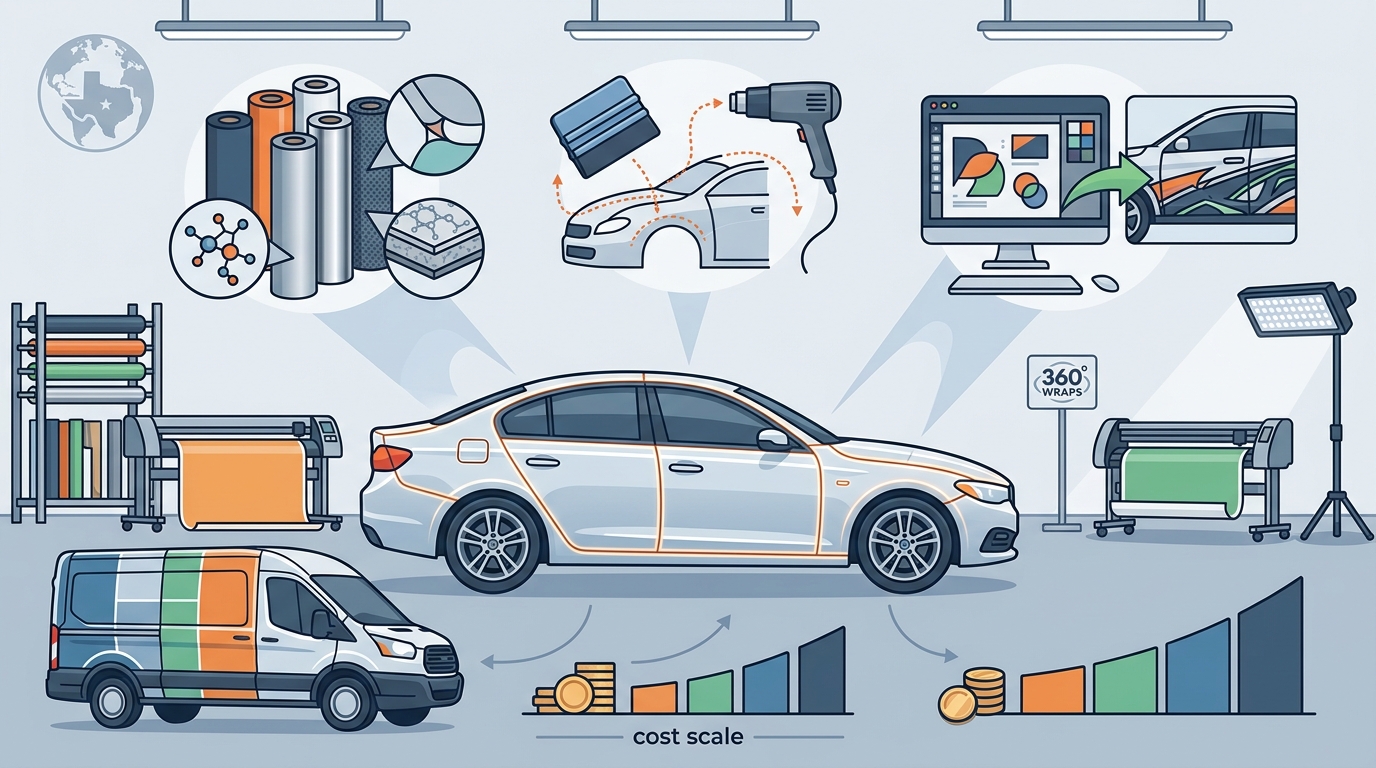
According to industry data from the International Sign Association, the average cost to fully wrap a standard sedan ranges between $2,500 and $5,000, while larger commercial vehicles can exceed $10,000 depending on complexity. This wide variance is not arbitrary. It reflects the intricate balance between material science, labor intensity, and design precision. Understanding these drivers is essential for business owners and individuals seeking accurate budgeting for their fleet or personal vehicle. (Vehicle Wrap Advertising) (Contact Us 360 Wraps)
Vehicle Size and Surface Area
The most fundamental factor influencing cost is the physical surface area of the vehicle. A full wrap requires covering every panel, from the hood and roof to the bumpers and mirrors. Consequently, pricing scales directly with the dimensions of the asset. (About Us 360 Wraps)
Vehicle Graphics are categorized by size classes. A compact car like a Honda Civic requires significantly less vinyl than a Ford F-150 pickup truck. The difference in material usage is substantial. Furthermore, larger vehicles often require more seams and joints, which increases the labor time for alignment and trimming. This is why a full wrap on a commercial box truck costs more than a personal SUV. The sheer volume of material needed drives up the base cost immediately. (Vehicle Wrap Advertising)
For businesses managing diverse fleets, understanding these size differentials is critical for accurate forecasting. Nationwide fleet branding requires precise calculations for each vehicle class to ensure consistent budgeting across the entire operation. Our system, developed over a decade, keeps brand colors and body placement accurate on every vehicle, whether you have one wrap or a thousand across all 50 states.
Material Quality and Durability
Not all vinyl is created equal. The grade of the material used is a primary determinant of the final price tag. High-quality cast vinyl, such as 3M or Avery Dennison, offers superior conformability to complex curves and lasts longer than cheaper calendered alternatives.
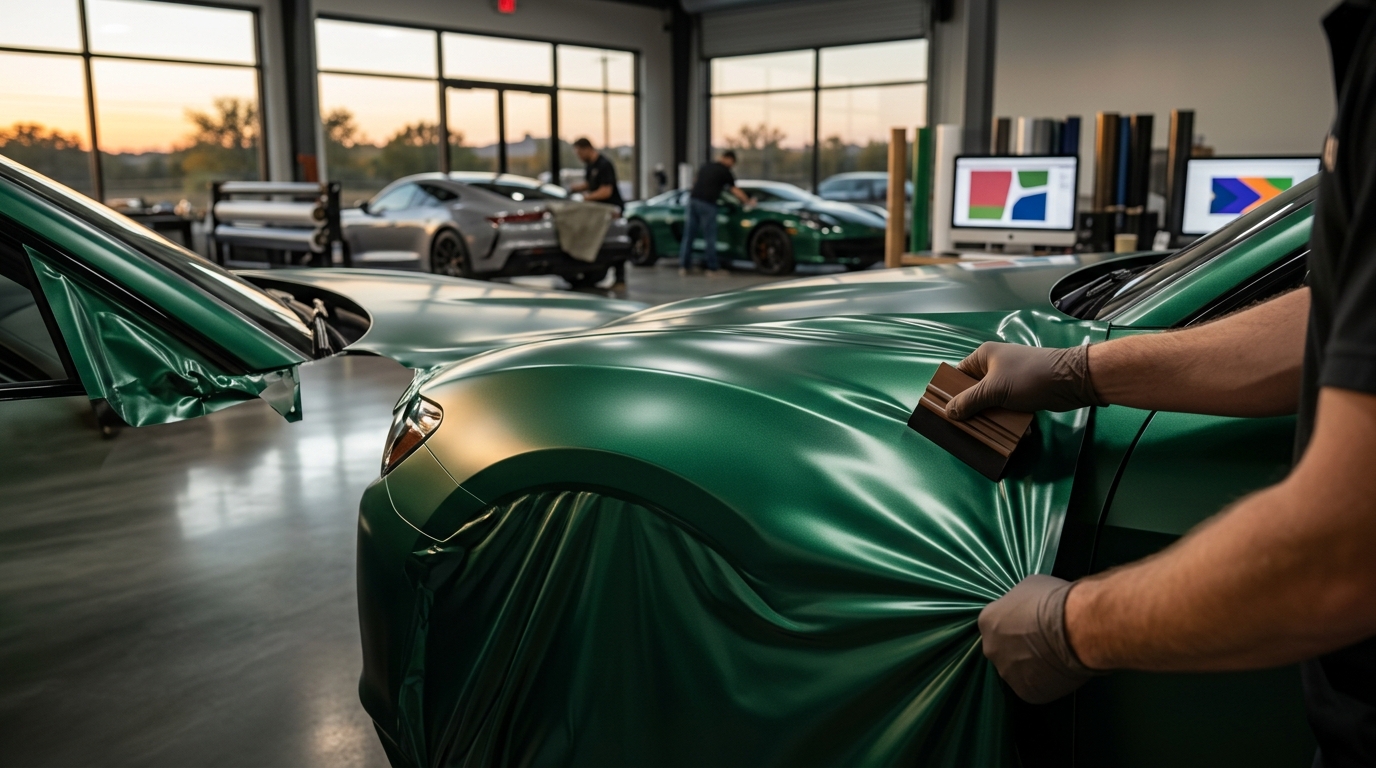
Vehicle wraps are designed to protect the underlying paint while providing advertising value. Vehicle Graphics must withstand UV exposure, rain, snow, and car wash chemicals. Premium materials resist fading and cracking for five to seven years. Cheaper materials may begin to peel or lose color saturation within two years, forcing a premature re-wrap. This makes the initial investment in high-grade vinyl a cost-saving measure over time.
According to data from the Vinyl Graphics Association, the lifespan of a professional wrap is directly correlated with the quality of the adhesive and the vinyl substrate. Investing in top-tier materials ensures that the brand image remains sharp and vibrant. We do not charge design time and believe in building long-lasting relationships by using only the best materials available.
Design Complexity and Customization
Design work is often overlooked in cost estimates, yet it plays a significant role. A simple color change is the most affordable option. However, complex graphics, multi-color layouts, and custom illustrations require extensive designer hours.
Brand Creation involves more than just placing a logo on a car. It requires strategic color theory, typography selection, and layout optimization for visibility at highway speeds. Brand Creation services ensure that the wrap communicates the brand message effectively. If your design requires intricate cut-lines, halftones, or photorealistic imagery, the design fee will increase accordingly.
Rebranding Experts at 360 Wraps specialize in translating corporate identity guidelines into vehicle-specific applications. Whether you need help creating your new brand, rebranding your current image, or expanding your fleet, we are here to help. The complexity of the artwork dictates the time spent in the design phase, which is then factored into the total project cost.
Surface Preparation and Paint Correction
Proper surface preparation is non-negotiable for a successful wrap. The vinyl must adhere to a perfectly clean and smooth surface. Any dirt, wax, or imperfections in the paint will be visible through the wrap and can cause adhesion failure.
Paint Correction is the process of removing swirl marks, scratches, and oxidation from the vehicle's paint before installation. This step is labor-intensive and requires skilled technicians. If the paint is in poor condition, additional prep work is needed. This includes deep cleaning, de-waxing, and potentially minor dent removal. Skipping this step can lead to bubbles and peeling, voiding the warranty.
Our team of designers, installers, and wrap specialists have seen every vehicle, every use case, and every budget. If we don't have the answer, we know exactly where to find it. We ensure that every vehicle is prepped to the highest standard before any vinyl is applied. This attention to detail is what makes us the Nation's Strongest Vehicle Wrap Company.
Installation Labor and Expertise
Installation is the most labor-intensive part of the process. It is not a simple "stick-on