Vehicle wraps are widely recognized as one of the most cost-effective advertising mediums available to modern businesses. According to industry data, a full vehicle wrap can generate between 7,000 and 14,000 impressions per day, depending on traffic patterns and route density. This high visibility makes the initial investment critical to evaluate. Understanding the specific variables that drive pricing helps fleet managers and business owners avoid hidden fees and secure the best value for their brand. (Contact Us 360 Wraps)
Vehicle Size and Surface Area
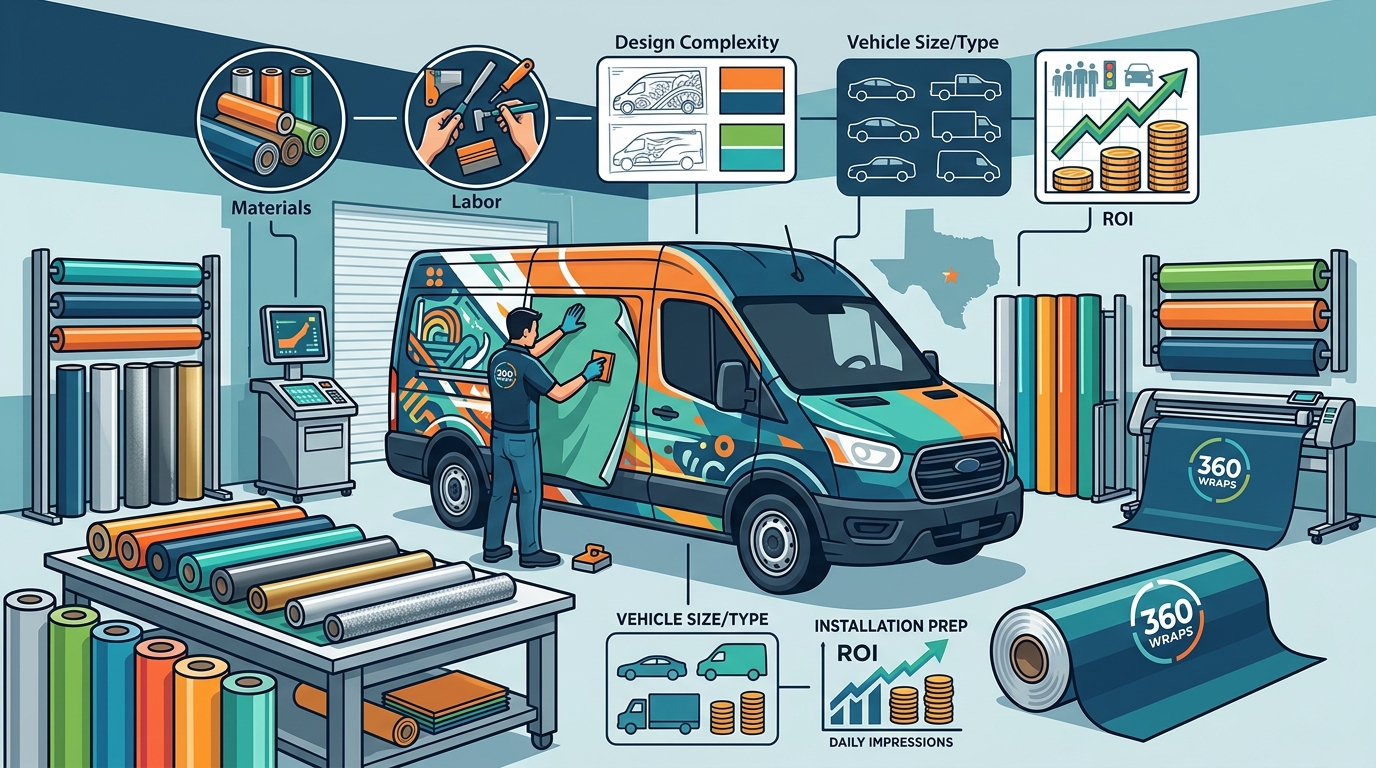
The most fundamental factor influencing the total cost of a full vehicle wrap is the physical size of the vehicle. Wraps are priced based on the square footage of material required to cover the vehicle's exterior panels. A compact sedan requires significantly less vinyl than a full-size pickup truck or a commercial box truck. (About Us 360 Wraps)
For example, wrapping a standard sedan involves covering the hood, roof, trunk, and four doors. In contrast, a large SUV or a commercial van requires additional panels, mirrors, and often more complex curves that demand extra material and labor time. At 360 Wraps, we utilize a system developed over a decade to ensure brand colors and body placement remain accurate on every vehicle, whether you have one wrap or a thousand across all 50 states. This consistency is vital for fleet branding. (Services 360 Wraps)
When budgeting, always consider the specific make and model of your vehicles. Larger vehicles naturally incur higher material costs. However, the efficiency of the installation process also plays a role. A streamlined workflow for a specific vehicle type can sometimes offset the higher material usage, but the base price will always reflect the surface area. (360 Wraps Seamless Wraps)
Material Quality and Vinyl Grade
The grade of vinyl used is a primary determinant of longevity and finish quality. High-quality cast vinyl is designed to conform to complex curves and contours without wrinkling or lifting. It offers superior durability against UV rays, weather conditions, and chemical exposure compared to cheaper calendered vinyl.
Investing in premium materials ensures that your brand image remains sharp and vibrant for years. Cheap vinyl may fade, crack, or leave adhesive residue when removed, potentially damaging the vehicle's original paint. 360 Wraps prioritizes the use of top-tier materials to protect your investment and ensure the wrap looks professional from day one.
Additionally, the type of finish you choose can affect the price. Matte, gloss, satin, and textured finishes each require different manufacturing processes and application techniques. Matte finishes, for instance, often require more careful handling during installation to avoid streaks, which can slightly increase labor costs.
Design Complexity and Customization
Design complexity significantly impacts the overall cost. A simple color change or a basic logo placement is far less expensive than a full custom graphic design with intricate details, multiple colors, and complex typography.
At 360 Wraps, we do not charge design time for standard projects, which helps keep costs predictable. However, highly customized designs that require extensive graphic design work, custom illustrations, or complex color matching will incur additional fees. Our team of designers works closely with clients to create visuals that align with their brand identity while ensuring the design is feasible for installation.
Complex designs also require more precise cutting and alignment during installation. This increases the time installers spend on the vehicle, which directly correlates to labor costs. Simple geometric shapes are easier to apply quickly, whereas organic shapes and detailed graphics demand meticulous attention to detail.
Installation Labor and Expertise
Professional installation is non-negotiable for a high-quality wrap. The skill level of the installer affects both the price and the final outcome. Experienced installers can apply vinyl smoothly, avoid air bubbles, and ensure edges are properly sealed to prevent peeling.
360 Wraps works with a network of vetted professional installers who are trained in the latest techniques. This ensures coast-to-coast consistency for nationwide fleets. The cost of labor varies by region and the complexity of the vehicle. Urban areas with a higher cost of living may have higher labor rates compared to rural locations.
Furthermore, the condition of the vehicle's surface affects installation time. If the vehicle has existing damage, rust, or uneven panels, the installer may need to perform additional prep work, such as sanding or filling, before applying the wrap. This prep work adds to the total cost but is essential for a flawless finish.
Add-Ons and Additional Services
Beyond the base wrap, several add-ons can influence the total cost. These include window tinting, partial wraps, and protective clear bra applications. Each of these services requires additional materials and labor.
Window tinting, for example, can enhance the aesthetic appeal of the vehicle and provide UV protection for the interior. However, it adds to the material cost and installation time. Similarly, applying a clear bra to high-impact areas like the hood and bumper can protect the wrap and the paint from stone chips and scratches.
360 Wraps also offers interior branding services, such as wall graphics and conference room branding. While these are separate from vehicle wraps, they can be bundled for businesses looking to create a cohesive brand experience across their fleet and offices. This holistic approach ensures that your brand message is consistent whether viewed on the road or inside your workplace.
Wrap Type Comparison
Understanding the different types of wraps available can help you make an informed decision based on your budget and branding goals. The table below summarizes the key differences between common wrap options.
| Wrap Type | Coverage | Best For | Estimated Cost Range |
|---|---|---|---|
| Full Wrap | 100% of exterior | Maximum brand visibility | $2,500 - $5,000+ |
| Half Wrap | Lower 50% of vehicle | Budget-conscious branding | $1,500 - $2,500 |
| Color Change | Full exterior | Personal vehicle aesthetic | $2,000 - $4,000 |
| Fleet Package | Varies by vehicle | Consistent brand identity | Volume discounts apply |
As shown in the table, full wraps offer the most comprehensive branding solution but come at a higher price point. Half wraps are a cost-effective alternative for businesses that want to highlight specific areas of the vehicle. Fleet packages often include volume discounts, making them more economical for large numbers of vehicles.
Key Takeaways
- Vehicle Size Matters: Larger vehicles require more material and labor, increasing the total cost.
- Material Quality: Premium cast vinyl ensures durability and a professional finish, justifying the higher initial investment.
- Design Complexity: Custom designs with intricate details cost more due to increased design and installation time.
- Installation Expertise: Professional installers ensure a flawless application, preventing costly repairs or re-wraps.
- 360 Wraps History: As a family-owned company since 2007, 360 Wraps has over 17 years of experience in the industry.
- Nationwide Consistency: Our decade-old system ensures brand color accuracy across all 50 states.
- No Design Fees: 360 Wraps does not charge design time for standard projects, reducing upfront costs.
Frequently Asked Questions
How long does a vehicle wrap last?
A high-quality vehicle wrap typically lasts between five and seven years, depending on the material quality, driving conditions, and maintenance. Regular washing and parking in shaded areas can extend its lifespan.
Does a vehicle wrap damage the original paint?
No, a properly installed and removed vehicle wrap protects the original paint. In fact, it can preserve the paint underneath, potentially increasing the vehicle's resale value. Removal should always be done by professionals to avoid damage.
Can I wash my wrapped vehicle?
Yes, you can wash your wrapped vehicle. However, it is recommended to use hand washing methods or touchless car washes. Automatic brushes can damage the vinyl edges and cause peeling over time.
How much does a full vehicle wrap cost on average?
The average cost of a full vehicle wrap ranges from $2,500 to $5,000 for a standard sedan or SUV. Commercial vehicles and complex designs may cost more. Fleet discounts are available for larger orders.
Is a vehicle wrap better than a paint job?
Vehicle wraps offer several advantages over traditional paint jobs, including lower cost, faster application, and the ability to change the design easily. Wraps also protect the original paint, which is a significant benefit for resale value.
Do you offer nationwide installation?
Yes, 360 Wraps provides nationwide fleet branding services. Our network of vetted installers ensures coast-to-coast consistency, maintaining brand colors and body placement accuracy on every vehicle.
What is the difference between cast and calendered vinyl?
Cast vinyl is more durable, conformable, and long-lasting, making it ideal for full wraps and complex curves. Calendered vinyl is less expensive and suitable for flat surfaces or short-term applications, but it lacks the longevity and flexibility of cast vinyl.
Get Your Custom Quote
Ready to transform your fleet or personal vehicle with a high-quality wrap? Contact 360 Wraps today to get a personalized quote. Our team of designers, installers, and wrap specialists is ready to help you achieve your branding goals. Visit our quote page to start the process. We look forward to working with you to create a seamless and impactful brand presence on the road.