
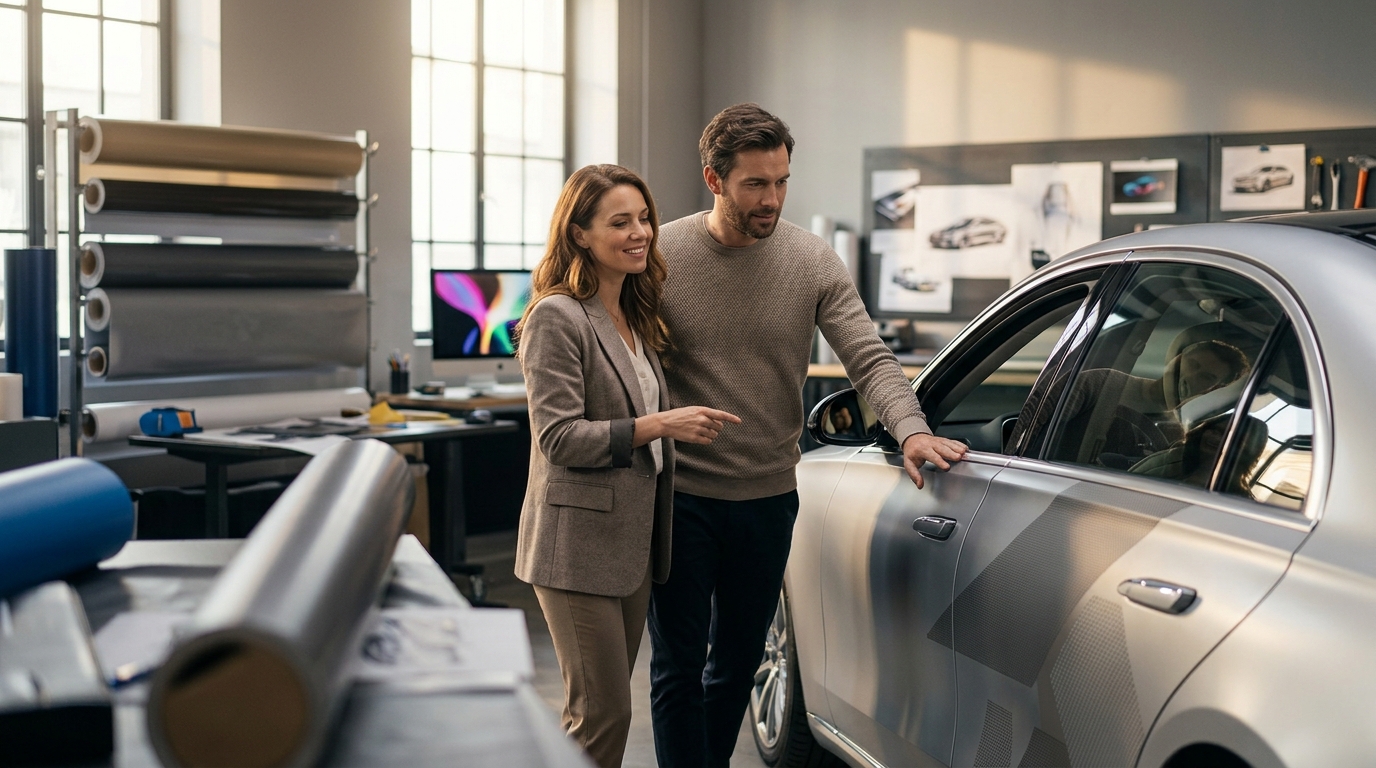
A vehicle wrap is a large vinyl graphic or decal applied directly to a car, truck, or van that turns the vehicle into a mobile billboard. When designed well, a single wrapped vehicle can generate between 30,000 and 70,000 daily impressions according to 3M's fleet graphics research. But not every wrap delivers results. The difference between a head-turning marketing asset and a forgettable paint job comes down to design strategy. Below, you will learn how to plan, design, and execute a vehicle wrap that actually drives business growth.
Why Vehicle Wraps Work for Marketing
Vehicle wrap advertising is a form of out-of-home marketing where branded graphics are applied to a vehicle's exterior to promote a business wherever it travels. The numbers behind wraps are compelling. According to the Outdoor Advertising Association of America (OAAA), 95% of Americans are reached by vehicle wrap advertising, and fleet graphics create a 15x increase in name recognition compared to other media.
Cost efficiency is another major advantage. The cost per thousand impressions (CPM) for vehicle wraps ranges from roughly $0.50 to $2.00, far below digital or print alternatives. That translates to an estimated ROI of approximately 1,500%, making wraps one of the highest-return advertising formats available. For Texas businesses looking to stretch their marketing budget, vehicle wrap services from 360 Wraps offer a proven path to local brand awareness.
Step 1: Define Your Brand Identity First
Brand identity is the collection of visual elements, including your logo, color palette, tagline, and typography, that represent your business. Before any wrap design begins, your brand identity must be locked in. A wrap without a strong brand behind it will underperform no matter how creative the graphics are.
Gather your brand guidelines, high-resolution logo files, and any existing marketing assets. If you are rebranding or starting fresh, a company like 360 Wraps Inc. can help build your visual identity from concept to completion, with no design fees charged for wrap projects.
Step 2: Keep the Design Simple and Bold
Simplicity is the single most important principle in vehicle wrap design. A driver or pedestrian has only a few seconds to absorb your message. If your wrap tries to say too much, nothing gets through.
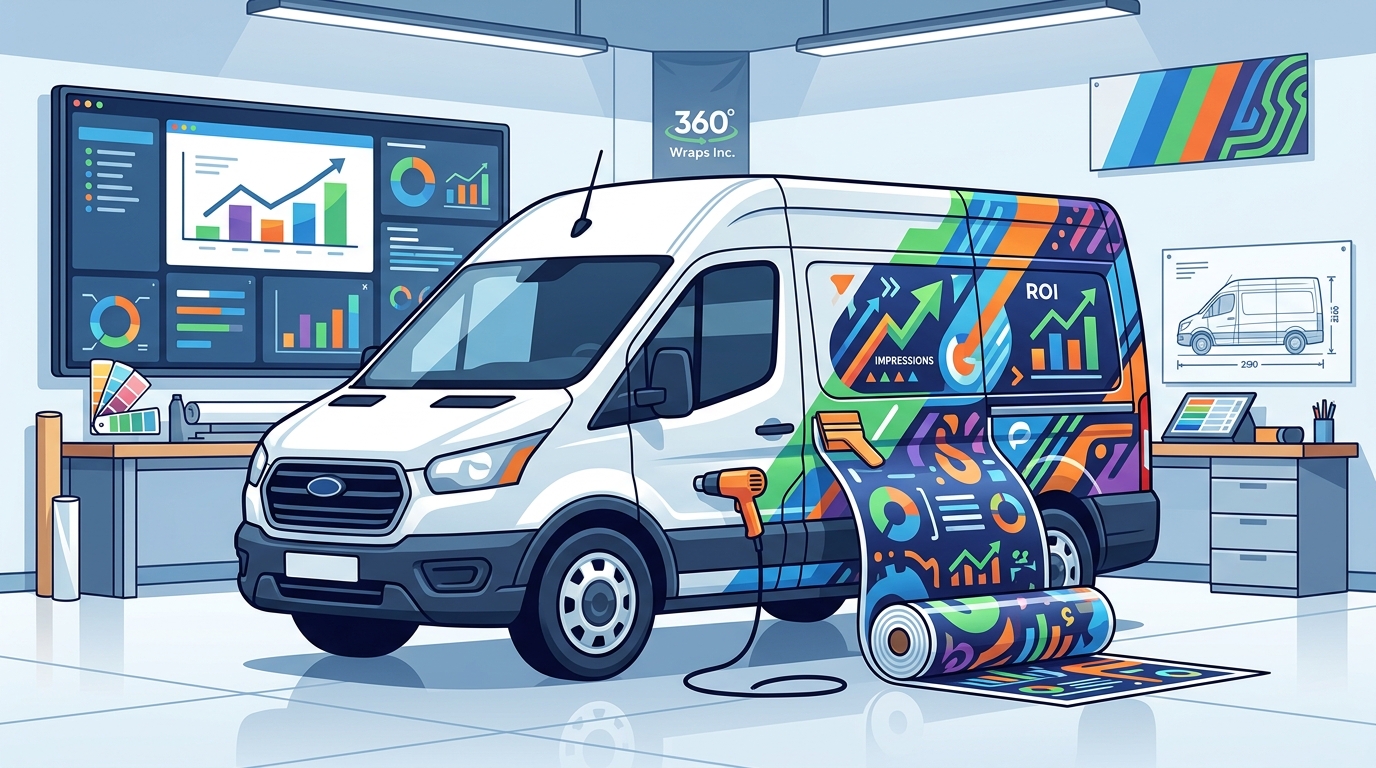
Treat It Like a Billboard
Industry best practice recommends fewer than seven words and no more than three visual elements per side of a vehicle. Focus on your company name, logo, and one supporting message. Bulleted service lists and paragraphs of copy do not belong on a moving vehicle.
Avoid Photographic Imagery
Photos rarely translate well across different vehicle sizes and shapes. A clean, brand-forward approach with vector illustrations or solid graphic elements delivers consistency, especially when scaling a design across a fleet. Browse the 360 Wraps project gallery for examples of effective, simple wrap designs.
Step 3: Choose the Right Typography and Colors
Color psychology is the study of how colors influence perception and behavior. For a vehicle wrap, high-contrast color combinations are essential. Light text on a dark background (or vice versa) ensures readability at speed and from a distance.
| Design Element | Best Practice | Common Mistake |
|---|---|---|
| Font Style | Bold, sans-serif fonts (e.g., Helvetica, Futura) | Script or decorative fonts that are hard to read |
| Font Size | Minimum 4 inches for primary text | Small text only readable up close |
| Color Contrast | Dark text on light background or light on dark | Low-contrast pairings (gray on white) |
| Number of Colors | 2 to 3 brand colors maximum | Rainbow palettes that confuse the eye |
| White Space | Generous spacing around text and logo | Filling every inch with content |
Select fonts that remain legible from 30 feet or more. Avoid decorative typefaces that may look appealing on screen but become unreadable on a moving vehicle.
Step 4: Design for the Vehicle, Not a Flat Canvas
Every vehicle has unique contours, door handles, wheel wells, and window placements that affect where graphics sit. A design that ignores these features will look awkward and unprofessional once installed.
Use Accurate Vehicle Templates
Professional designers use manufacturer-specific template files to ensure scale accuracy. This step prevents logos from landing on seams and text from being cut off by wheel arches. The design team at 360 Wraps works with hundreds of vehicle makes and models to ensure accurate placement across entire fleets.
Consider All Five Sides
Your vehicle is not one canvas; it is up to five: left, right, rear, front, and top. Each side offers a branding opportunity. Prioritize the sides and rear, as those receive the most viewing time in traffic.
Step 5: Include a Clear Call to Action
A call to action (CTA) is a prompt that tells viewers what to do next, such as visiting a website or calling a phone number. Every effective vehicle wrap includes at least one CTA. The two highest-priority items are your website URL and phone number.
QR codes have also become a viable option for parked vehicles, allowing passersby to scan and connect instantly. Keep the CTA visible on the rear and both sides of the vehicle for maximum exposure.
Step 6: Work With Professional Designers and Installers
Even the best design will fail with poor installation. Bubbles, misalignment, and premature peeling undermine your brand image. Working with experienced professionals ensures that the design is printed on the correct vinyl, color-matched accurately, and installed in a climate-controlled environment.
360 Wraps in Dallas operates from a 25,000 sq. ft. climate-controlled facility with over 100 years of combined staff experience. Their process covers everything from initial design consultation through final installation and post-install support.
Full Wrap vs. Partial Wrap: Which Is Right for You?
| Feature | Full Wrap | Partial Wrap |
|---|---|---|
| Coverage | Entire vehicle surface | Select panels (doors, tailgate, hood) |
| Visual Impact | Maximum brand presence | Moderate, depends on placement |
| Cost | Higher upfront investment | Lower cost, budget-friendly |
| Best For | Primary brand vehicles, fleets | Startups, supplementary vehicles |
| Paint Protection | Full exterior protection | Partial protection only |
Both options deliver strong ROI. If budget is limited, a well-designed partial wrap on the rear and sides still captures the majority of impressions. Read 360 Wraps customer reviews to see real results from both full and partial wrap projects.
Key Takeaways
- Vehicle wraps generate 30,000 to 70,000 daily impressions and offer CPM rates as low as $0.50.
- Lock in your brand identity (logo, colors, tagline) before starting any wrap design.
- Keep the design simple: fewer than seven words per side, high-contrast colors, and bold sans-serif fonts.
- Design for the vehicle's specific contours using accurate templates, not flat mockups.
- Always include a clear CTA such as your website URL or phone number.
- Work with experienced professionals for both design and installation to protect your investment.
- Both full and partial wraps deliver measurable marketing returns when designed strategically.
Frequently Asked Questions
How much does a vehicle wrap cost for marketing?
A full commercial vehicle wrap typically costs between $2,500 and $5,000 depending on vehicle size, design complexity, and vinyl quality. Partial wraps start lower. Contact a provider like 360 Wraps for a custom quote based on your specific vehicle and goals.
How long does a vehicle wrap last?
A professionally installed vinyl wrap lasts between five and seven years with proper care. Factors like sun exposure, washing habits, and vinyl grade affect longevity. In hot Texas climates, premium vinyl from manufacturers like 3M or Avery Dennison is recommended.
Can I design a vehicle wrap myself?
You can create a basic concept, but professional designers with vehicle wrap experience produce significantly better results. They understand template scaling, print specifications, and how colors render on vinyl versus screens.
What information should I include on a vehicle wrap?
Prioritize your business name, logo, website URL, phone number, and a short tagline. Avoid listing every service you offer. Think billboard, not brochure.
Do vehicle wraps damage paint?
No. High-quality vinyl wraps actually protect the original paint underneath from UV rays, minor scratches, and road debris. When removed properly by a professional, the paint is preserved.
What file format should my logo be in for a wrap?
Vector formats like AI, EPS, or SVG are ideal because they scale to any size without losing resolution. Avoid low-resolution JPEGs or PNGs, which pixelate when enlarged for vehicle-sized printing.
How long does installation take?
Most full vehicle wraps are designed and installed within one to seven business days, depending on vehicle size and design complexity. A partial wrap can often be completed in a single day.
Are vehicle wraps removable?
Yes. Professional-grade vinyl wraps are designed to be removable without damaging the vehicle's paint. However, once a wrap is removed, it cannot be reapplied. A new wrap must be printed for any design change.
Ready to Get Started?
An effective vehicle wrap starts with a clear brand, a clean design, and a skilled installation team. Whether you need a single truck wrap or a nationwide fleet rollout, 360 Wraps Inc. has helped thousands of businesses turn their vehicles into high-impact marketing tools since 2007. Reach out today to discuss your project and get a free design consultation with zero design fees.