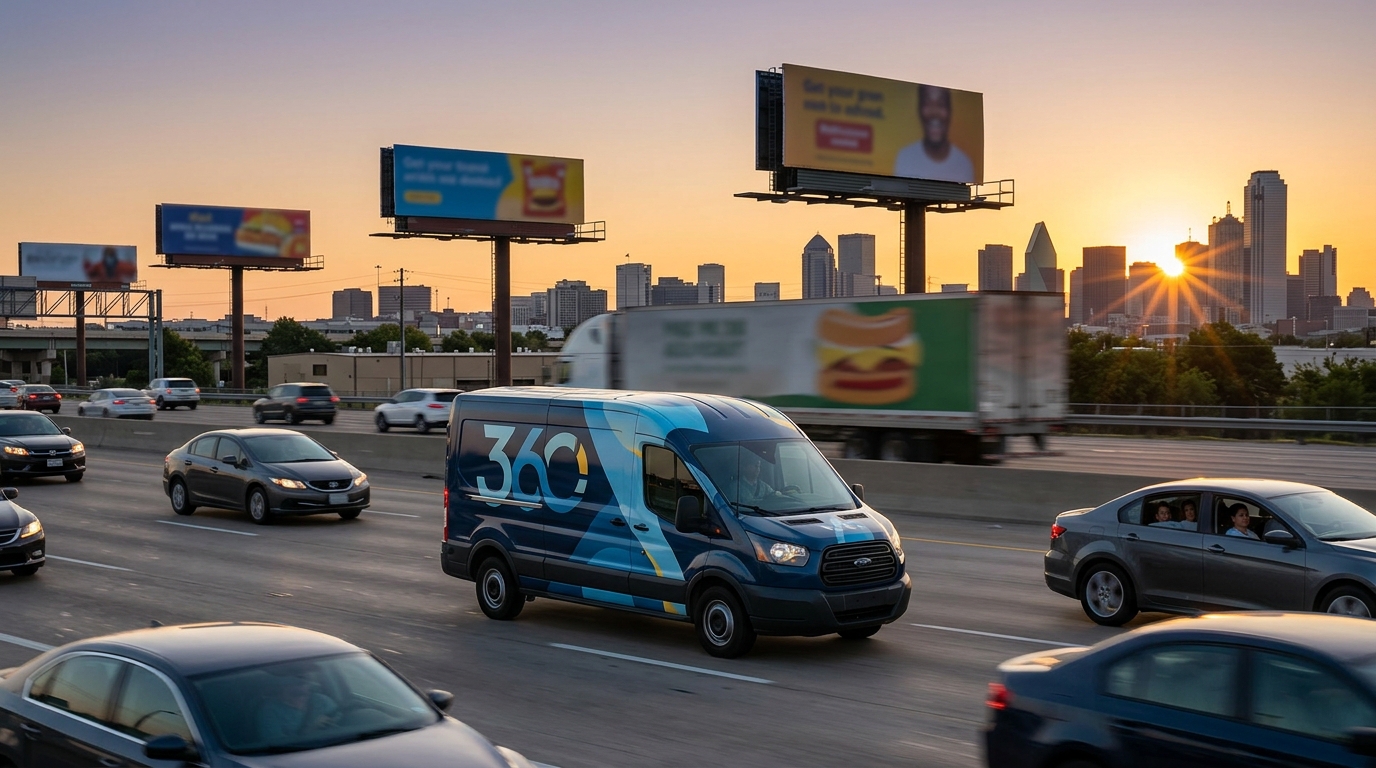
Every marketing dollar matters, especially for small and mid-size businesses trying to build local brand awareness. Two of the most visible out-of-home (OOH) advertising options are full vehicle wraps and traditional billboards. Both put your brand in front of drivers and pedestrians, but they differ dramatically in cost structure, flexibility, and long-term return on investment. If you have been weighing vehicle branding against a static sign on the highway, this comparison breaks down the numbers so you can invest with confidence.
What Is a Full Vehicle Wrap?
A full vehicle wrap is a large vinyl graphic applied to the entire exterior surface of a car, truck, or van to display branding, contact information, and promotional imagery. Once installed, the wrap turns a company vehicle into a mobile billboard that advertises your business every time it is on the road or parked in a busy area. Industry data shows that a professionally installed wrap typically costs between $2,500 and $5,000 and can last three to five years with proper care, according to Gitnux's 2026 market data report.
What Is Billboard Advertising?
Billboard advertising is a form of out-of-home media where a printed or digital display is mounted in a fixed, high-traffic location such as a highway or intersection. Unlike wraps, billboards require recurring monthly rental fees. According to Fit Small Business, the national average cost for a four-week billboard campaign in 2025 sat at roughly $3,953, with prices ranging from $250 in rural areas to over $25,000 per month in major metros.
Cost Comparison: Wraps vs Billboards
The biggest difference comes down to one-time investment versus ongoing expense. A vehicle wrap is a single purchase that keeps working for years, while billboard rent never stops. The table below illustrates typical cost ranges.
| Factor | Full Vehicle Wrap | Traditional Billboard |
|---|---|---|
| Upfront Cost | $2,500 - $5,000 (one-time) | $750 - $14,000+ per month |
| Annual Cost (Year 1) | $2,500 - $5,000 | $9,000 - $168,000+ |
| Lifespan | 3 - 5 years | Runs only while rented |
| Design Fees | Often included (free at 360 Wraps) | $300 - $2,500 additional |
| CPM (Cost per 1,000 Impressions) | $0.35 - $0.77 | $3.65+ (static) |
| Tax Deduction | 100% deductible advertising expense | Deductible as recurring expense |
Over a five-year period, a single wrap costing $4,000 generates impressions at a fraction of the cumulative cost of billboard rent. At 360 Wraps, design time is included at no extra charge, further improving the value equation.
Impressions and CPM Head-to-Head
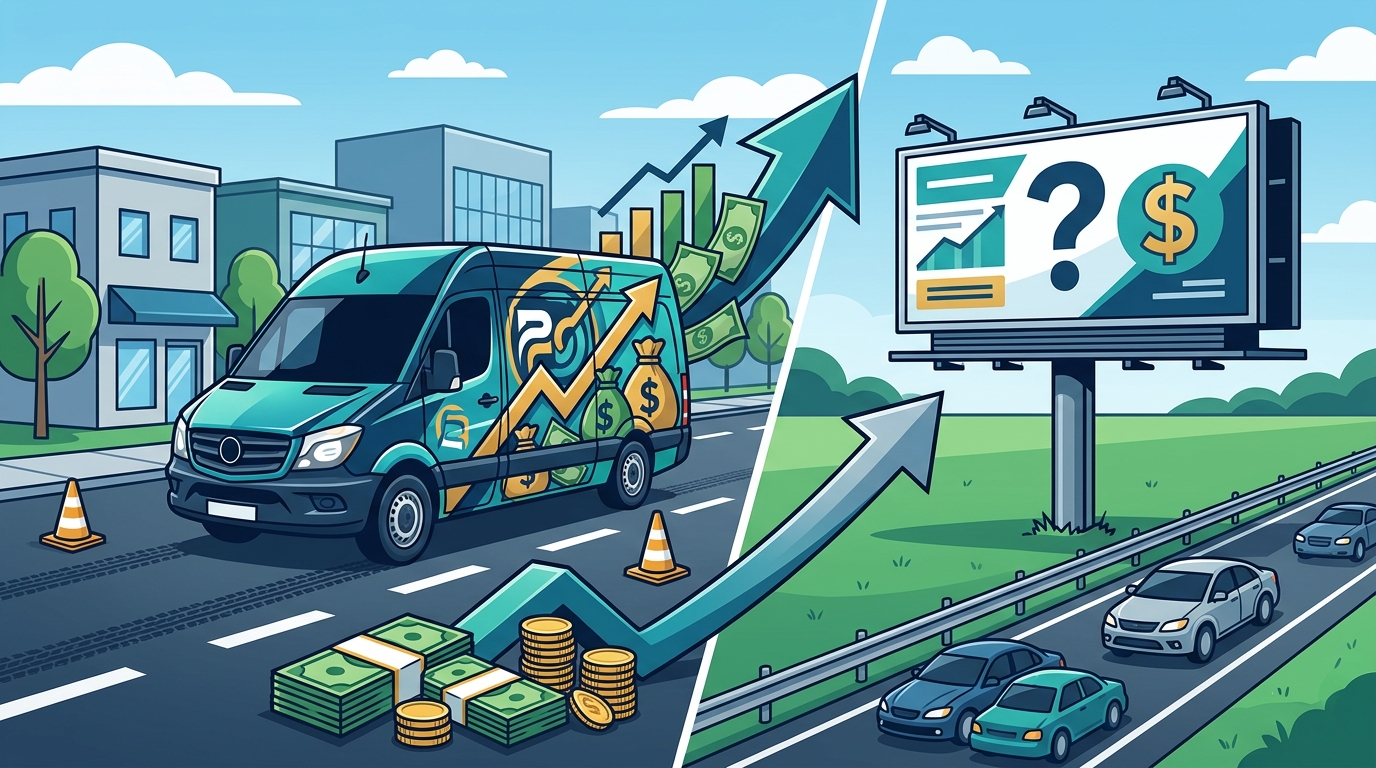
Cost per thousand impressions (CPM) is the standard metric for comparing advertising efficiency. Vehicle wraps consistently deliver the lowest CPM among all OOH formats. According to data compiled by the Outdoor Advertising Association of America (OAAA) via LookupAPlate, vehicle wrap advertising averages just $0.48 CPM, the lowest among all out-of-home options.
Daily Impression Volume
A single wrapped vehicle can generate an estimated 30,000 to 70,000 impressions per day in urban traffic. In a Texas metro like Dallas-Fort Worth, where commute times and highway congestion are significant, those numbers can trend toward the higher end. A billboard, by contrast, is limited to one fixed location and reaches the same commuters repeatedly.
Fleet Multiplier Effect
Every additional wrapped vehicle multiplies your reach exponentially. Businesses that invest in nationwide fleet branding can achieve millions of annual impressions across multiple markets without paying a single recurring media fee.
Brand Recall and Audience Engagement
Impressions only matter if people remember your brand. Research from 3M indicates that vehicle marketing achieves a 97% message recall rate versus just 19% for stationary advertisements. Separately, Wrapmate reports that mobile billboards hold attention 2.5 times longer than static billboards. These figures suggest that wraps do not just reach more eyes; they stick in memory far more effectively.
Why Wraps Are More Engaging
Vehicle wraps travel through neighborhoods, job sites, parking lots, and event venues. They meet potential customers at the point of need rather than waiting for those customers to drive past a fixed sign. For Texas service businesses like HVAC companies, plumbers, and landscapers, a branded truck parked in a residential driveway acts as a hyper-local endorsement that no billboard can replicate.
Flexibility, Mobility, and Longevity
Billboard campaigns typically require three-, six-, or twelve-month commitments, and changing the creative costs extra. Vehicle wraps, on the other hand, are fully owned assets. You can update a phone number or seasonal promotion with a partial panel swap rather than replacing the entire graphic.
Paint Protection Bonus
Beyond advertising value, a quality wrap protects the vehicle's factory paint from UV rays, minor scratches, and road debris. When you eventually remove the wrap, the paint underneath is often in better condition, helping maintain resale value. Learn more about wrap care on the 360 Wraps blog.
Tax Advantages
A vehicle wrap qualifies as a fully deductible advertising expense under current IRS guidelines. At a 25% effective tax rate, a $4,000 wrap has an after-tax cost of just $3,000, shortening the payback period to mere months of driving.
Key Takeaways
- Vehicle wraps deliver a CPM as low as $0.48, compared to $3.65 or more for static billboards.
- A single wrapped vehicle can generate 30,000 to 70,000 impressions per day in urban areas.
- Wraps are a one-time investment lasting 3 to 5 years; billboards require continuous monthly rent.
- Brand recall for vehicle advertising reaches up to 97%, far exceeding static signage.
- Fleet wraps multiply your reach with no additional media fees per vehicle.
- Wraps protect your vehicle's paint, adding resale value on top of advertising ROI.
- The full cost of a vehicle wrap is tax-deductible as an advertising expense.
Frequently Asked Questions
How much does a full vehicle wrap cost?
A full vehicle wrap typically costs between $2,500 and $5,000 depending on vehicle size and design complexity. At 360 Wraps, design fees are included at no additional charge.
How long does a vehicle wrap last?
With proper care, a high-quality wrap lasts 3 to 5 years. 360 Wraps uses Avery wrap film and laminate, which the manufacturer rates for up to 5 years of durability on vertical surfaces.
How many impressions does a wrapped vehicle generate per day?
Industry studies estimate 30,000 to 70,000 impressions daily in urban traffic, translating to millions of views per year for a single vehicle.
Is a vehicle wrap tax-deductible?
Yes. Vehicle wraps are considered a 100% deductible advertising expense under current IRS guidelines because the business owns the medium.
Can I wrap just part of my vehicle instead of a full wrap?
Absolutely. Partial wraps, door logos, and rear window graphics are all effective options at a lower price point. Visit the 360 Wraps services page to explore your choices.
How does billboard CPM compare to vehicle wrap CPM?
Static billboards average around $3.65 CPM, while vehicle wraps average as low as $0.35 to $0.77 CPM, making wraps roughly 5 to 10 times more cost-efficient per impression.
Do vehicle wraps damage the paint on my car?
No. A professionally installed wrap actually protects the factory paint from UV damage and minor scratches. However, choosing an experienced installer is critical to avoid issues during removal.
Does 360 Wraps handle fleet branding nationwide?
Yes. 360 Wraps works with the largest fleet management companies and vehicle manufacturers, providing consistent branding whether you need one vehicle in a single city or a thousand across all 50 states.
Ready to Outperform Billboards with a Custom Wrap?
Stop paying monthly rent for a static sign. Turn every vehicle in your fleet into a rolling advertisement that works 24/7. Contact 360 Wraps today for a free consultation and discover how a professional vehicle wrap can deliver unmatched ROI for your business.