Every marketing dollar matters, especially for small and mid-sized businesses in Texas competing for local attention. If you have been weighing a full vehicle wrap against a traditional billboard, you are not alone. Both fall under out-of-home (OOH) advertising, yet they differ dramatically in cost structure, impression volume, and long-term return on investment. This guide breaks down real numbers, industry data, and practical considerations so you can decide which channel deserves your budget in 2025 and beyond.
What Is a Full Vehicle Wrap?
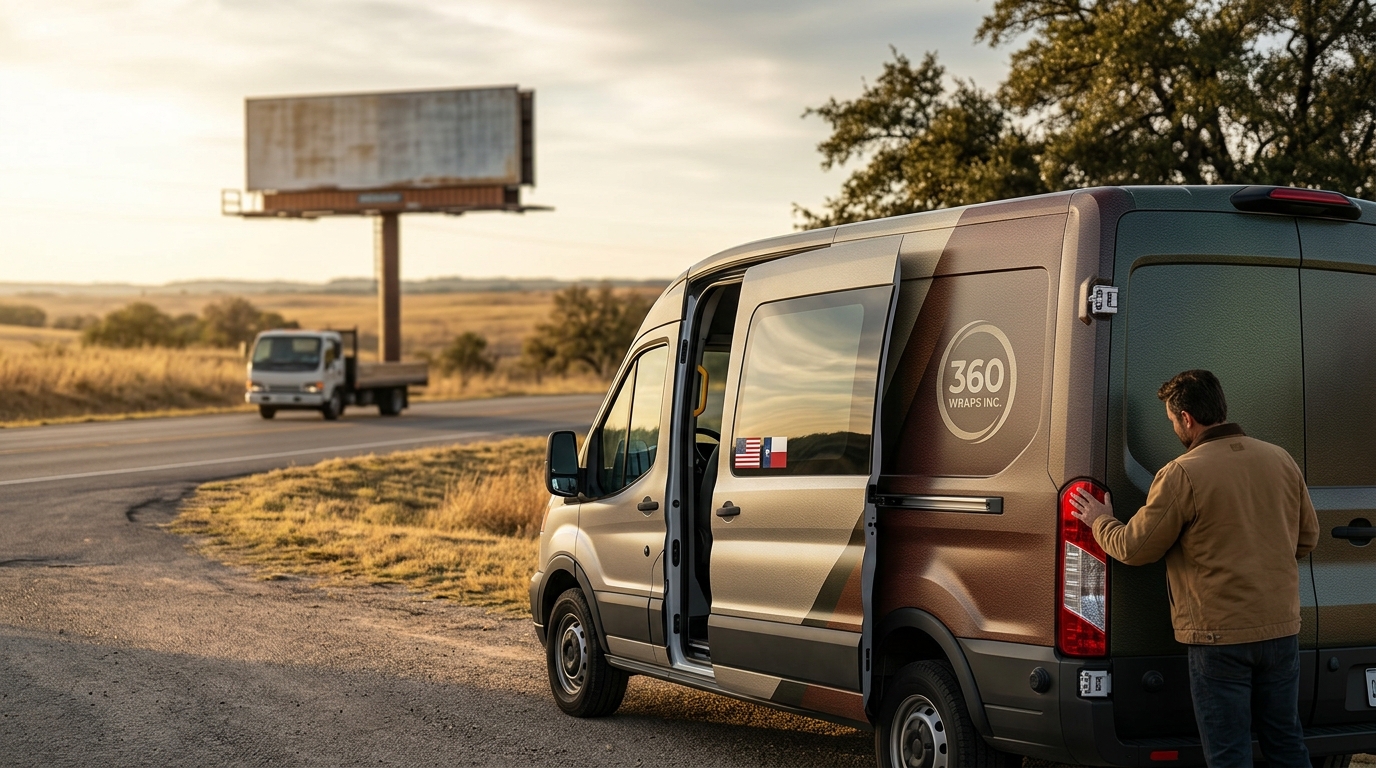
A full vehicle wrap is a large-format vinyl graphic applied to the entire exterior surface of a car, truck, or van, turning it into a mobile advertisement. Unlike a paint job, wraps can be removed or updated without damaging the original finish. At 360 Wraps, wraps are priced by the square foot, and the design team creates a digital mockup before anything goes to print.
Modern wraps use premium films from manufacturers like Avery Dennison and 3M. When professionally installed in a climate-controlled facility, a quality wrap lasts three to five years with proper care. That single upfront investment keeps working 24/7 with zero recurring media fees.
What Is Traditional Billboard Advertising?
Billboard advertising is a static or digital display placed in a fixed, high-traffic location such as a highway or intersection. Advertisers rent the space on a monthly basis, and the message stays in one spot for the duration of the contract. According to Fit Small Business, the national average billboard rental in 2025 is $3,953 per four-week cycle.
While billboards deliver strong visibility in their immediate area, they cannot follow your customers home, show up at job sites, or park in a busy shopping center lot. Their reach is fixed by geography.
Cost Comparison: Wraps vs Billboards
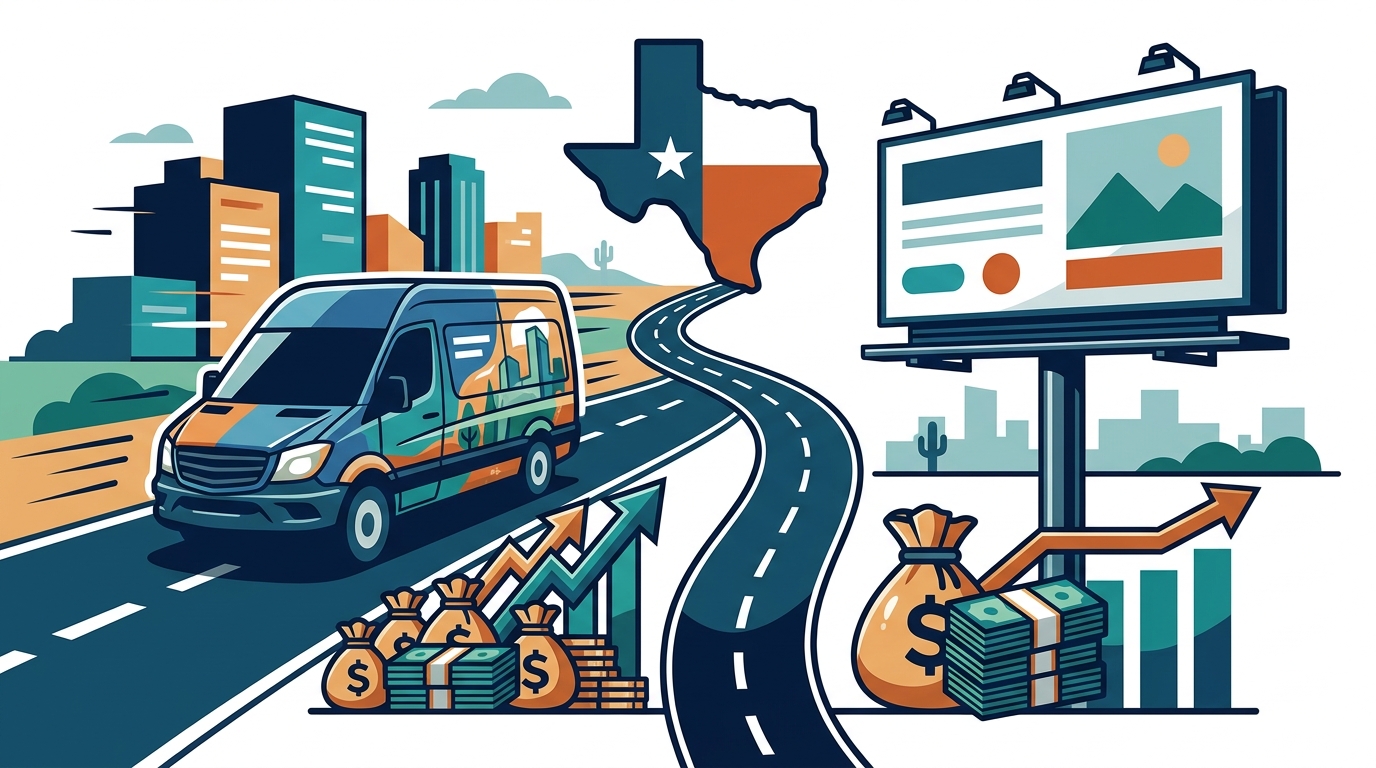
Cost is where the gap becomes unmistakable. A full vehicle wrap from 360 Wraps' fleet branding program typically ranges from $2,000 to $3,500 as a one-time investment. A billboard in a mid-sized Texas city costs $1,000 to $5,000 every single month.
| Metric | Full Vehicle Wrap | Traditional Billboard |
|---|---|---|
| Upfront Cost | $2,000 - $5,000 (one-time) | $1,000 - $5,000/month (recurring) |
| Avg. CPM (Cost per 1,000 Impressions) | $0.48 - $0.77 | $3.65 - $8.00+ |
| Lifespan | 3 - 5 years | Lease period only |
| Daily Impressions | 30,000 - 70,000 | Varies by traffic count |
| Tax Deductibility | 100% (advertising expense) | 100% (advertising expense) |
| Geographic Flexibility | Mobile; goes wherever you drive | Fixed location |
Over a three-year span, a single billboard in a Texas metro area could cost $36,000 to $180,000 in rent alone. A full wrap on the same timeline costs roughly $3,500 once.
Impressions and Reach
According to the Outdoor Advertising Association of America (OAAA) data compiled by LookupAPlate, a single wrapped vehicle generates between 30,000 and 70,000 impressions daily. The same research shows vehicle wraps achieve a 97% message recall rate, compared to just 19% for stationary ads.
Billboards can only reach the same commuters who pass the same route every day. A wrapped service vehicle, on the other hand, travels through neighborhoods, commercial districts, and event venues. Every stop at a traffic light or parking lot becomes a micro-billboard viewed at close range.
Fleet Multiplier Effect
When you wrap multiple vehicles through a professional vehicle wrap service, impressions multiply without multiplying your media spend. Industry data suggests multi-vehicle fleets amplify brand recall by up to three times compared to a single wrapped vehicle.
ROI by the Numbers
Return on investment is the metric that ultimately matters. According to Gitnux's 2026 market data report, 99% of vehicle wrap campaigns achieve a positive ROI, and brands using wraps see an average 30% increase in website traffic. The same report notes wraps deliver 96% more visibility per dollar spent than static billboards.
Real-World Results
Service businesses like HVAC companies, plumbers, and electricians often see the strongest returns because their vehicles are constantly on the move. Dallas-based companies that have wrapped their fleets with 360 Wraps' truck wrap services report immediate increases in inbound calls. One client noted their wrapped trucks generated calls even while working hurricane relief out of state.
Billboard ROI Context
Billboards are not without value. Studies suggest every $1 spent on billboard advertising produces roughly $5.97 in returns. However, the recurring monthly cost erodes that ROI over time, especially for small businesses with limited budgets. Vehicle wraps convert a depreciating asset (your vehicle) into an appreciating marketing tool.
Flexibility and Longevity
Flexibility is a critical but often overlooked factor. Billboard campaigns demand three-, six-, or twelve-month commitments, and design changes cost extra. A vehicle wrap gives you total control. Seasonal promotions, updated phone numbers, or a full rebrand can be handled with partial panel swaps rather than replacing the entire graphic.
360 Wraps operates out of a 25,000-square-foot climate-controlled facility near DFW Airport, enabling fast turnarounds whether you need a single vehicle or a full fleet refreshed. Wraps also protect your vehicle's factory paint, adding resale value when it is time to sell or trade.
Key Takeaways
- A full vehicle wrap costs $2,000 to $5,000 once; a billboard costs $1,000 to $5,000 every month.
- Vehicle wraps deliver a CPM as low as $0.48, while billboards average $3.65 or higher.
- Wrapped vehicles generate 30,000 to 70,000 daily impressions and achieve 97% message recall.
- 99% of wrap campaigns achieve positive ROI, with brands seeing up to 30% more website traffic.
- Wraps are mobile, reaching audiences in multiple neighborhoods, job sites, and events daily.
- Billboards are best for short-term, location-specific promotions rather than sustained brand building.
- Fleet wraps multiply impressions without multiplying recurring ad spend.
Frequently Asked Questions
How much does a full vehicle wrap cost in Texas?
An average full wrap ranges from $2,000 to $3,500 at 360 Wraps. The final price depends on vehicle size, design complexity, and material selection. This is a one-time cost with no monthly rental fees.
How long does a vehicle wrap last?
With proper care, a professionally installed wrap lasts three to five years. Avery Dennison wrap film used by 360 Wraps carries an estimated durability of five years on vertical surfaces.
Are vehicle wraps tax deductible?
Yes. Vehicle wraps used for business advertising are a 100% deductible advertising expense under current IRS guidelines. Consult your tax advisor for specifics.
How many impressions does a wrapped vehicle generate?
According to the OAAA, a single wrapped vehicle generates between 30,000 and 70,000 impressions per day depending on driving routes and metro area traffic.
Do vehicle wraps damage paint?
No. When professionally installed and removed, wraps actually protect factory paint from UV rays and minor abrasion. This can help preserve resale value.
Is a billboard ever the better choice?
Billboards can work well for short-term event promotions or hyper-local awareness in a single high-traffic corridor. For sustained, cost-effective brand building, vehicle wraps consistently outperform.
Can I wrap just part of my vehicle?
Yes. Partial wraps, door decals, and rear window graphics are all available and reduce costs while still providing strong visibility. 360 Wraps offers a range of options through their custom car wrap services.
How quickly can I get my vehicle wrapped?
Turnaround depends on the scope of the project. Most single-vehicle wraps at 360 Wraps are completed within a few business days from design approval to installation.
Ready to Wrap? Get Started Today
If you are ready to turn your vehicles into the hardest-working marketing assets in your fleet, request a free quote from 360 Wraps. With over 100 years of combined vehicle advertising experience on staff and a nationwide installation network, 360 Wraps Inc. has helped thousands of businesses maximize every marketing dollar since 2007.