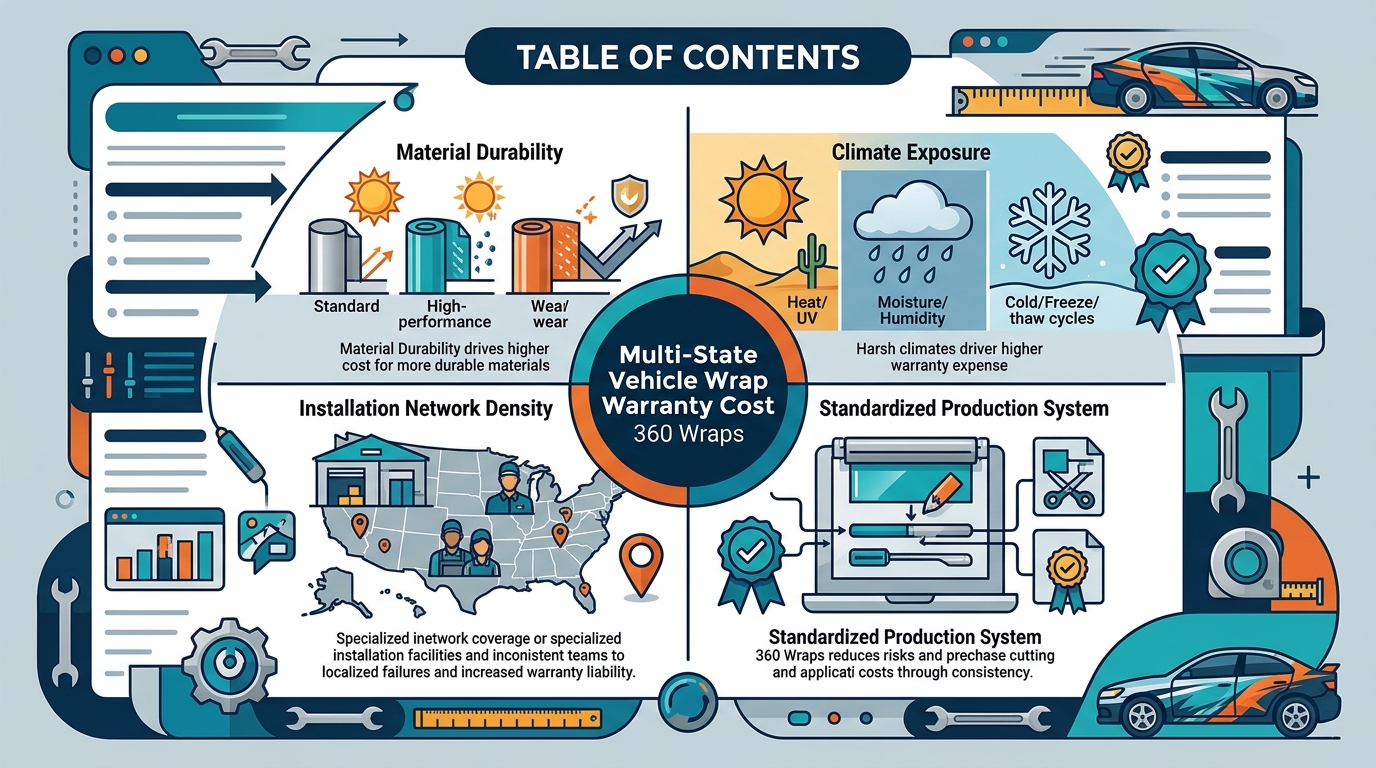
Vehicle wrap warranty costs for multi-state fleets fluctuate based on material durability, climate exposure, and installation network density. 360 Wraps manages these variables through a standardized production system that ensures consistent brand application across all 50 states. This consistency reduces the risk of localized failure, which directly impacts the financial liability of the warranty.
Material Durability and Environmental Stress
For example, a fleet operating in both Arizona and Minnesota faces vastly different thermal stress. The warranty cost reflects the probability of material degradation in these extreme conditions. By selecting materials with proven track records in varied climates, fleet managers can stabilize warranty terms. This approach ensures that the guarantee covers normal wear and tear without unexpected spikes in cost due to environmental failure.
Installation Consistency Across a Nationwide Network
Installation quality is the second major factor influencing warranty pricing. A multi-state fleet is a group of vehicles operating in different geographic regions, each requiring local installation expertise. If installations are performed by unvetted local shops, the risk of improper surface preparation or panel misalignment increases. These errors often lead to peeling, bubbling, or premature delamination, which are common grounds for warranty claims. Providers with a standardized installation network can offer more favorable warranty terms because they control the quality of the application process.
360 Wraps maintains a network of over 3,000 certified professionals across the country. This extensive network ensures that every vehicle, regardless of location, is installed to the same high standard. The implication for fleet managers is clear: a unified installation protocol reduces the variance in outcomes, which in turn lowers the statistical risk for the warranty provider. This stability allows for more predictable and often lower warranty costs over the life of the wrap.
Brand Complexity and Design Precision
The complexity of the brand design also plays a significant role in warranty cost. Intricate designs with multiple colors, fine details, or complex color transitions require more precise printing and installation. Brand consistency is the uniform application of visual identity elements across all marketing materials and vehicles. When a fleet requires exact color matching across hundreds of vehicles in different states, the production process must be tightly controlled. Any deviation in color or placement can be considered a defect, increasing the scope of the warranty.
For instance, a fleet with a simple two-color design is easier to produce and install consistently than one with a full-color photographic wrap. The latter requires higher precision in printing and alignment, which can increase the cost of the warranty due to the higher standard of quality required. By simplifying design elements where possible, fleet managers can reduce the complexity of the production process, leading to more stable warranty terms. This balance between visual impact and production feasibility is key to managing costs effectively.
Logistics and Support Infrastructure
The logistical support provided by the wrap company also affects warranty costs. A provider with a robust logistics system can quickly address any issues that arise, minimizing downtime for the fleet. Fleet branding is the process of applying a company's visual identity to its vehicles to create a mobile advertising platform. When a warranty claim is filed, the speed and efficiency of the repair or replacement process are critical. Providers with a nationwide support infrastructure can offer more comprehensive warranty coverage because they can respond to claims in any state without significant delay.
Key Takeaways
- Material durability is the primary driver of warranty cost, with high-performance vinyls offering better long-term value.
- Installation consistency across a nationwide network reduces the risk of defects and lowers warranty liability.
- Brand complexity, including color matching and design precision, impacts the scope and cost of the warranty.
- Standardized production systems ensure brand consistency, which stabilizes warranty terms across all states.
- Choosing a provider with a certified installer network ensures that every vehicle is installed to the same high standard.
Frequently Asked Questions
What is a vehicle wrap warranty?
A vehicle wrap warranty is a contractual guarantee that the vinyl material will maintain its color, finish, and adhesion for a defined period.
How does climate affect warranty costs?
Climate affects warranty costs by influencing the rate of material degradation, with extreme temperatures and UV exposure increasing the risk of failure.
Why is installation consistency important?
Installation consistency is important because it reduces the risk of defects such as peeling or bubbling, which are common grounds for warranty claims.
How does brand complexity impact warranty terms?
Brand complexity impacts warranty terms by increasing the precision required in printing and installation, which can raise the cost of the warranty.
What role does logistical support play?
Logistical support plays a crucial role in warranty management by ensuring rapid response to claims, which minimizes downtime and reduces overall costs.
How can fleet managers lower warranty costs?
Fleet managers can lower warranty costs by selecting durable materials, simplifying design elements, and choosing a provider with a standardized installation network.