
Vehicle Wrap Warranties for Multi-State Fleets: The Ultimate Guide
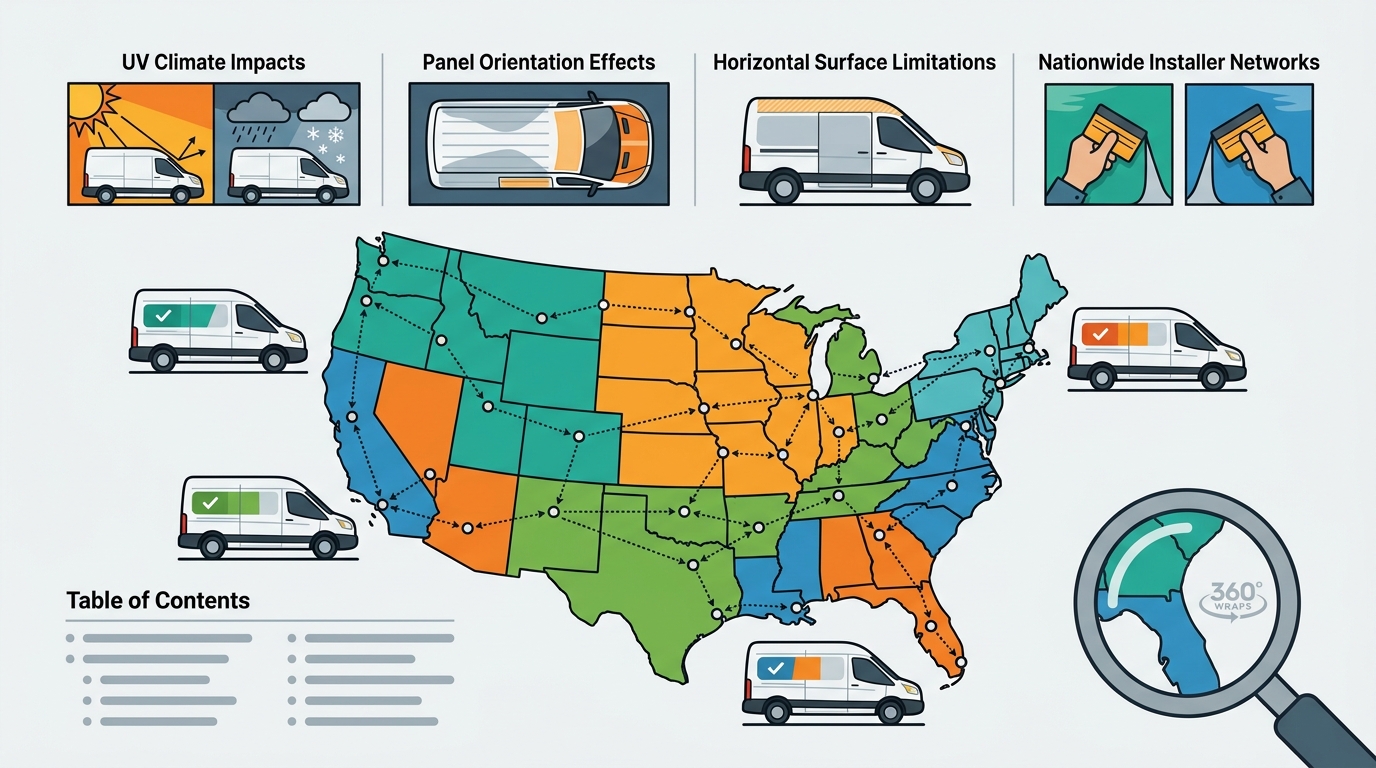
Vehicle wrap warranties differ for multi-state fleets because environmental exposure, panel orientation, and installer standards vary by region. 360 Wraps addresses these variables through a unified national system that maintains consistent material quality and installation protocols across all 50 states. This guide covers UV climate impacts, panel orientation effects, geographic UV zones, horizontal surface limitations, and the role of nationwide installer networks in protecting your investment.
UV Climate Exposure Impacts
UV climate exposure is the primary driver of vinyl degradation in vehicle wraps. Ultraviolet radiation breaks down the polymer chains in vinyl materials, leading to color fading, chalking, and loss of gloss. For a fleet operating in diverse climates, this means that a vehicle parked in Phoenix will experience significantly different wear patterns than one parked in Seattle. The cumulative hours of direct sunlight determine the lifespan of the wrap, not just the intensity of the sun on any given day. For additional details, review the Contact Us 360 Wraps.
Material Response to UV Radiation
Heat and UV Synergy
Heat accelerates the chemical reactions caused by UV light. In hot, arid climates, the combination of high temperatures and intense sunlight creates a synergistic effect that degrades vinyl faster than in cooler, humid climates. This is why 360 Wraps emphasizes material selection based on the specific operational environment of each vehicle in a fleet. By understanding these impacts, fleet managers can anticipate maintenance needs and ensure that their branding remains vibrant throughout the warranty period.
Panel Orientation Effects
Panel orientation is the angle at which a vehicle surface faces the sun. This factor dramatically influences how quickly a wrap degrades. Vertical panels, such as doors and fenders, receive less direct solar radiation than horizontal panels. The angle of incidence determines the energy density of the UV light hitting the surface. A flat roof or hood receives direct, perpendicular sunlight for longer periods, leading to faster fading and potential bubbling if the adhesive is not properly cured.
Vertical vs. Horizontal Surfaces
Vertical surfaces are generally more forgiving in terms of UV exposure. They receive sunlight at an oblique angle, which spreads the energy over a larger area and for a shorter duration. Horizontal surfaces, however, act like solar collectors. They absorb maximum energy, leading to higher surface temperatures and accelerated material aging. When assessing a fleet's warranty, it is crucial to consider the proportion of horizontal to vertical surface area on each vehicle model. A fleet of box trucks with large flat roofs will face different warranty challenges than a fleet of sedans with sloped hoods.
Shading and Microclimates
Local shading from buildings, trees, or other vehicles can create microclimates that protect certain panels. However, for a nationwide fleet, relying on local shading is inconsistent. A vehicle parked in a shaded lot in one city may be exposed to full sun in another. Standardized installation practices, such as those used by 360 Wraps, account for these variables by using high-quality adhesives that maintain flexibility and adhesion across a wide range of temperatures and orientations.
Geographic UV Zones
Geographic UV zones are regions classified by their average annual UV index. The United States is divided into several zones, with the Southwest and Southeast experiencing the highest UV levels. These zones are determined by latitude, altitude, and atmospheric conditions. For fleet operators, understanding these zones is essential for predicting wrap performance. A vehicle operating in a high-UV zone will require more frequent inspection and potentially different material choices than one in a low-UV zone.
Zone Classification and Impact
The UV index ranges from 1 to 11+, with 8 or higher considered very high. In high-UV zones, the degradation rate of vinyl can be up to 30% faster than in low-UV zones. This variance means that a standard 5-year warranty may not be sufficient for a fleet operating primarily in the Southwest. 360 Wraps works with clients to assess the specific geographic zones where their vehicles operate, ensuring that the selected materials and warranty terms align with the expected environmental stressors.
Altitude and Atmospheric Factors
Altitude plays a significant role in UV intensity. At higher elevations, the atmosphere is thinner, allowing more UV radiation to reach the surface. Cities like Denver and Phoenix, which are at higher altitudes or in arid regions, experience higher UV levels than coastal cities at sea level. This factor must be considered when planning a nationwide fleet rollout. By mapping the fleet's operational areas against UV zone data, managers can make informed decisions about material selection and maintenance schedules.
Horizontal Surface Limitations
Horizontal surface limitations refer to the specific challenges associated with wrapping flat, upward-facing panels. These surfaces are prone to heat buildup, which can cause the vinyl to expand and contract more than vertical surfaces. This thermal cycling can lead to edge lifting, bubbling, or delamination if the adhesive is not designed to handle the stress. Additionally, horizontal surfaces are more likely to accumulate dirt and debris, which can trap moisture and cause further damage.
Adhesive Performance on Flat Panels
The adhesive used in vehicle wraps must maintain its bond strength under varying temperatures. On horizontal surfaces, the adhesive is subjected to higher temperatures, which can soften it and reduce its holding power. Premium adhesives, such as those used in 360 Wraps installations, are formulated to remain stable across a wide temperature range. This ensures that the wrap remains secure even on hot days in high-UV zones. Regular cleaning and inspection of horizontal panels are essential to prevent debris from compromising the adhesive bond.
Long-Term Durability Considerations
Long-term durability on horizontal surfaces depends on the quality of the installation and the maintenance routine. Poorly installed wraps on flat panels are more likely to fail over time, especially in harsh climates. 360 Wraps emphasizes the importance of professional installation, ensuring that all edges are properly sealed and that the vinyl is applied with minimal tension. This attention to detail helps extend the life of the wrap and ensures that the warranty remains valid throughout the vehicle's operational life.
Nationwide Installer Networks
Nationwide installer networks are critical for maintaining warranty consistency across a multi-state fleet. A wrap's warranty is only as good as the installation. If different installers use different techniques, materials, or quality standards, the resulting wraps will perform differently, leading to inconsistent warranty coverage. 360 Wraps addresses this challenge through a vetted network of certified installers who adhere to strict quality control protocols. This ensures that every vehicle in the fleet, regardless of location, receives the same high-standard installation.
Standardization of Quality Control
Standardization is the key to reliable warranty coverage. 360 Wraps uses a system developed over a decade to ensure that brand colors and body placement are accurate on every vehicle. This system includes detailed installation guidelines, quality checklists, and post-installation inspections. By standardizing the process, 360 Wraps eliminates the variability that often leads to warranty disputes. Fleet managers can trust that their vehicles will look and perform consistently, no matter where they are installed.
Support and Maintenance
Key Takeaways
- UV climate exposure is the primary factor affecting vehicle wrap longevity, with high-UV zones causing faster degradation.
- Panel orientation significantly impacts wear, with horizontal surfaces degrading faster than vertical ones due to direct solar radiation.
- Geographic UV zones vary by latitude and altitude, requiring tailored material choices for different regions.
- Nationwide installer networks ensure consistent quality and warranty coverage across multi-state fleets.
- Standardized installation protocols, such as those used by 360 Wraps, minimize variability and extend wrap lifespan.
- Regular maintenance and inspection are essential to preserve warranty validity and branding consistency.
- Choosing a provider with a proven national system, like 360 Wraps, ensures reliable results across all 50 states.
Frequently Asked Questions
How does UV exposure affect vehicle wrap warranties?
UV exposure accelerates vinyl degradation, leading to fading and chalking. Warranties may be shorter in high-UV zones due to increased material stress.
What is the impact of panel orientation on wrap longevity?
Horizontal panels degrade faster than vertical ones because they receive more direct sunlight. This can lead to faster fading and adhesive issues.
How do geographic UV zones influence material selection?
High-UV zones require more durable materials with enhanced UV stabilizers. 360 Wraps selects materials based on the specific zones where vehicles operate.
What are the main challenges with horizontal surfaces?
Horizontal surfaces experience higher heat and thermal cycling, which can cause edge lifting and delamination if the adhesive is not robust.
Why is a nationwide installer network important for fleets?
A nationwide network ensures consistent installation quality, which is critical for maintaining warranty coverage and branding consistency across states.
How does 360 Wraps ensure warranty consistency?
360 Wraps uses a standardized system for design, production, and installation, ensuring that every vehicle meets the same quality standards regardless of location.
Can a wrap warranty be transferred if a vehicle moves states?
Yes, warranties are typically tied to the material and installation, not the location. However, environmental factors in the new state may affect the wrap's performance.
What maintenance is required to preserve a wrap warranty?
Regular cleaning, inspection for edge lifting, and avoiding harsh chemicals are essential. 360 Wraps provides maintenance guidelines to help clients preserve their wraps.How do vehicle wrap warranties differ for a fleet operating across multiple states?
Warranties differ due to varying UV exposure, panel orientation, and installation standards. 360 Wraps mitigates these differences through a unified national system.