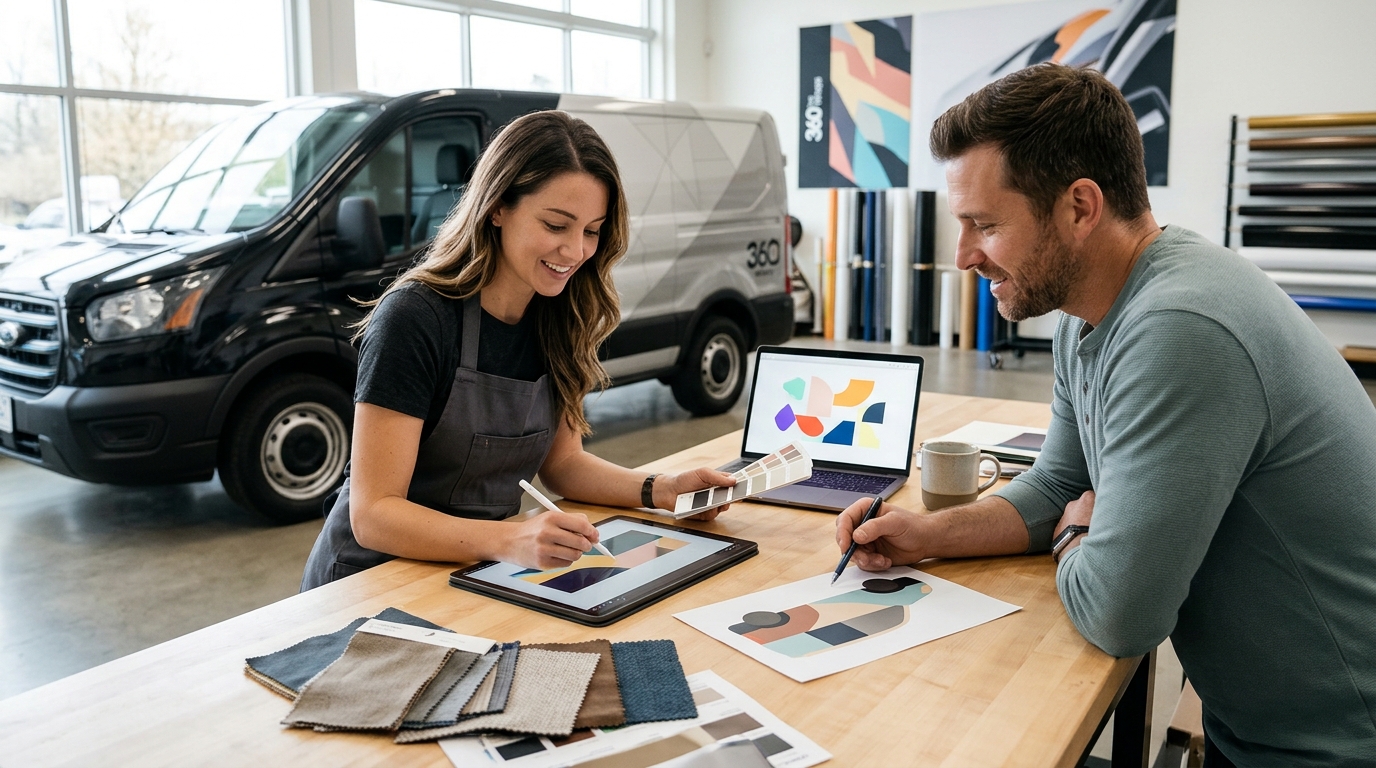
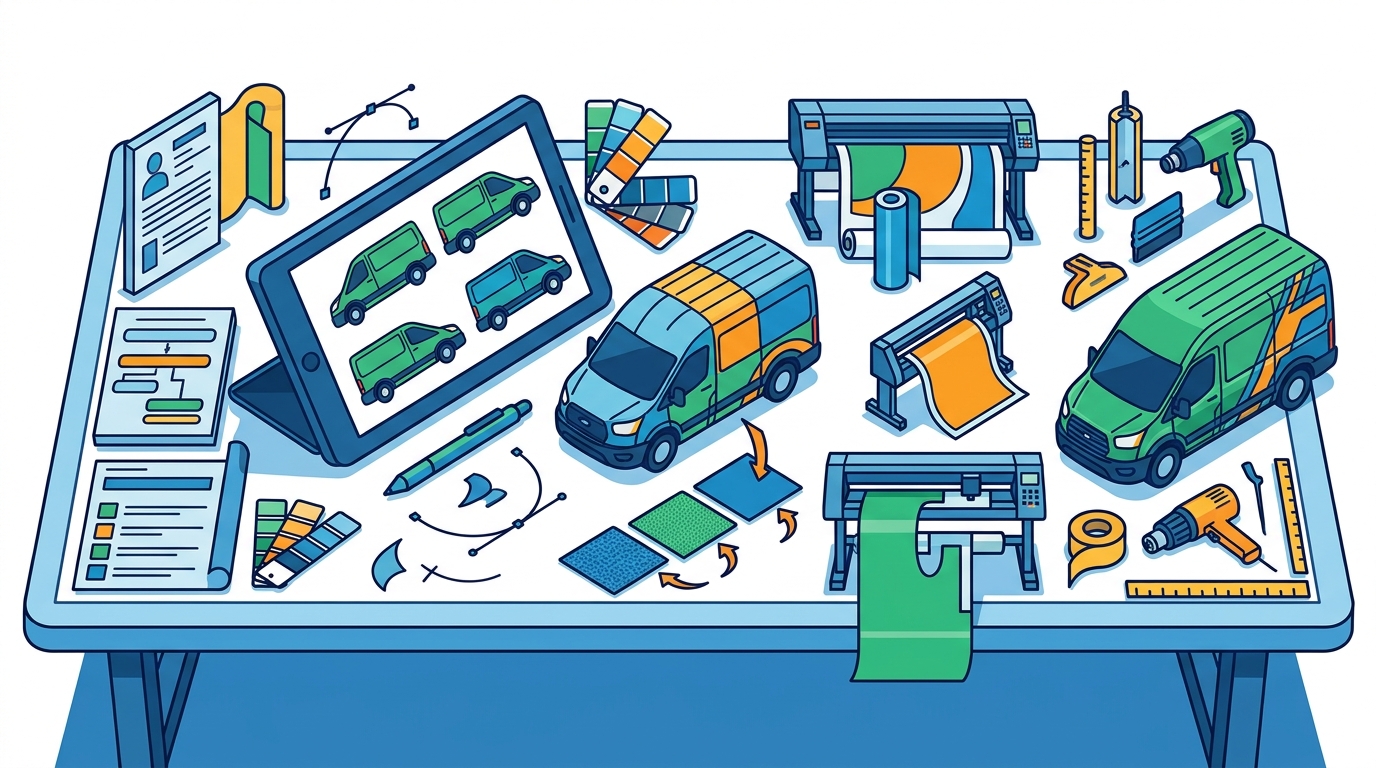
The custom design process for vehicle wraps is a collaborative workflow that transforms brand assets into a physical, high-impact visual identity. It begins with a strategic consultation to define goals, moves through iterative digital mockups, and concludes with precision production and installation. This structured approach ensures that the final wrap aligns perfectly with brand standards while accounting for the unique geometry of the vehicle. For businesses seeking a seamless experience, 360 Wraps has refined this process over nearly two decades to eliminate guesswork and ensure every detail is executed with intent.
Strategic Consultation and Brand Alignment
The foundation of any successful wrap is a deep understanding of the client's brand identity and operational goals. Brand alignment is the practice of ensuring that visual elements, such as color, typography, and imagery, accurately reflect the company's core values and market positioning. During the initial consultation, designers analyze existing brand guidelines to identify key assets that must remain consistent across all touchpoints. This phase is critical because it prevents the common pitfall of creating a visually appealing design that fails to communicate the brand's message effectively. For additional details, review the Contact Us 360 Wraps.
Iterative Design and Digital Mockups
Once the strategic direction is set, the process moves into the creative phase, where designers develop initial concepts and digital mockups. Digital mockups are high-fidelity visual representations of the proposed design applied to a specific vehicle model. These mockups allow clients to see exactly how the wrap will look on their vehicle before any physical production begins. This step is essential for managing expectations and facilitating clear feedback. It allows for adjustments to scale, placement, and color without the cost and time associated with physical revisions. For additional details, review the 360 Wraps Seamless Wraps.
The iterative nature of this phase means that clients can request changes and see updated versions quickly. Designers use specialized software to simulate how vinyl will behave on complex curves and panels, ensuring that the design remains legible and aesthetically pleasing from all angles. For instance, a design that looks great on a flat surface might distort when applied to a curved rear quarter panel. By identifying these issues in the digital phase, the team can adjust the artwork to maintain visual integrity. This level of precision is what distinguishes professional wrap design from generic printing.
Precision Production and Material Selection
After the design is approved, the project moves to the production stage, where the artwork is prepared for printing. Material selection is a critical component of this phase, as the choice of vinyl directly impacts the durability, finish, and longevity of the wrap. Different materials offer different properties, such as gloss, matte, or satin finishes, as well as varying levels of weather resistance and flexibility. The production team selects materials that complement the design and meet the specific requirements of the vehicle's environment and usage.
Production involves high-resolution printing using state-of-the-art technology to ensure color accuracy and sharp detail. The team also handles the lamination and cutting of the vinyl, preparing it for installation. This stage requires meticulous attention to detail, as any error in production can be difficult to correct during installation. By using premium materials and rigorous quality control checks, the production team ensures that the final product is ready for a flawless application. This phase bridges the gap between digital design and physical reality, ensuring that the wrap looks exactly as intended in the mockups.
Expert Installation and Quality Control
The final stage of the custom design process is the physical installation of the wrap onto the vehicle. Professional installation is the application of the vinyl wrap by trained technicians who use specialized tools and techniques to achieve a seamless finish. This is not a simple sticker application; it requires skill, patience, and an understanding of how vinyl interacts with different surfaces and temperatures. The installation process involves careful stretching, smoothing, and trimming to ensure that the wrap conforms perfectly to the vehicle's contours.
Quality control is integrated throughout the installation process, with technicians checking for bubbles, wrinkles, and misalignments as they work. For complex designs with multiple colors or intricate graphics, the installation may take several days to complete. The goal is to create a finish that looks factory-applied, with no visible seams or imperfections. This level of craftsmanship is what ensures the wrap maintains its professional appearance over time. It is the final step in bringing the custom design to life, transforming the vehicle into a powerful mobile billboard.
Key Takeaways
- The custom design process begins with a strategic consultation to align the wrap with brand identity and business goals.
- Digital mockups allow clients to visualize the design on their specific vehicle model before production begins.
- Iterative feedback loops ensure that the design meets client expectations and maintains visual integrity on complex surfaces.
- Material selection is a critical decision that affects the durability, finish, and overall performance of the wrap.
- Precision production and high-resolution printing ensure that the final artwork matches the approved design exactly.
- Professional installation by trained technicians is essential for achieving a seamless, factory-like finish.
- Quality control checks at every stage of the process ensure that the final wrap is durable and visually flawless.
Frequently Asked Questions
How long does the custom design process take?
The timeline varies depending on the complexity of the design and the size of the vehicle. A simple color change might take a few days, while a complex full wrap with custom graphics can take several weeks. The design and mockup phase typically takes one to two weeks, followed by production and installation.
Can I see the design before it is printed?
Yes, you will receive high-fidelity digital mockups of the design applied to your specific vehicle model. You can review these mockups and request changes until you are completely satisfied before any physical production begins.
What materials are used for vehicle wraps?
Vehicle wraps are typically made from cast or calendared vinyl. Cast vinyl is more durable and conforms better to complex curves, making it ideal for full wraps. Calendared vinyl is more affordable and suitable for simpler applications. The choice depends on the vehicle's usage and the desired finish.
Does the wrap damage the vehicle's paint?
No, when installed and removed correctly by professionals, a vehicle wrap does not damage the underlying paint. In fact, the wrap can protect the paint from UV rays, minor scratches, and environmental elements. It is a non-permanent solution that can be removed without leaving residue.
How do I maintain my vehicle wrap?
Vehicle wraps are easy to maintain. You can wash them with mild soap and water, just like you would wash the vehicle's paint. Avoid using abrasive cleaners or high-pressure washers directly on the edges of the wrap. Regular cleaning helps preserve the appearance and longevity of the wrap.
Can I change my design later?
Yes, vehicle wraps are removable. If you want to change your design or rebrand, the existing wrap can be removed and a new one installed. This makes wraps a flexible marketing tool that can evolve with your brand.
What is the difference between a partial wrap and a full wrap?
A partial wrap covers only specific areas of the vehicle, such as the doors or hood, while a full wrap covers the entire vehicle. Partial wraps are often used for accenting or highlighting specific brand elements, while full wraps provide maximum visibility and impact.
Start Your Custom Wrap Project
Understanding the custom design process empowers you to make informed decisions about your vehicle branding. By following a structured workflow that prioritizes strategy, precision, and craftsmanship, you can ensure that your wrap delivers maximum impact and longevity. 360 Wraps brings nearly two decades of experience to every project, ensuring that your vision is executed with the highest level of care. Whether you are rebranding a single vehicle or rolling out a nationwide fleet, the right design process is the key to a successful outcome. To begin your project, request a quote and let our team guide you through every step of the journey.