Choosing the right vehicle wrap for a Texas business fleet requires balancing extreme heat durability, brand visibility, and long-term cost efficiency. The best options combine cast vinyl materials with UV-stable inks and precise installation standards to ensure your brand remains sharp despite the harsh climate. This guide covers essential wrap types, material science, and fleet standardization strategies to help you make an informed decision. For additional details, review the About Us 360 Wraps.
UV Protection and Color Stability
UV protection is the primary defense against color fading in high-sun environments. Texas receives some of the highest annual UV index readings in the United States, which can degrade standard inks rapidly. UV-stable vinyl is a material engineered with specific additives that absorb or reflect ultraviolet radiation to preserve pigment integrity. Without this protection, vibrant brand colors can shift or fade within months of exposure. For additional details, review the Get a Quote 360.
When selecting wraps for a fleet, you must prioritize materials with robust UV inhibitors. These additives prevent the chemical bonds in the ink from breaking down under intense sunlight. This ensures that your brand identity remains consistent across all vehicles, whether they are parked in a shaded lot or driving on the highway. 360 Wraps utilizes premium materials designed to withstand these conditions, ensuring your investment lasts.
Perforated Window Graphics
Perforated window graphics allow businesses to brand their vehicles without compromising driver visibility. This type of wrap is applied to the exterior of windows, featuring thousands of tiny holes that let light pass through. Perforated vinyl is a specialized film that provides a clear view from the inside while displaying a solid graphic from the outside. This makes it ideal for branding the rear and side windows of vans, trucks, and SUVs.
Full Wraps for Maximum Impact
Full wraps provide the highest level of brand immersion and visual impact. This process involves covering the entire exterior of the vehicle with vinyl, transforming the car into a moving billboard. Full vehicle wrapping is a comprehensive branding solution that allows for complex designs, color changes, and detailed graphics. It is the most effective way to capture attention in heavy traffic or crowded parking lots.
Partial Wraps and Decals
Decals are pre-cut graphics that can be applied to specific panels. They are often used for logos, phone numbers, and website addresses. Partial wraps allow for a mix of branding and original paint, which can be aesthetically pleasing and cost-effective. For Texas fleets, this option provides a good balance between visibility and maintenance, as smaller areas are easier to clean and inspect for wear.
Fleet Standardization and Consistency
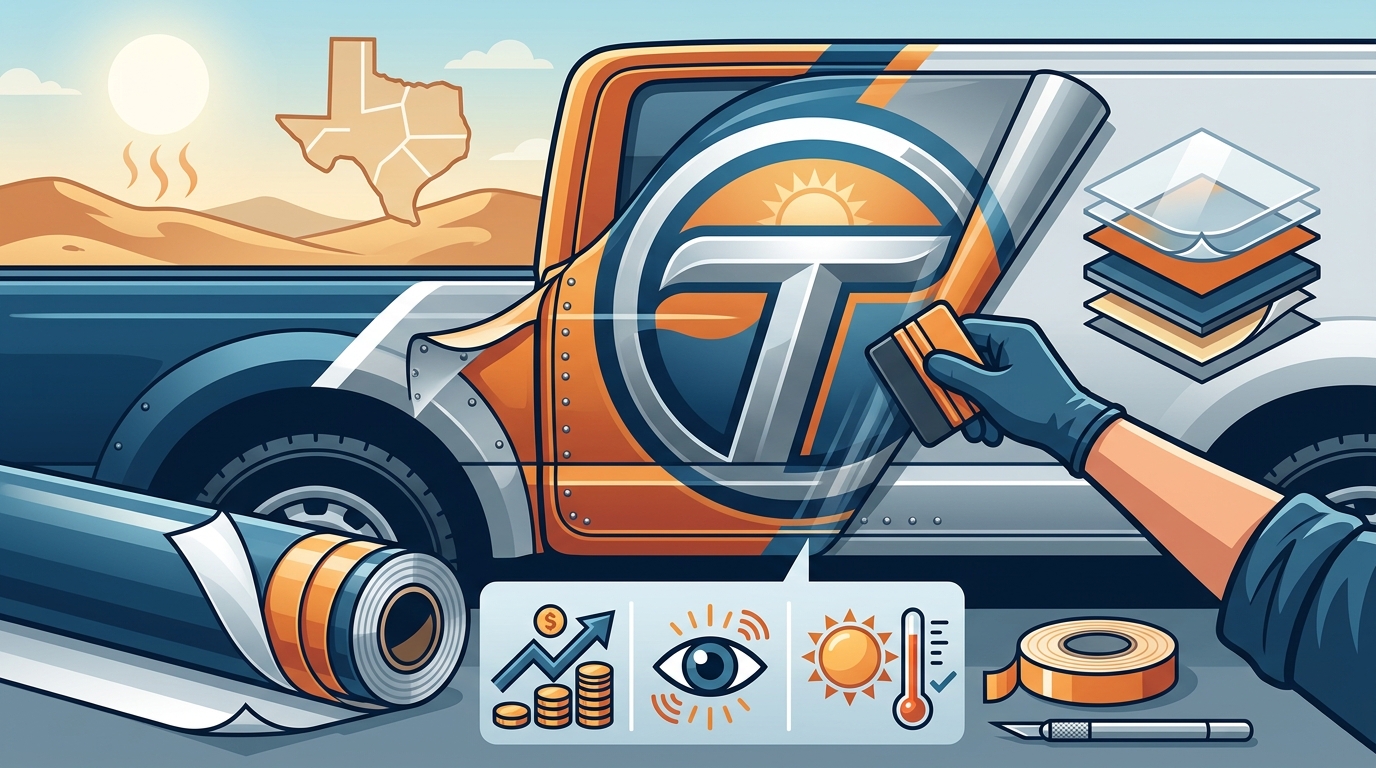
Fleet standardization ensures that every vehicle in your company looks identical, reinforcing brand recognition. Consistency is critical for building trust with customers and establishing a professional image. Fleet branding consistency is the practice of applying the same design, colors, and placement standards to all vehicles in a fleet. This uniformity makes your business more memorable and credible.
Achieving consistency requires a systematic approach to design and installation. It involves creating a master template that accounts for different vehicle models and sizes. 360 Wraps has developed a system over a decade to ensure that brand colors and body placement are accurate on every vehicle. This level of precision is essential for large fleets operating across multiple locations in Texas and beyond.
Durability in Texas Heat
Texas heat poses unique challenges for vehicle wraps, requiring materials that can withstand extreme temperatures. Prolonged exposure to high heat can cause vinyl to soften, warp, or release adhesive. Heat-resistant vinyl is a material formulated to maintain its structural integrity and adhesive strength in high-temperature environments. This is crucial for vehicles that are frequently parked in direct sunlight or driven in hot conditions.
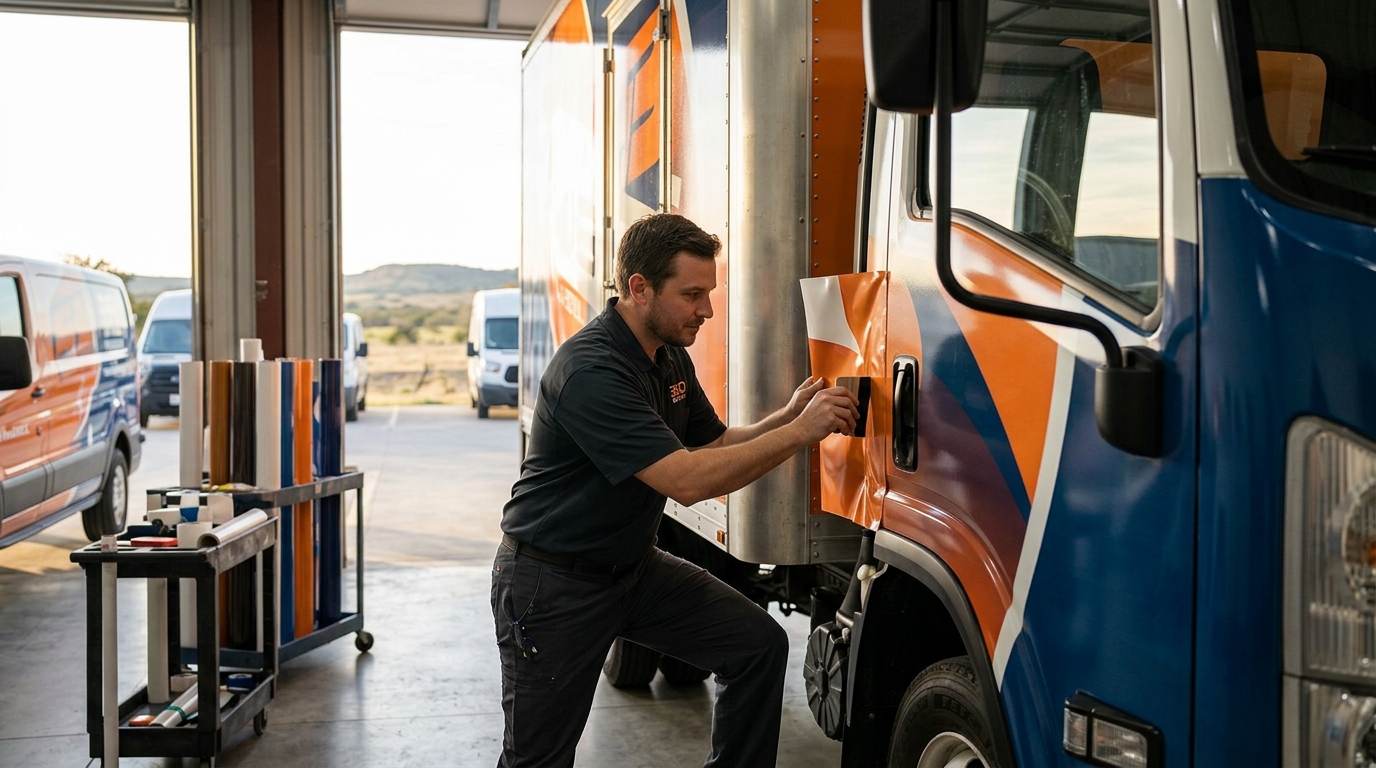
Proper installation is also key to heat durability. Installers must ensure that the vinyl is applied smoothly and without air bubbles, which can expand in the heat. 360 Wraps uses vetted professionals who understand the specific challenges of the Texas climate. Their expertise ensures that your wraps remain secure and visually appealing, even during the hottest months of the year.
Cut Lettering and Vinyl
Cut lettering is a classic branding technique that uses pre-cut vinyl to create crisp, clean text and logos. This method is ideal for businesses that want a simple, professional look. Cut vinyl lettering is a branding solution that involves cutting vinyl into specific shapes and applying them to a vehicle. It is often used for company names, phone numbers, and service descriptions.
Cut lettering is durable and long-lasting, making it a cost-effective option for fleet branding. It can be applied to various surfaces, including glass, metal, and plastic. For Texas fleets, cut lettering provides a reliable way to display essential information without the complexity of full graphics. It is a timeless choice that works well for a wide range of industries, from construction to healthcare.
Reflective Graphics for Safety
Reflective graphics enhance vehicle visibility and safety, especially during nighttime or low-light conditions. These materials reflect light back to the source, making the vehicle more visible to other drivers. Reflective vinyl is a material that contains microscopic glass beads or prisms that reflect light. This is particularly useful for fleets that operate in the early morning, late evening, or in poor weather conditions.
Using reflective graphics can improve safety and reduce the risk of accidents. It is a smart choice for vehicles that are frequently on the road, such as delivery trucks or service vans. 360 Wraps can incorporate reflective elements into your fleet design, ensuring that your brand is visible and safe at all times. This is a valuable addition for any business that prioritizes the safety of its drivers and the public.
Cast Vinyl Materials Explained
Cast vinyl is the premium choice for vehicle wraps, offering superior conformability and durability. This material is created by casting a thin layer of vinyl, which results in a flexible and durable film. Cast vinyl is a high-quality material that can conform to complex curves and contours without wrinkling or bubbling. It is the preferred choice for full wraps and detailed graphics.
Fleet Pricing and ROI
Fleet pricing depends on several factors, including the size of the fleet, the type of wrap, and the complexity of the design. Understanding the cost structure is essential for budgeting and planning. Fleet wrap pricing is typically calculated based on the number of vehicles, the square footage of vinyl used, and the labor required for installation. Volume discounts are often available for larger fleets.
Key Takeaways
- UV-stable vinyl is essential for preventing color fading in Texas's high-sun environment.
- Perforated window graphics maximize branding space without compromising driver visibility.
- Full wraps offer the highest visual impact and are ideal for rebranding efforts.
- Partial wraps and decals provide a budget-friendly option for targeted branding.
- Fleet standardization ensures a consistent and professional brand image across all vehicles.
- Heat-resistant materials and proper installation are critical for durability in Texas heat.
- Cast vinyl is the premium choice for conformability and long-term durability.
- Reflective graphics enhance safety and visibility during low-light conditions.
Frequently Asked Questions
How long do vehicle wraps last in Texas?
With proper care and high-quality materials, vehicle wraps can last 5 to 7 years in Texas. UV-stable vinyl and heat-resistant adhesives help ensure longevity despite the harsh climate.
Do vehicle wraps damage the original paint?
No, vehicle wraps do not damage the original paint when applied and removed correctly. In fact, they can protect the paint from UV rays and minor scratches.
Can I drive my vehicle in the rain after a wrap is installed?
It is recommended to avoid washing or driving in heavy rain for 24 to 48 hours after installation to allow the adhesive to fully cure.
Are perforated window graphics visible from the inside?
Perforated window graphics are designed to be nearly invisible from the inside, allowing for a clear view while displaying a solid graphic from the outside.
What is the difference between cast and calendared vinyl?
Cast vinyl is more flexible and durable, making it ideal for full wraps and complex curves. Calendared vinyl is less expensive but less conformable and durable.
How much does a fleet wrap cost?
Fleet wrap costs vary based on the number of vehicles, wrap type, and design complexity. Volume discounts are often available for larger fleets.
Conclusion
Selecting the right vehicle wrap options for your Texas business fleet requires a careful consideration of material quality, design impact, and long-term durability. By prioritizing UV-stable and heat-resistant materials, you can ensure that your brand remains vibrant and professional in the harsh climate. 360 Wraps offers comprehensive solutions for fleet branding, from full wraps to partial decals, with a focus on consistency and quality. To start your project, for a consultation and quote.