Choosing the correct vinyl substrate directly impacts fleet visibility and long-term return on investment. Industry data shows that properly specified commercial vehicle wrap material increases average annual impressions by nearly forty percent across metropolitan routes. Businesses that prioritize material science over upfront cost savings consistently report higher brand retention and fewer premature replacements. This guide breaks down the exact specifications you need to evaluate before committing to a full fleet conversion.
Understanding Material Composition
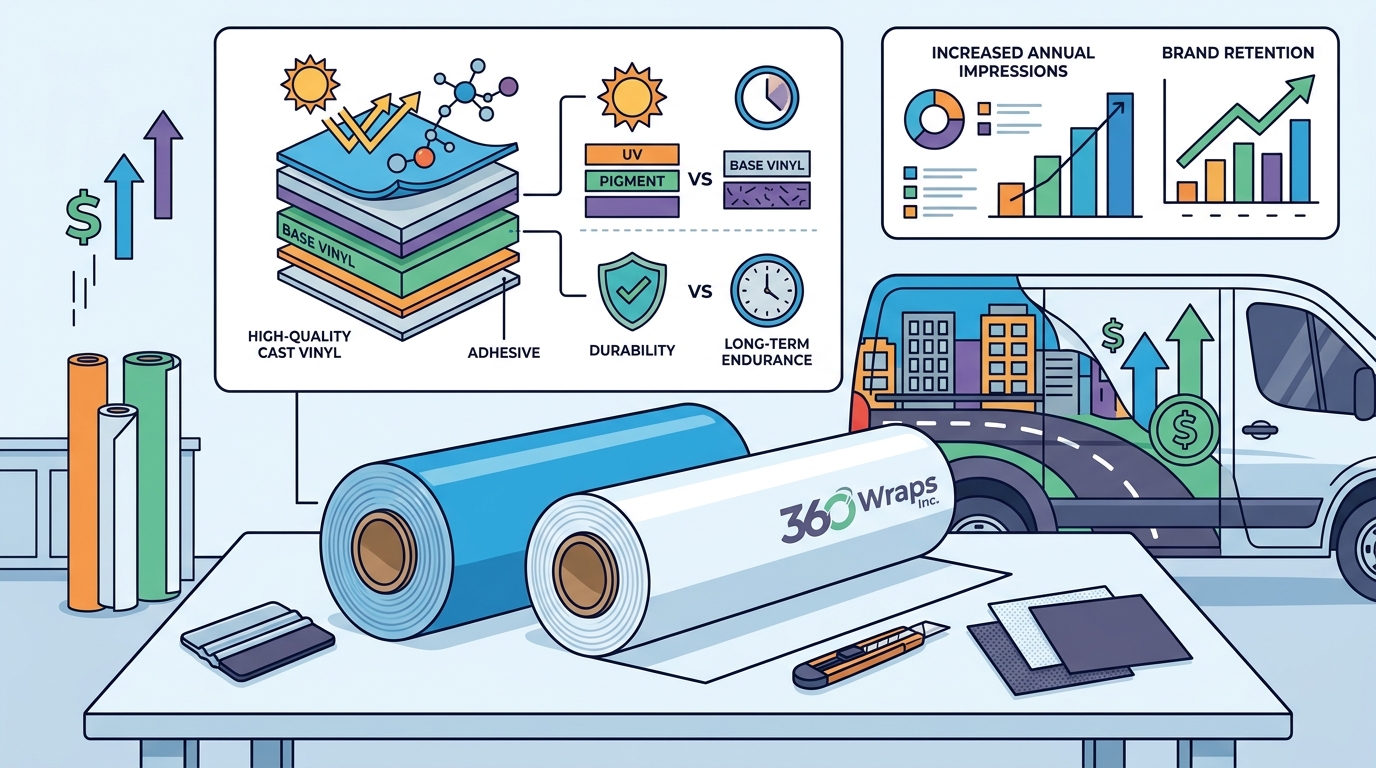
Commercial vehicle wrap material is a multi-layered polymer system engineered for exterior exposure. The top layer contains ultraviolet inhibitors that prevent color fading under direct sunlight. The middle layer provides structural rigidity and dimensional stability. The bottom layer features a pressure-sensitive adhesive that bonds to factory paint or existing coatings. Selecting the correct composition prevents premature delamination and maintains brand consistency across diverse climates.
Manufacturers typically offer two primary polymer bases for fleet applications. Polyvinyl chloride remains the industry standard due to its balance of flexibility and impact resistance. Thermoplastic polyurethane offers superior stretch characteristics for complex curves and recessed panels. Your operational environment dictates which polymer matrix delivers the longest service life.
Cast Versus Calendered Vinyl
Cast versus calendered vinyl represents the most critical decision point for commercial fleets. Cast vinyl is manufactured through a continuous casting process that aligns polymer molecules uniformly. This method produces a thin, highly conformable film that shrinks predictably over time. Calendered vinyl is manufactured by passing liquid polymer through heated rollers to achieve a specific thickness. This process leaves residual stress in the material that can cause edge lifting after two years.
Fleet managers should always specify cast vinyl for any vehicle featuring complex body lines. The material memory allows installers to stretch and shrink the film without tearing or whitening. Calendered options remain viable for flat-sided box trucks and simple delivery vans. Upgrading to cast vinyl reduces long-term maintenance costs and preserves brand equity. Cast vinyl delivers superior conformability for modern aerodynamic truck designs.
Adhesive Technology and Removal
Adhesive technology and removal protocols determine your total cost of ownership. High-performance pressure-sensitive adhesives contain rubber-based compounds that bond aggressively to factory paint. These formulations resist moisture intrusion and thermal cycling without leaving residue behind. Low-tack alternatives exist for leased vehicles or short-term promotional campaigns.
Proper adhesive selection prevents paint damage during future removal cycles. Industry reports indicate that premium adhesive systems reduce labor costs by nearly thirty percent. You should always verify the adhesive rating matches your expected vehicle lifespan. A five-year fleet cycle requires a permanent adhesive rated for exterior exposure. Professional installers follow strict environmental controls to prevent temperature-related adhesive failure.
Durability Factors and Environmental Stress
Durability factors and environmental stress directly influence your wrap replacement schedule. Temperature fluctuations cause polymer expansion and contraction across vehicle panels. Direct sunlight accelerates pigment degradation without proper ultraviolet stabilization. Road debris impact resistance determines how well the wrap withstands highway speeds and gravel shoulders.
Weather resistance testing follows standardized industry protocols to predict real-world performance. Data shows that properly installed cast vinyl maintains color integrity for five to seven years. Coastal operations require additional salt-fog resistance to prevent adhesive breakdown. Your geographic service area should dictate your material specification and warranty tier. Our team has spent 17 years optimizing material selections for extreme regional climates.
Cost Analysis and Fleet Scaling
Cost analysis and fleet scaling require a comprehensive lifecycle evaluation rather than a simple per-vehicle quote. Premium materials carry higher upfront costs but deliver extended service intervals and reduced labor expenses. Bulk fleet pricing structures often include volume discounts for orders exceeding twenty units. You should always request a total cost of ownership breakdown before signing production contracts.
Transparent pricing models eliminate hidden fees for design time and color matching. Our system, developed over a decade, keeps brand colors and body placement accurate on every vehicle. Fleet operators benefit from predictable budgeting when material costs align with replacement cycles. Investing in higher-grade substrates reduces long-term operational expenses and protects brand reputation. Get a Quote to receive a customized production timeline.
Installation Standards and Quality Control
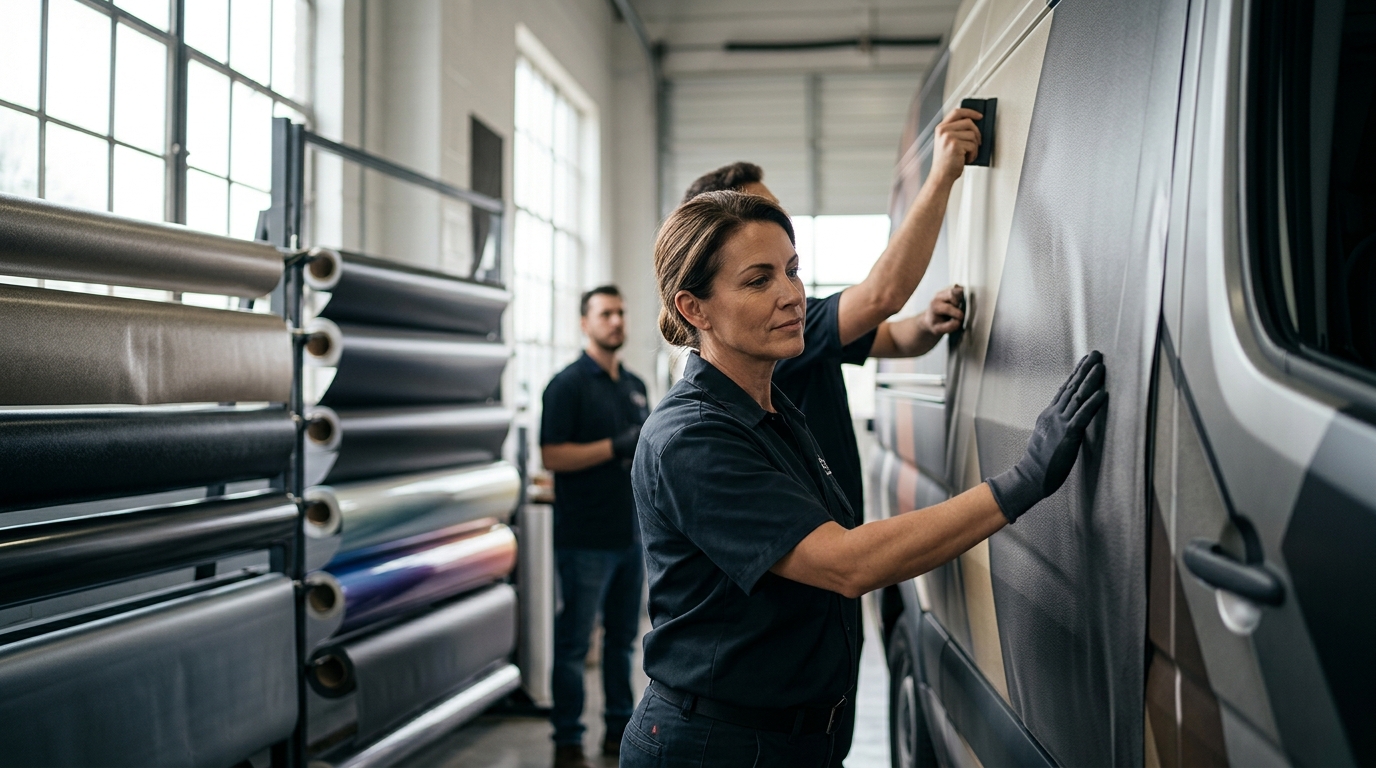
Installation standards and quality control determine the final appearance and longevity of your fleet graphics. Professional installers follow strict environmental controls to prevent dust contamination and temperature-related adhesive failure. Surface preparation involves thorough cleaning and alcohol wiping to remove factory waxes and road grime. Proper panel alignment ensures seamless transitions across doors, hoods, and bumpers.
Quality assurance protocols include post-installation inspections and warranty registration. Nationwide fleet branding requires coast-to-coast consistency across all service locations. We carry that same discipline to workplace graphics, ensuring your indoor branding matches your outdoor presence. Partnering with certified installers guarantees compliance with industry best practices and manufacturer warranties. View our gallery to see recent fleet conversions and material applications.
Material Comparison Overview
| Material Type | Thickness | Lifespan | Best Use Case |
|---|---|---|---|
| Cast Vinyl | 2.5 to 3.0 mils | 5 to 7 years | Complex vehicle curves |
| Calendered Vinyl | 3.0 to 3.5 mils | 3 to 5 years | Flat panel trucks |
| Perforated Window Film | 1.5 to 2.0 mils | 3 to 5 years | Vehicle window graphics |
| Paint Protection Film | 6.0 to 8.0 mils | 7 to 10 years | High-impact zones |
Key Takeaways
- Family owned since 2007, delivering 17 years of wrap expertise across all 50 states.
- Cast vinyl remains the industry standard for complex vehicle body lines and long-term durability.
- Calendered vinyl offers a cost-effective solution for flat-sided delivery trucks and box vans.
- Premium adhesive systems reduce removal labor costs by nearly thirty percent over five years.
- Nationwide fleet branding requires coast-to-coast consistency in color matching and panel alignment.
- Transparent pricing models eliminate hidden design fees and streamline fleet scaling operations.
Frequently Asked Questions
What is the difference between cast and calendered vinyl?
Cast vinyl is manufactured through a continuous casting process that aligns polymer molecules uniformly, creating a thin, highly conformable film. Calendered vinyl is manufactured by passing liquid polymer through heated rollers to achieve a specific thickness, leaving residual stress that can cause edge lifting after two years.
How long does a commercial vehicle wrap typically last?
Properly installed cast vinyl maintains color integrity for five to seven years under normal driving conditions. Calendered options generally provide three to five years of service life depending on environmental exposure.
Can I wrap leased vehicles without damaging factory paint?
Yes, low-tack adhesive formulations exist specifically for short-term campaigns and leased fleets. These systems bond securely during the lease period and remove cleanly without leaving residue behind.
Do you charge extra for custom design work?
We do not charge design time and believe in building long-lasting relationships. Our team handles color matching, layout adjustments, and print preparation at no additional cost to your project.
How does geographic location affect wrap durability?
Coastal operations require additional salt-fog resistance to prevent adhesive breakdown. Desert climates demand higher ultraviolet stabilization to prevent pigment fading and polymer cracking.
What is the average cost to wrap a commercial fleet?
Bulk fleet pricing structures often include volume discounts for orders exceeding twenty units. Total costs vary based on vehicle size, material selection, and graphic complexity.
Can you handle nationwide fleet branding projects?
Our system, developed over a decade, keeps brand colors and body placement accurate on every vehicle. We coordinate coast-to-coast consistency across all 50 states for large-scale deployments.
How do I schedule a consultation for my fleet?
You can request a custom quote through our online portal or contact our project managers directly. We will assess your vehicle count, operational routes, and branding goals to provide a precise production timeline.
Next Steps for Your Fleet
Upgrading your fleet graphics requires careful material selection and professional installation. Our team of designers, installers, and wrap specialists have seen every vehicle, every use case, and every budget. Whether it is a personal color change, a business fleet, or a full custom design, we have got you covered from the first click to the final install. Thousands of vehicles wrapped. One team that gives a damn about every single one. One process. Zero hassle. Every time. Get a Quote today to start your transformation.