
Vehicle wrap warranties for multi-state fleets differ primarily in how installers handle climate variance, regional labor standards, and cross-border liability. A national provider like 360 Wraps manages these variables through a unified quality control system, ensuring that a vehicle in Texas meets the same standard as one in California. This guide covers how to choose, verify, and manage wrap warranties across state lines.
How to Choose a Warranty Provider
Choosing the right warranty provider for a multi-state fleet requires looking beyond the sticker on the box. A vehicle wrap warranty is a contractual promise that the material and installation will perform under specific conditions for a set period. For fleets operating across state lines, the installer's geographic reach is the single most important factor. If your fleet spans the Midwest and the Southwest, a local shop in one city cannot realistically service a vehicle in another state without incurring prohibitive travel costs or relying on unvetted third parties.
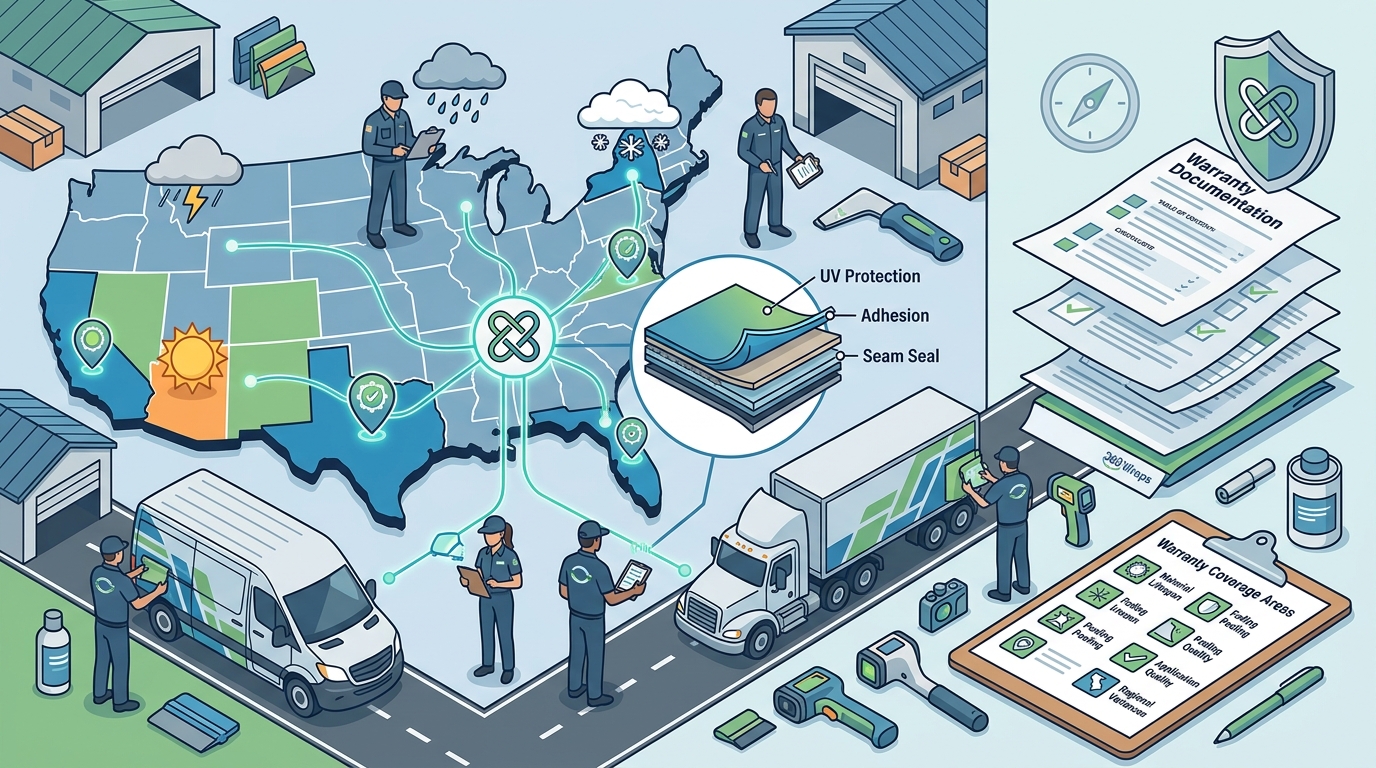
360 Wraps addresses this by operating a nationwide network of certified installers. This structure ensures that warranty claims are handled by professionals who follow the same installation standards regardless of location. When evaluating a provider, look for a unified quality control system. This means the company must have a documented process for checking color accuracy, panel alignment, and material integrity at every stage of production and installation. A provider that relies on independent contractors without a central oversight body often leads to inconsistent warranty enforcement.
Network Versus Single Location
A single-location shop may offer a strong warranty for local vehicles, but their coverage often ends at their state border. A national network, however, can dispatch a certified installer to any location within the service area. This is critical for fleets that move vehicles between hubs. The warranty must explicitly state that service is available at any location where the vehicle is parked, not just at the original installation site.
Material Versus Labor Coverage
Many warranties cover only the vinyl material, leaving the installation labor uncovered. A comprehensive warranty covers both. If the wrap peels due to poor surface preparation, a material-only warranty will deny the claim. You need a provider that stands behind both the product and the hands that applied it. This dual coverage is essential for maintaining brand consistency across a large fleet.
What to Ask Before Committing
Before signing a contract, you must ask specific questions that reveal the true scope of the warranty. Do not accept vague answers. Ask the provider to define exactly what is covered and what is excluded. This transparency is the foundation of a reliable partnership.
Key Questions for Multi-State Fleets
- Does the warranty cover installation labor in all 50 states?
- Who performs the warranty service if the vehicle is in a different state from the original installer?
- Is there a travel fee for warranty service, and how is it calculated?
- How long is the turnaround time for a warranty claim in a remote location?
- Does the warranty require the vehicle to be serviced at a specific facility, or can it be handled by any certified installer in the network?
How to Verify Claims and Credentials
Verifying a warranty claim requires checking the provider's credentials and past performance. A vehicle wrap warranty is only as good as the entity issuing it. You need to confirm that the company has the financial stability and operational capacity to honor claims over the full warranty period. This is especially important for long-term warranties that extend beyond five years.
Checking Installer Certifications
Ask for a list of certified installers in the states where your fleet operates. Verify that these installers are current with their certifications. A certified installer is a professional who has passed a standardized test of installation skills and knowledge. This certification ensures that the person applying the wrap follows industry best practices. If the provider cannot provide a verifiable list of certified installers in your key markets, their warranty is at risk.
Reviewing Past Claims
Ask for case studies of warranty claims handled in different states. This reveals how the provider manages logistics and communication. A provider with a track record of resolving claims quickly and fairly is a safer bet. Look for testimonials from other multi-state fleets. These references provide insight into the real-world experience of managing a warranty across state lines.
How the Warranty Process Works
Understanding the workflow of a warranty claim helps you set realistic expectations. The process typically begins with a claim submission, followed by an assessment, and ends with a resolution. For multi-state fleets, the logistics of this process are more complex than for local vehicles.
Step-by-Step Claim Process
- Submission: The fleet manager submits a claim with photos and a description of the issue.
- Assessment: The provider reviews the claim and determines if it falls under warranty coverage.
- Dispatch: A certified installer is assigned to the vehicle's current location.
- Service: The installer performs the repair or replacement.
- Verification: The provider verifies the work and closes the claim.
This process should be transparent and documented. You should receive updates at each stage. The total time from submission to resolution varies by location and complexity. A national provider should aim for a turnaround time of 5 to 10 business days for standard claims. Delays beyond this window indicate operational inefficiencies.
What It Costs and Price Drivers
The cost of a vehicle wrap warranty is often bundled into the price of the wrap itself. However, for multi-state fleets, additional costs may apply. These costs are driven by logistics, material quality, and labor rates. Understanding these drivers helps you budget accurately.
Price Drivers
- Geographic Spread: Fleets with vehicles in remote or high-cost areas may face higher service fees.
- Fleet Size: Larger fleets often qualify for volume discounts, which can offset warranty costs.
- Complexity of Design: Intricate designs require more labor, which can increase the overall cost.
360 Wraps offers competitive pricing for fleet branding, with no charge for design exploration on qualifying programs. This approach allows you to focus on the long-term value of the wrap rather than upfront design fees. The total cost of ownership includes the initial wrap, any warranty service, and the potential cost of early replacement if the wrap fails.
Common Mistakes and How to Avoid Them
Many fleet managers make mistakes that void their warranties or lead to poor outcomes. Avoiding these pitfalls is essential for protecting your investment. The most common mistakes involve maintenance, documentation, and choosing the wrong provider.
Top Mistakes to Avoid
- Ignoring Maintenance: Failure to clean the vehicle regularly can lead to premature wear. Use only recommended cleaning products.
- Poor Documentation: Failing to keep records of all service and maintenance can make it difficult to prove a claim.
- Choosing a Local Shop for a National Fleet: This is the most critical mistake. A local shop cannot service a vehicle in another state effectively.
- Assuming All Warranties Are Equal: Different providers have different terms. Read the fine print carefully.
By avoiding these mistakes, you can maximize the lifespan of your wraps and ensure that your warranty remains valid. Regular inspections and prompt reporting of issues are key to maintaining warranty coverage.
Warranties Versus Alternatives
Comparison Table
| Option | Cost | Durability | Warranty Availability | Best For |
|---|---|---|---|---|
| Full Vehicle Wrap | High | 5-7 Years | Comprehensive (Material + Labor) | Brand Consistency, Full Coverage |
| Partial Wrap/Decals | Medium | 3-5 Years | Material Only (Often) | Logo Placement, Cost Savings |
| Paint | Very High | 10+ Years | Manufacturer Warranty | Permanent Color Change |
| No Protection | Low | Varies | None | Short-Term Use, Low Budget |
For multi-state fleets, full vehicle wraps with comprehensive warranties offer the best balance of cost, durability, and brand consistency. Paint is a viable alternative for permanent changes but lacks the flexibility of wraps. Decals are a cost-effective option for logo placement but do not provide full coverage.
Multi-State Fleet Specifics
Operating a fleet across multiple states introduces unique challenges that do not exist for local fleets. These challenges include varying climate conditions, different state regulations, and logistical complexities. A warranty that works for a local fleet may not work for a multi-state operation.
Climate Variance
Climate is a major factor in wrap performance. A vehicle in Arizona faces extreme heat, while a vehicle in Minnesota faces extreme cold. These conditions can affect the vinyl's adhesion and color stability. A national provider must account for these variations in their warranty terms. 360 Wraps uses a system developed over a decade to ensure that brand colors and body placement remain accurate on every vehicle, regardless of location. This system includes material selection and installation techniques tailored to specific climates.
Regulatory Differences
State regulations can affect how vehicles are branded. Some states have specific rules about vehicle advertising, such as size limits or content restrictions. A national provider should be familiar with these regulations and ensure that their designs comply with local laws. This compliance is part of the warranty, as non-compliant designs may not be covered.
Rules and Consumer Protections
Vehicle wrap warranties are governed by contract law and consumer protection regulations. Understanding these rules helps you know your rights. The Magnuson-Moss Warranty Act is a federal law that governs written warranties for consumer products. It requires that warranties be clearly stated and that the provider honor their terms.
Key Protections
- Clear Terms: The warranty must clearly state what is covered and what is excluded.
- No Unreasonable Conditions: The provider cannot impose unreasonable conditions that make it difficult to claim the warranty.
These protections ensure that you are treated fairly. If a provider violates these rules, you may have legal recourse. However, the best protection is to choose a reputable provider with a track record of honoring their warranties.
Local Specifics for Key Regions
While a national warranty provides a baseline, local specifics can affect the outcome. Different regions have different environmental factors and labor markets. These factors can influence the cost and quality of warranty service.
Regional Considerations
- Sunbelt States: High UV exposure can fade colors faster. Use UV-resistant materials.
- Northern States: Extreme cold can make vinyl brittle. Use flexible materials.
- Coastal Areas: Salt air can corrode metal and affect adhesion. Use marine-grade materials.
Timing and When to Act
Timing is critical when managing vehicle wrap warranties. Acting quickly can prevent minor issues from becoming major problems. Delaying a claim can void the warranty or increase the cost of repair. You should establish a routine inspection schedule for your fleet.
Inspection Schedule
- Monthly: Visual inspection for peeling, bubbling, or fading.
- Quarterly: Detailed inspection by a certified installer.
- Annually: Full assessment of the wrap's condition.
By acting promptly, you can ensure that your warranty remains valid and that your fleet maintains a professional appearance. Timing also matters when choosing a provider. Start the selection process early to allow time for due diligence and contract negotiation.
Results Over Time
Measurable outcomes are the best indicator of a warranty's value. Over time, you should see consistent brand visibility, reduced maintenance costs, and high customer satisfaction. A well-managed wrap program can last 5 to 7 years, providing a strong return on investment.
Long-Term Benefits
- Brand Consistency: Uniform appearance across all vehicles and locations.
- Cost Savings: Avoiding the cost of early replacement or repainting.
- Professional Image: A well-maintained fleet reflects positively on your brand.
360 Wraps is committed to delivering these results. Their focus on quality and consistency ensures that your fleet looks its best for the entire duration of the warranty. By partnering with a national provider, you can achieve these outcomes with confidence.
Key Takeaways
- Choose a national provider with a certified installer network for multi-state fleets.
- Ask specific questions about labor coverage, travel fees, and turnaround times.
- Verify installer certifications and review past claims to assess reliability.
- Understand the claim process and set realistic expectations for resolution.
- Budget for material quality, geographic spread, and fleet size when calculating costs.
- Avoid common mistakes like poor maintenance and choosing a local shop for a national fleet.
- Compare warranties with alternatives like paint and decals to make an informed decision.
- Act promptly on inspections and claims to maintain warranty validity.
Frequently Asked Questions
Does a vehicle wrap warranty cover installation labor in other states?
It depends on the provider. A national provider like 360 Wraps covers labor in all 50 states through their certified installer network. A local shop may not cover labor outside their state.
How long does a vehicle wrap warranty typically last?
Most vehicle wrap warranties last between 3 and 7 years. The exact duration depends on the material quality and the provider's terms.
What voids a vehicle wrap warranty?
Common voids include using harsh chemicals, failing to maintain the vehicle, and unauthorized modifications. Always follow the provider's maintenance guidelines.
Can I transfer a vehicle wrap warranty to a new owner?
Some warranties are transferable, but this is not standard. Check the terms of your specific warranty to see if transfer is allowed.
How do I file a warranty claim for a vehicle in another state?
Contact the provider's warranty department with photos and a description of the issue. They will dispatch a certified installer to the vehicle's location.
Are there different warranty terms for different climates?
Yes, some providers adjust terms based on climate. For example, UV exposure in the Sunbelt may affect color stability. A national provider should account for these variations.
What is the cost of a vehicle wrap warranty?
The cost is often bundled into the price of the wrap. Additional costs may apply for travel or premium materials. Ask the provider for a detailed breakdown.
How do I verify that an installer is certified?
Ask the provider for a list of certified installers in your area. Verify their credentials with the certifying body. A reputable provider will provide this information readily.